President George W. Bush signed into law a package of housing legislation intended to ease the burden on thousands of borrowers who face losing their homes. The legislation will also bail out major mortgage financiers Fannie Mae and Freddie Mac.


"The law authorizes the Treasury to rescue the mortgage finance giants, Fannie Mae and Freddie Mac, should they verge on collapse, potentially by spending tens of billions in federal monies. Together, the companies own or guarantee nearly half of the nation's $12 trillion in mortgages."
"To accommodate the rescue plan for the mortgage companies, the bill raises the national debt ceiling to $10.6 trillion, an increase of $800 billion. The bill also creates significant liabilities and risks for taxpayers, that are virtually impossible to calculate."
"Though the legislation was the product of months of intensive work by lawmakers in both parties and has been hailed as the most aggressive intervention by the government into the housing market in more than a generation, perhaps since the New Deal, no members of Congress were invited to the signing."
"The enactment of the legislation comes in the same week that the administration announced that Mr. Bush would leave behind a record $482 billion deficit, which will probably grow substantially if home values continue to decline and if there are further reductions in corporate and personal income as many economists are forecasting for the rest of the year."
Read the full story: Bush Signs Sweeping Housing Bill
Bailing Out the Mortgage Market
The housing market -- and especially the exurban housing market -- played a major role in bringing about the current economic recession, according to this piece from Christopher Leinberger. He says sprawl is unlikely to regain its lost value.

House Poor: Low-Income Homeowners Struggle in the Shadows
While renters and homebuyers’ challenges dominate the headlines, they aren't the only ones wrestling with maintaining decent housing.
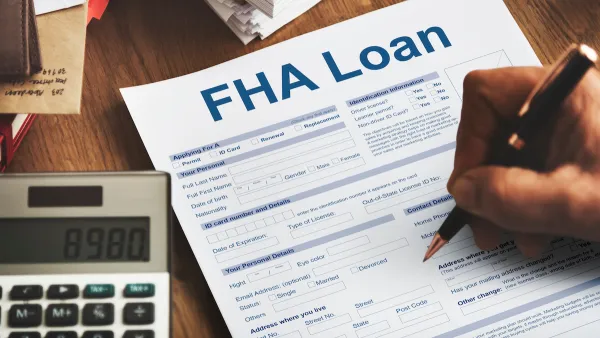
Federal Rule Change Lets Banks Include ADU Income in Mortgage Decisions
A policy change from the Federal Housing Administration is designed to spur more rental housing construction and bring homeownership within reach of more U.S. households.

Planetizen Federal Action Tracker
A weekly monitor of how Trump’s orders and actions are impacting planners and planning in America.

Eastern Nebraska is running out of electricity
Data centers and electrification are straining eastern Nebraska’s grid, throttling economic development.

Study reveals best places in the U.S. for cycling, walking
New research from Streetlight Data examines bicycle and pedestrian miles per capita in the 100 largest U.S. cities by population.

Next-generation nuclear reactors are coming to Texas
The reactors will not require towering containment structures thanks to new safety features.

California distributes $1.3 billion to prevent transit service cuts, bolster projects
Twenty-eight projects across California received a portion of the funding.

Pennsylvania Democrats have 15 affordability, clean energy bills for flipped state Senate
Bills in consideration include a bill supporting geothermal energy and a bill supporting solar on warehouses.

FREE Course: Walkable City 1: Why Walkability?
After describing his path towards focusing on walkability as the essence of good planning, Jeff Speck marches through his five principal reasons for making more walkable places.
Reinventing Malls: Planning Alchemy—Turning Gray Fields Into Gold
The course focuses on the opportunities and imperatives that shape reinvention of mall sites.

City of Charlotte
City of Rosemead
Rutgers University, Edward J. Bloustein School of Planning and Public Policy
University of Michigan School for Environment and Sustainability (SEAS)
Hunter College, City University of New York (CUNY)
The Architects Foundation
City of Cambridge
The Pocatello Development Authority
The Urban Renewal Agency of the City of Pocatello