A policy change from the Federal Housing Administration is designed to spur more rental housing construction and bring homeownership within reach of more U.S. households.



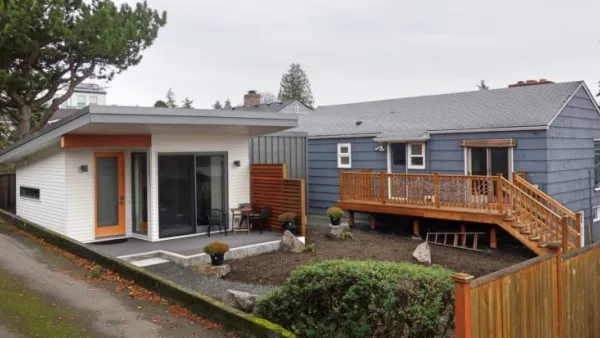
An article in MReport highlights a policy change from the Federal Housing Administration (FHA) that will impact mortgage qualifications for homeowners who build or buy homes with accessory dwelling units (ADUs).
“The change in policy allows for the inclusion of rental income from the ADU in the borrower’s qualifying income, and would allow more borrowers to qualify for FHA financing for properties with ADUs, including 203(k) rehabilitation mortgages,” the article explains. The new rule is meant to make homeownership possible for more households and add to the rental housing supply.
The new policies allow mortgage lenders to qualify homebuyers based on estimated income from existing or proposed ADUs, “Include ADU-specific appraisal requirements for appraisers to clearly identify, analyze, and report on ADU characteristics and the estimated rent the ADU can be expected to generate,” and “Add ADUs to the types of improvements that can be financed under FHA’s mortgages for new construction.”
FULL STORY: FHA Amends Policy on Accessory Dwelling Units

ADUs for Sale? San Diego Could Legalize Backyard Condos
As one of 25 proposed amendments, San Diego may soon allow accessory dwelling units to be bought and sold as individual homes.

ADUs as Condos: What Does it Mean for Homeownership?
A California law that allows the sale of ADUs as condos may soon make homeownership more attainable.

San Jose Homeowners Can Now Sell ADUs as Condos
A new policy could help boost the supply of smaller, more affordable ‘starter homes’ in the first California city to legalize the sale of ADUs.

Planetizen Federal Action Tracker
A weekly monitor of how Trump’s orders and actions are impacting planners and planning in America.

The state-sanctioned urbicide of Austin
People don’t kill cities. Freeways do.

US to reduce Colorado River water deliveries to Mexico
A new Colorado Treaty amendment reduces Mexico’s Colorado River water allocation by 250,000 acre feet.

5 New England states march closer to 800 megawatt wind energy project
Securing federal approval for the project may be complicated under the Trump administration, which has historically been hostile towards domestic wind power.

Baltimore to break ground on $50 million Transit Priority Project
The project will bring faster bus trips, safer streets and better bike connections to Baltimore.

Airbnb launches $250 million 'last-dollar financing' housing accelerator, makes first investment in Austin
The company will put $6.4 million towards affordable housing development in Texas’ capital.

FREE Course: Walkable City 1: Why Walkability?
After describing his path towards focusing on walkability as the essence of good planning, Jeff Speck marches through his five principal reasons for making more walkable places.
Reinventing Malls: Planning Alchemy—Turning Gray Fields Into Gold
The course focuses on the opportunities and imperatives that shape reinvention of mall sites.

Eagle County Government
Harvard University Graduate School of Design
Nashville Planning Department
The Architects Foundation
University of Cincinnati Online
The Pocatello Development Authority
The Urban Renewal Agency of the City of Pocatello
Journal of the American Planning Association