It's Gold Rush days long since passed, Canada's Yukon Territory was until recently a wild, myth-bound place. But now oil and gas revenues are fueling new construction and population growth.


"It won't be long, realtors here say, before [the] Whitehorse subdivision of Copper Ridge routinely sees homes going for a million dollars or more. Many of the château-style estates wouldn't be out of place in the upscale suburbs of Vancouver or Toronto. Or Whistler, for that matter.
As the financial and political epicentre of the [Yukon] territory, there is no question Whitehorse is undergoing a radical change. It is reflected in subdivisions such as Copper Ridge and big-box retailers such as Wal-Mart that have moved in downtown. There are gleaming new multimillion-dollar complexes such as the Canada Games Centre that would be the envy of any city.
In the downtown core, it is becoming harder to find the quaint, authentic, Gold Rush-era facades that have always been the hallmark of Whitehorse. But is destroying these myths all a good thing? For everything that Whitehorse is gaining in the modernization process, is it losing just as much? Does it need Pizza Huts and Real Canadian Superstores to not only attract new residents but keep those it has?
Good luck finding a prevailing wisdom to any of those questions."
Read the full story: Progress is bittersweet in Gold Rush country

How Orphan Oil Wells Threaten West Texas Communities
Abandoned and orphaned oil wells in West Texas are causing costly environmental hazards like sinkholes and leaks, prompting urgent calls for increased funding and regulation to address a growing statewide and national crisis.
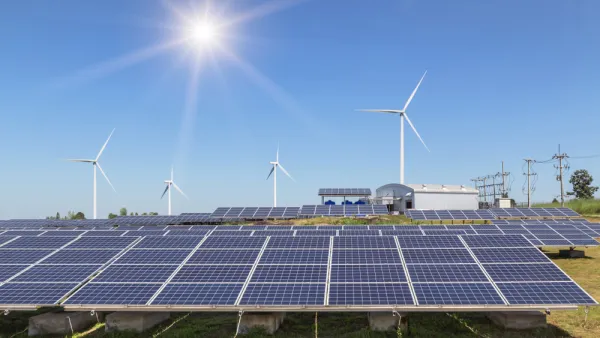
Building a Cleaner Future: Financing the Coal-to-Clean Transition
The Coal-to-Clean Initiative is an effort to fund the early retirement of coal plants in emerging markets, urging public-private collaboration to achieve a just energy transition that limits global warming and supports sustainable growth.
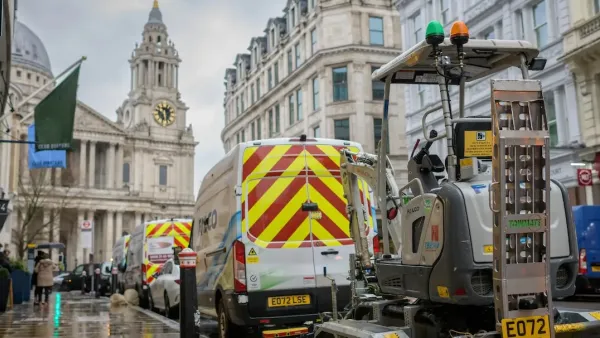
E-diggers Pave Way for Cleaner, Greener, Quieter London
London power workers are trialing zero-emission electric diggers that remove more than 200 tonnes of CO2 emissions and 75% of noise pollution from their work in the capital.

Planetizen Federal Action Tracker
A weekly monitor of how Trump’s orders and actions are impacting planners and planning in America.

Eastern Nebraska is running out of electricity
Data centers and electrification are straining eastern Nebraska’s grid, throttling economic development.

Study reveals best places in the U.S. for cycling, walking
New research from Streetlight Data examines bicycle and pedestrian miles per capita in the 100 largest U.S. cities by population.

Next-generation nuclear reactors are coming to Texas
The reactors will not require towering containment structures thanks to new safety features.

California distributes $1.3 billion to prevent transit service cuts, bolster projects
Twenty-eight projects across California received a portion of the funding.

Pennsylvania Democrats have 15 affordability, clean energy bills for flipped state Senate
Bills in consideration include a bill supporting geothermal energy and a bill supporting solar on warehouses.

FREE Course: Walkable City 1: Why Walkability?
After describing his path towards focusing on walkability as the essence of good planning, Jeff Speck marches through his five principal reasons for making more walkable places.
Reinventing Malls: Planning Alchemy—Turning Gray Fields Into Gold
The course focuses on the opportunities and imperatives that shape reinvention of mall sites.

City of Charlotte
City of Rosemead
Rutgers University, Edward J. Bloustein School of Planning and Public Policy
University of Michigan School for Environment and Sustainability (SEAS)
Hunter College, City University of New York (CUNY)
The Architects Foundation
City of Cambridge
The Pocatello Development Authority
The Urban Renewal Agency of the City of Pocatello