Moscow tops an annual ranking of the world's most expensive cities. The survey examines housing, transportation, food, clothing, household goods and entertainment for corporations and government agencies determining living costs for expats.


"In 1998, Moscow was in crisis. More than 100,000 Russians took to the streets as a slew of banks--and the life savings of millions of citizens--went bust.
But just a decade later, the global commodities boom has made Russia flush with cash, and Moscow has become a pricey place to live.
That's the finding in Mercer's 2008 Worldwide Cost of Living Survey. Moscow tops the list with a score of 142.4, up 6% from last year--and 42% higher than New York, the most expensive city in the U.S. The Russian capital is followed by Tokyo; London; Oslo, Norway; and Seoul, South Korea.
'The decline in the ranking of all U.S. cities is due to the weakening value of the U.S. dollar against most major world currencies,' says Mercer's Mitch Barnes, a principal at the firm. 'The dollar has been declining steadily for the past several years, which has resulted in an overall decrease in the cost of living in 19 U.S. cities, relative to other major global cities studied.'"
Read the full story: World's Most Expensive Cities

Cost of living too high? Planners to the rescue!
Excessive costs of living force many people to work more than optimal hours, leaving less time for family and fun. Local policies that favor affordable housing and transportation increase freedom, opportunity and happiness.
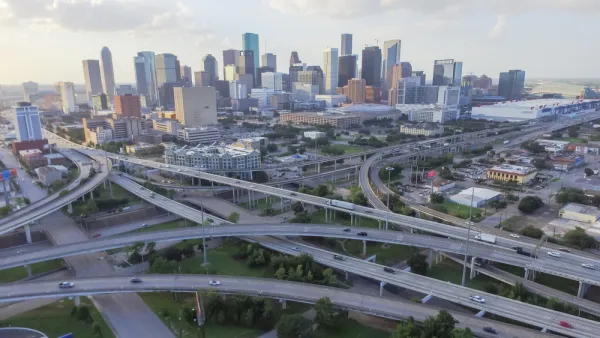
Houston More Expensive Than New York? Not So Fast
A recent study claiming that transportation costs in Houston, among other expenses, raise the cost of living almost to the same level as living in New York City. Some took exception to the study's methodology.
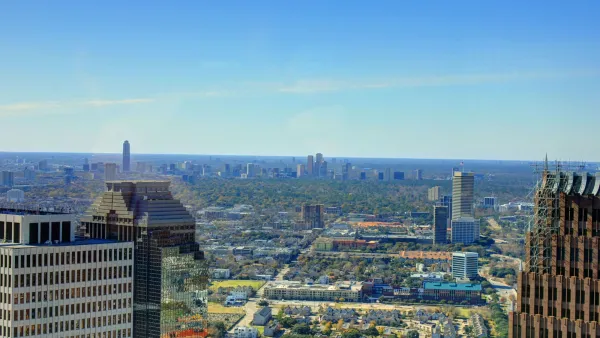
Houston Just as Expensive as New York City, Study Says
The extra costs of automobile dependency turn assumptions about affordability on their head, according to a recently published report by the Citizens Budget Commission.

Planetizen Federal Action Tracker
A weekly monitor of how Trump’s orders and actions are impacting planners and planning in America.

California plans to bury El Niño’s downpour
If the state plays its cards right, it may be able to store a billion acre-feet of El Niño’s water in aquifers.

Desperate measures: Advocates weigh draining Lake Powell to fill Colorado River
Draining the reservoir could reduce evaporation losses by a couple hundred thousand acre-feet.

Housing is the top priority of Seattle’s sole new councilmember
Jenks campaigned on building 1,000 new units of affordable housing.

New tax cuts may slash $1.5 billion in funding for Miami transit, public parks
Amendment 3 will save Miami-Dade homeowners $2,700 in 2028.

Arizona, Wisconsin, Pennsylvania hope to finally advance climate goals post-midterms
The three states have spent years under Republican or divided control.

FREE Course: Walkable City 1: Why Walkability?
After describing his path towards focusing on walkability as the essence of good planning, Jeff Speck marches through his five principal reasons for making more walkable places.
Reinventing Malls: Planning Alchemy—Turning Gray Fields Into Gold
The course focuses on the opportunities and imperatives that shape reinvention of mall sites.

City of Rosemead
Rutgers University, Edward J. Bloustein School of Planning and Public Policy
One Hundred Miles
University of Michigan School for Environment and Sustainability (SEAS)
Hunter College, City University of New York (CUNY)
The Architects Foundation
City of Cambridge
Montrose County
The Pocatello Development Authority