The increase in the price of fuel encourages one St. Louis family to purchase a second home near work.


"Carol and Robert Miles recently realized that they were spending nearly $800 a month on gasoline. For that money, they figured they could buy a second house. So they did."
"The Mileses drive lots of miles. They live in De Soto and work in the city of St. Louis, a 100-mile daily round trip. They spend nearly an hour on the road each way. When gas was cheaper, the time was worth it. "We bought in DeSoto 15 years ago and it's beautiful. We have a lake lot, and it's peaceful, and I love it," says Mrs. Miles."
"Soon they'll see their De Soto home only on weekends. The monthly payment on their small, two-bedroom South St. Louis pied-à-terre will be $500, almost $300 less than their gasoline bill."
"The Mileses are an extreme case, but the sky-high price of fuel may be starting to have an effect on the housing market, although changes haven't shown up yet in St. Louis-area real estate statistics. Real estate agents, however, say buyers are factoring the price of gas into decisions on where they'll live and what they'll pay for a home."
Read the full story: Gasoline prices: Ending sprawl?

Drivers Cling to Their SUVs
Even as SUV sales have dropped 33% this year, some drivers hang on to their gas-guzzlers. "You've got to have that room when you're moving around," says a Georgia man. The cost of switching is another major factor for families.

Wildfires are coming for America’s suburbs
Buying land in between paved cities and forests has become increasingly popular, but those same areas are naturally fire prone.
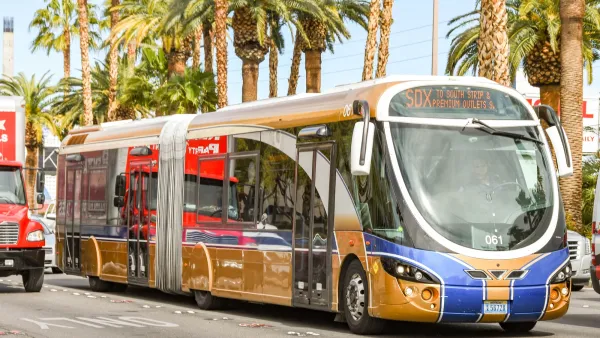
Two out of three transit riders in Las Vegas don't own a car
As gas and insurance prices rise, car commuting is becoming more unaffordable to working Americans, leaving them reliant on their local transit systems.

Planetizen Federal Action Tracker
A weekly monitor of how Trump’s orders and actions are impacting planners and planning in America.

‘Going backwards:’ Baltimore mayor, students rally against state's transit funding plan
Maryland's proposed six-year plan provides no funding for Baltimore’s BMORE bus program and reduces its road maintenance funding.

Detroit to transform waterfront with $2.2 billion investment
Developers will convert about 18 acres of unused parking lot space into civic spaces.

Newsom vetoes high-speed rail supervision bill after agency receives condemnatory audit
The audit found the CHSRA approved almost $600,000 in unallowable travel expenses.

Nation sees first electric plane-boat hybrid take off in public demo
The Viceroy Seaglider can fly at speeds of 180mph for up to 180 miles.

One of nation’s poorest counties to receive $6 billion data center
The developers estimate the project will create 200 permanent jobs and 1,000 temporary construction jobs.

FREE Course: Walkable City 1: Why Walkability?
After describing his path towards focusing on walkability as the essence of good planning, Jeff Speck marches through his five principal reasons for making more walkable places.
Reinventing Malls: Planning Alchemy—Turning Gray Fields Into Gold
The course focuses on the opportunities and imperatives that shape reinvention of mall sites.

City of Thousand Oaks
City of Wisconsin Rapids
Harvard University Graduate School of Design
The Architects Foundation
University of Cincinnati Online
Northern Illinois Transit Authority (NITA)
The Pocatello Development Authority
The Urban Renewal Agency of the City of Pocatello