In what may be the silver lining of the current economic climate, high fuel costs and carbon restrained economies may spell the end for unsustainable planning and development patterns in California, according to Rick Cole, City Manager of Ventura.


"we can't possibly reduce greenhouse gas emissions to 1990 levels by 2020 without reducing vehicle miles traveled. With transportation producing 40 percent of the problem, improved fuel efficiency will help-and so will switching to alternative fuels. But those gains are essentially wiped out by the offsetting increases in population and mileage that people are traveling. We can't continue to replicate sprawl and comply with AB 32."
"Even if we adopted a universal program of smart growth across America tomorrow, it would be decades before we had repaired and reshaped our landscape and economy to a more sustainable model. In the meantime, there will be tremendous pressure to exploit existing and new energy sources to maintain the suburban model we live in. But we can't ignore Stein's Law. Herb Stein was the pragmatic economist who first observed, 'Things which can't go on forever, don't.'"
Thanks to James Brasuell
Read the full story: Cole: AB 32 Compels Adoption of Smart Growth Principles

Smart Growth, Bad Air
Locating residential development closer to city centers comes with a price: increased exposure to air pollutants.
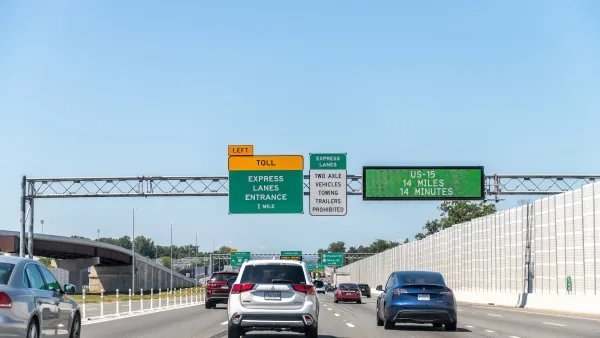
Congestion Costing Reality Check, Part 2: A congestion costing critique
There are good reasons to be skeptical of highway industry claims that traffic congestion is a growing problem. Their analysis is often incomplete and biased. Let’s pull back the curtain on some major congestion cost studies.
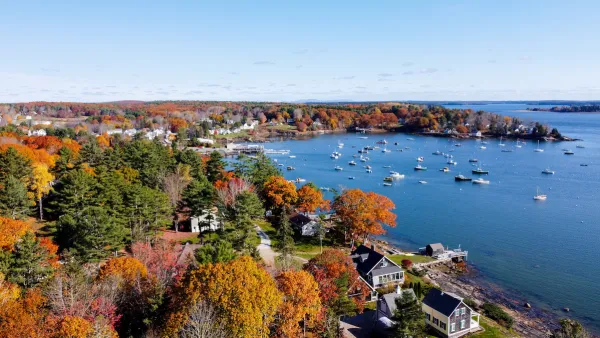
Maine Law Promotes Smart Growth
New state legislation encourages cities to plan around ‘smart growth’ principles to preserve farmland and open space, and use infill development to build more housing.

Planetizen Federal Action Tracker
A weekly monitor of how Trump’s orders and actions are impacting planners and planning in America.

‘Going backwards:’ Baltimore mayor, students rally against state's transit funding plan
Maryland's proposed six-year plan provides no funding for Baltimore’s BMORE bus program and reduces its road maintenance funding.

Detroit to transform waterfront with $2.2 billion investment
Developers will convert about 18 acres of unused parking lot space into civic spaces.

Newsom vetoes high-speed rail supervision bill after agency receives condemnatory audit
The audit found the CHSRA approved almost $600,000 in unallowable travel expenses.

Nation sees first electric plane-boat hybrid take off in public demo
The Viceroy Seaglider can fly at speeds of 180mph for up to 180 miles.

One of nation’s poorest counties to receive $6 billion data center
The developers estimate the project will create 200 permanent jobs and 1,000 temporary construction jobs.

FREE Course: Walkable City 1: Why Walkability?
After describing his path towards focusing on walkability as the essence of good planning, Jeff Speck marches through his five principal reasons for making more walkable places.
Reinventing Malls: Planning Alchemy—Turning Gray Fields Into Gold
The course focuses on the opportunities and imperatives that shape reinvention of mall sites.

City of Thousand Oaks
City of Wisconsin Rapids
Harvard University Graduate School of Design
The Architects Foundation
University of Cincinnati Online
Northern Illinois Transit Authority (NITA)
The Pocatello Development Authority
The Urban Renewal Agency of the City of Pocatello