Planners in Saskatchewan, Canada encouraged the Schewes to build solar panels on their roof and go off the grid. Then they okayed a home next door that overshadowed the Schewes. Do homeowners have a 'right to light'?


""This was going to be our retirement home," said Annette Schewe, who moved with her husband Les into the home in Aberdeen, Saskatchewan, about 35 kilometres northeast of Saskatoon, on April 14. "We just can't believe this is happening. I can't tell you the mental anguish it's had on both of us."
A closet is filled with 12 large batteries that store the energy produced by the massive solar panels on the south-sloped roof.The sun powers and heats the entire home, including its ceramic floors. The house is also linked to the town's power grid as a backup source.
The trouble is, a concrete foundation for what's to be a two-storey home - looming 10 feet higher than the Schewes' - has been built on a 25-foot lot behind them.
"It's our own stupidity. We didn't get a survey done when we bought the house," said Schewe, who assumed the lot was too small for any structures."
Read the full story: Owners of solar-powered home left in the dark

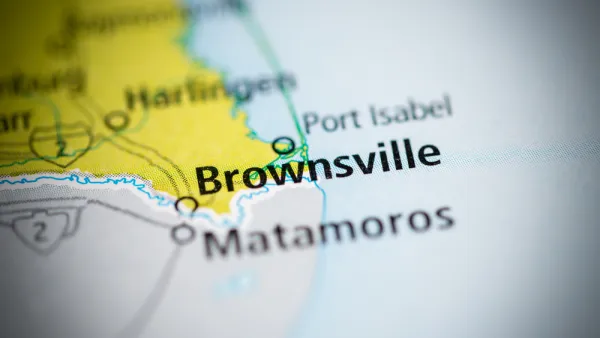
Border Town Removes Licensing Barrier to Encourage Solar
On the U.S.-Mexico border just west of the Gulf of Mexico, Brownsville looks to take advantage of its sunny territory.
New Reports Show Wind Power Growing at Full Sail
Two new reports published by the Department of Energy detail the remarkable rise in wind power in the United States. Energy derived from the wind can now power more than 15 millions homes.
How Voters in Ohio Could Determine the Future of California's Energy Industry
California has relied more on federal subsidies to develop its growing alternative energy industry than any other state in the country. With Mitt Romney seeking to trim such aid, the upcoming election will determine the fate of state energy policy.

Planetizen Federal Action Tracker
A weekly monitor of how Trump’s orders and actions are impacting planners and planning in America.

‘Going backwards:’ Baltimore mayor, students rally against state's transit funding plan
Maryland's proposed six-year plan provides no funding for Baltimore’s BMORE bus program and reduces its road maintenance funding.

Detroit to transform waterfront with $2.2 billion investment
Developers will convert about 18 acres of unused parking lot space into civic spaces.

Newsom vetoes high-speed rail supervision bill after agency receives condemnatory audit
The audit found the CHSRA approved almost $600,000 in unallowable travel expenses.

Nation sees first electric plane-boat hybrid take off in public demo
The Viceroy Seaglider can fly at speeds of 180mph for up to 180 miles.

One of nation’s poorest counties to receive $6 billion data center
The developers estimate the project will create 200 permanent jobs and 1,000 temporary construction jobs.

FREE Course: Walkable City 1: Why Walkability?
After describing his path towards focusing on walkability as the essence of good planning, Jeff Speck marches through his five principal reasons for making more walkable places.
Reinventing Malls: Planning Alchemy—Turning Gray Fields Into Gold
The course focuses on the opportunities and imperatives that shape reinvention of mall sites.

City of Thousand Oaks
City of Wisconsin Rapids
Harvard University Graduate School of Design
The Architects Foundation
University of Cincinnati Online
Northern Illinois Transit Authority (NITA)
The Pocatello Development Authority
The Urban Renewal Agency of the City of Pocatello