California has relied more on federal subsidies to develop its growing alternative energy industry than any other state in the country. With Mitt Romney seeking to trim such aid, the upcoming election will determine the fate of state energy policy.


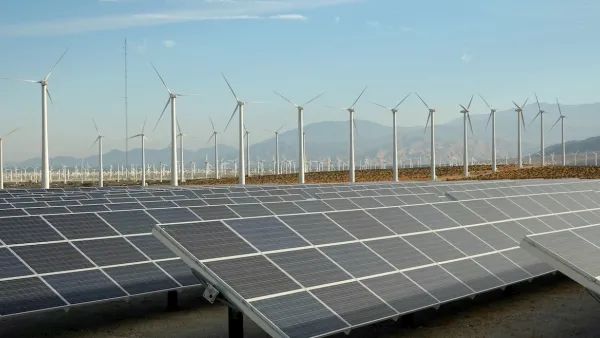
Renewable energy has been one of the few economic bright spots in a state hit hard by the collapse of the housing bubble, with 170,000 of California's jobs tied to the green economy and a quarter of all venture capital spent in the state tied to clean energy, reports
"California's policies are fueling the
movement toward cleaner electricity," says Halper, "but many experts say the state
can't go it alone. Federal subsidies are the backbone of these efforts
and have helped draw private investment."
With general opposition to such aid a cornerstone of the Romney campaign, "[t]he prospect of a Romney victory in November is a source of
consternation among players large and small in California's rapidly
growing renewable-energy industry."
"The
election will have a huge effect on California energy policy," said
Severin Borenstein, co-director of the Energy Institute at the UC Berkeley
Haas School of Business. "If the federal support dries up, a lot of
this will come to a halt. It is critical to the cost-competitiveness of a
lot of renewable energy here."
FULL STORY: California's renewable-energy plans may hinge on presidential race

New Reports Show Wind Power Growing at Full Sail
Two new reports published by the Department of Energy detail the remarkable rise in wind power in the United States. Energy derived from the wind can now power more than 15 millions homes.
California’s Shift to Renewables: Successes and Challenges
The state aims to run on 100 percent renewable energy by 2045.

Zoning Stands in the Way of Renewable Energy
Renewable energy is cheap as ever, but zoning isn’t keeping up with the market.

Planetizen Federal Action Tracker
A weekly monitor of how Trump’s orders and actions are impacting planners and planning in America.

The state-sanctioned urbicide of Austin
People don’t kill cities. Freeways do.

US to reduce Colorado River water deliveries to Mexico
A new Colorado Treaty amendment reduces Mexico’s Colorado River water allocation by 250,000 acre feet.

5 New England states march closer to 800 megawatt wind energy project
Securing federal approval for the project may be complicated under the Trump administration, which has historically been hostile towards domestic wind power.

Baltimore to break ground on $50 million Transit Priority Project
The project will bring faster bus trips, safer streets and better bike connections to Baltimore.

Airbnb launches $250 million 'last-dollar financing' housing accelerator, makes first investment in Austin
The company will put $6.4 million towards affordable housing development in Texas’ capital.

FREE Course: Walkable City 1: Why Walkability?
After describing his path towards focusing on walkability as the essence of good planning, Jeff Speck marches through his five principal reasons for making more walkable places.
Reinventing Malls: Planning Alchemy—Turning Gray Fields Into Gold
The course focuses on the opportunities and imperatives that shape reinvention of mall sites.

Eagle County Government
Harvard University Graduate School of Design
Nashville Planning Department
The Architects Foundation
University of Cincinnati Online
The Pocatello Development Authority
The Urban Renewal Agency of the City of Pocatello
Journal of the American Planning Association