Though there is some resistance to change, many cities in North America have their sights on undoing the damage of the last 50 years of suburban development.


"Ontario and the Greater Toronto Area, indeed all of North America, will have to spend the next 50 years dealing with the problems created during the last 50 years."
"The process will be excruciatingly difficult, but failure is not an option. Every day it becomes clearer and clearer that the suburban model so beloved by Americans and Canadians doesn't work. In fact, the need for change has reached a critical moment, a point of no return."
"Still, there's enormous pressure to keep our collective head buried in the sand and continue pretending that everything's okay. So many have so much invested in suburbia and all it entails, there are good reasons to wonder whether we can rise to the challenge."
"But there's no shortage of plans; from Mississauga to Markham, suburban cities are trying to change their way, smarten up and grow intelligently."
Read the full story: A planning headache, 50 years in the making
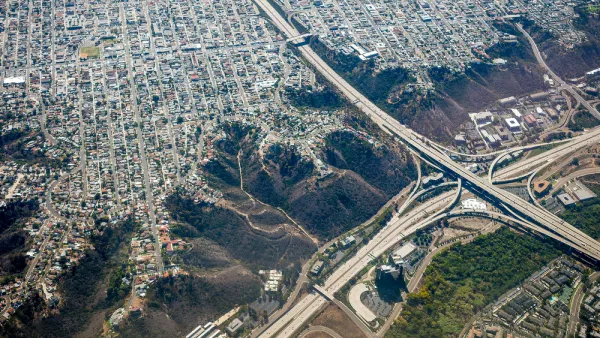
Carbon Offsets for Suburban Developments? The Courts Could Decide
The county of San Diego wants sprawling suburban developments to buy carbon offsets, billing the idea as a fix to the region's housing affordability crisis.
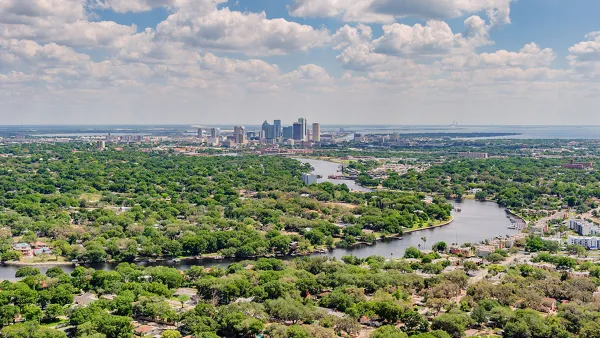
With Florida Sprawl Comes Infrastructure and Public Safety Concerns
Some local officials in unincorporated Hillsborough County, outside of Tampa, Florida, are trying to take local residents up to the consequences of unmitigated sprawl.
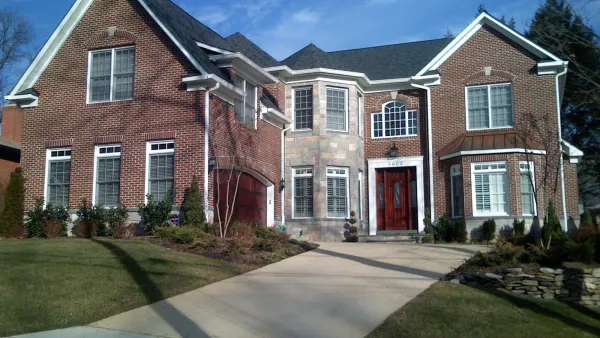
More McMansions: Upscaling Suburbia
According to this article, the market forces behind large home construction are alive and well. In a process of suburban gentrification, developers purchase older, smaller homes and build "McMansions" in their place.

Planetizen Federal Action Tracker
A weekly monitor of how Trump’s orders and actions are impacting planners and planning in America.

California plans to bury El Niño’s downpour
If the state plays its cards right, it may be able to store a billion acre-feet of El Niño’s water in aquifers.

Desperate measures: Advocates weigh draining Lake Powell to fill Colorado River
Draining the reservoir could reduce evaporation losses by a couple hundred thousand acre-feet.

Voters choose public transit, approve $31 billion in funding
Approved projects include $101,000 for reduced-cost transit in a Michigan town and $14 billion for regional transit in the San Francisco Bay Area.

Study reveals best places in the U.S. for cycling, walking
New research from Streetlight Data examines bicycle and pedestrian miles per capita in the 100 largest U.S. cities by population.

Los Angeles just elected an urban planner as its mayor
Transportation analysts are optimistic that Raman will be more aggressive in addressing transit issues than Bass.

FREE Course: Walkable City 1: Why Walkability?
After describing his path towards focusing on walkability as the essence of good planning, Jeff Speck marches through his five principal reasons for making more walkable places.
Reinventing Malls: Planning Alchemy—Turning Gray Fields Into Gold
The course focuses on the opportunities and imperatives that shape reinvention of mall sites.

City of Rosemead
Rutgers University, Edward J. Bloustein School of Planning and Public Policy
One Hundred Miles
University of Michigan School for Environment and Sustainability (SEAS)
Hunter College, City University of New York (CUNY)
The Architects Foundation
City of Cambridge
Montrose County
The Pocatello Development Authority