BART, the region's rail transit agency, is negotiating with a private company to install a wireless network that would allow riders to check email and access the Internet.


"The San Francisco Bay Area Rapid Transit District, is negotiating with a startup for a Wi-Fi network that would provide fast Internet access to riders throughout its 104-mile (167 kilometers) regional rail system.
BART would not pay anything for the network, which would be paid for by rider subscriptions and advertising, according to Wi-Fi Rail, a company based near Sacramento that says it has four patents pending on its Wi-Fi technology for predetermined paths such as railways and roads.
Municipal wireless networks have had a hard time financially, but public transit offers a daily captive audience that is growing as gasoline prices rise. Wi-Fi Rail estimates that within three years, as many as 20 percent of BART's 180,000 regular riders will subscribe to the service, according to Michael Cromar, chief financial officer of Wi-Fi Rail.
Wi-Fi Rail has been testing the system for about a year on a stretch of track in downtown San Francisco as well as on an outdoor test track. More than 9,000 people have signed up to use the system and have signed on more than 42,000 times, Cromar said."
Read the full story: SF's BART in Talks for Full Wi-Fi Rollout
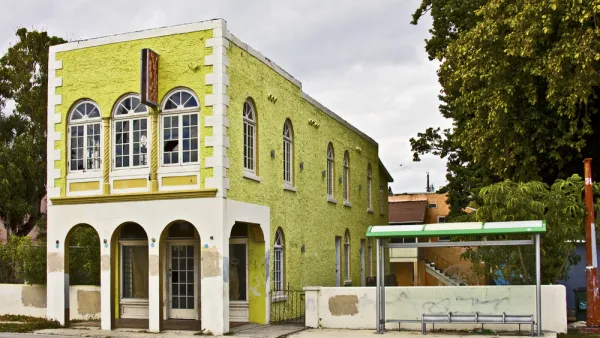
It's Bus Shelters or Wi-Fi in Miami, But Not Both
The company that pays to build and maintain bus shelters in Miami-Dade County isn't happy about plans to bring in another company to build wi-fi kiosks at transit stops.
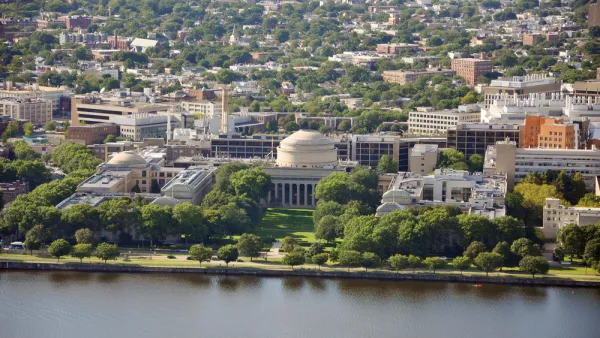
Free Wi-Fi Network Launches Around Kendall Square in Cambridge
It wasn't easy, but a broad swath of Cambridge, Massachusetts will now have free Wi-Fi Internet. The effort required a partnership between several institutions and organizations to come to fruition.
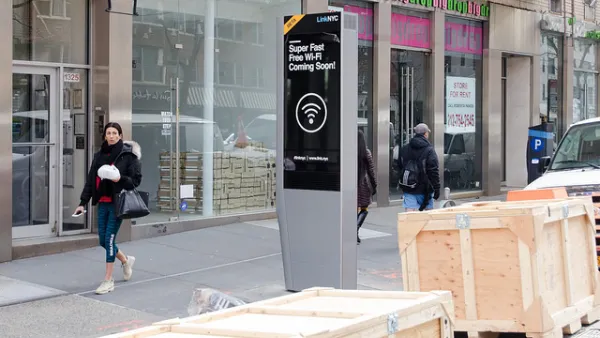
No More Browsing the Internet at LinkNYC WiFi Kiosks
A cynical person might say that this is why we can't have nice things.

Desperate measures: Advocates weigh draining Lake Powell to fill Colorado River
Draining the reservoir could reduce evaporation losses by a couple hundred thousand acre-feet.

Eastern Nebraska is running out of electricity
Data centers and electrification are straining eastern Nebraska’s grid, throttling economic development.

Malls are becoming the midtowns of the future
Mall and office park redevelopments are a generational opportunity to create new nodes of urbanity.

NYC breaks ground on anti-flooding infrastructure project
New York City's new system will reduce stormwater flows to local sewers by 90%.

One Kentucky town’s secret to affordable housing
The Smoketown Community Land Trust has already built seven affordable homes for community members.

Houston gains petal-shaped cooling infrastructure to make streets more ‘delightful’
The city has installed the pavilions along 15 blocks in Houston.

FREE Course: Walkable City 1: Why Walkability?
After describing his path towards focusing on walkability as the essence of good planning, Jeff Speck marches through his five principal reasons for making more walkable places.
Reinventing Malls: Planning Alchemy—Turning Gray Fields Into Gold
The course focuses on the opportunities and imperatives that shape reinvention of mall sites.

City of Rosemead
Rutgers University, Edward J. Bloustein School of Planning and Public Policy
One Hundred Miles
University of Michigan School for Environment and Sustainability (SEAS)
Hunter College, City University of New York (CUNY)
The Architects Foundation
City of Cambridge
Montrose County
The Pocatello Development Authority