UCLA Professor Donald Shoup has criss-crossed the nation lecturing about the many benefits from market pricing of parking -- but he says too many cities are still making decisions based on politics.


"..[P]lanning departments always insist that developers include a minimum number of parking spots[, but] Shoup doesn't have much respect for the ability of urban planners to determine how many spots are necessary. Since planners don't learn anything about parking in school, they learn it on the job, but because parking is so political – NIMBY neighbours constantly squawk at the thought of anyone parking on their street – what they really learn is the politics of parking.
"Planning will be looked back on as worse than phrenology, because phrenology didn't do any harm," he said, referring to the nineteenth-century pseudoscience that claimed to be able to determine character and other traits from the size and shape of a cranium.
The harm abundant free parking does feeds on itself: All that land dedicated to parking, which often sits empty for much of the day, increases sprawl, and that sprawl makes alternatives such as public transit and walking less feasible, which forces more people into cars, which increases the need for more parking."
"Although ideas seem like so much common sense, Shoup still feels they're underappreciated...Still, he knows some planners are curious because he receives more invitations to speak than he can accept. Cities pay him large lecture fees, fly him first class and then wine him and dine him, but they don't all do what he suggests because parking is so political."
Read the full story: How the politics of parking can defile a city

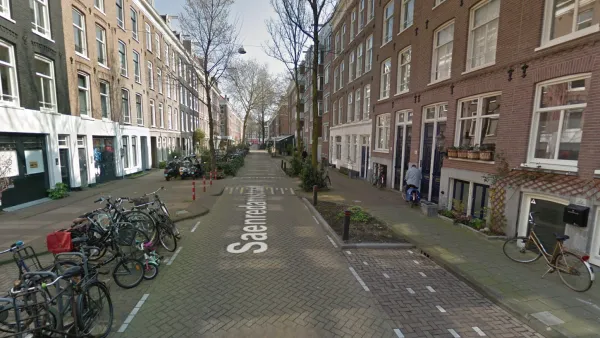
Watch: How to Remove Thousands of Parking Spaces
What the city of Amsterdam will gain by removing cars from on-street parking space.
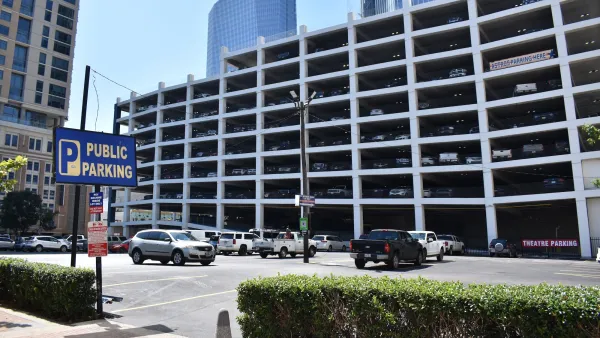
Downtown Houston parking garage will take up an entire block
The garage will connect to the Houston Center retail complex, a 4.6-million square foot office and commercial site.
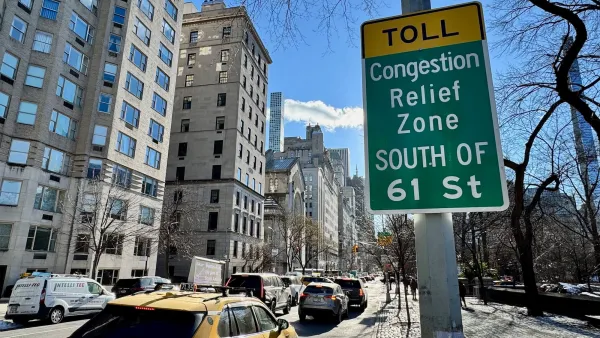
Study: NYC congestion pricing didn't impact parking demand
A city report shows that free parking, not congestion pricing, is the main driver of limited parking demand in the city.

Planetizen Federal Action Tracker
A weekly monitor of how Trump’s orders and actions are impacting planners and planning in America.

Data reveals that NYC’s bet on congestion pricing has paid off
After almost two years of the program, reports show positive impacts on traffic and air quality and no disruptions to parking.

HUD modernizes 50-year-old manufactured housing framework
The Next Generation Manufactured Housing Action Plan establishes new energy-efficiency standards for manufactured homes, and new guidelines for anchoring them.

Chicago city vehicles are on the hunt for illegally-parked cars
Cameras on the vehicles can automatically issue tickets to drivers who park their cars in bus or bike lanes.

Small single-family homes are illegal in most of MA. Voters can change that
Most land zoned for single-family housing in Massachusetts requires at least 40,000 square feet of land per house.

Public steps inside U.S.’s first battery-powered train
Metra’s groundbreaking train feature modern seats and a futuristic battery car.

FREE Course: Walkable City 1: Why Walkability?
After describing his path towards focusing on walkability as the essence of good planning, Jeff Speck marches through his five principal reasons for making more walkable places.
Reinventing Malls: Planning Alchemy—Turning Gray Fields Into Gold
The course focuses on the opportunities and imperatives that shape reinvention of mall sites.

One Hundred Miles
County of Mendocino
planning NEXT
The Architects Foundation
University of Cincinnati Online
Montrose County
Northern Illinois Transit Authority (NITA)
The Pocatello Development Authority