This commentary from the Austin American Statesman argues that the city's aim to become the country's most livable city is undercut by its low number of community gardens.


"The laundry list of green initiatives adopted by the City of Austin is a tribute to Austin's commitment to becoming the most livable city in the country. Green oases in the middle of urban areas, community gardens are a necessary part of any livable city. Located in areas easily accessible to residents, these public spaces offer land on which neighbors work together to grow their own food, thereby reducing fuel consumption and pollution emitted by trucking produce across the country."
"Austin is home to 12 community gardens. For a city the size of Austin, this number is well below that of urban areas of similar size. In Portland, Ore., the Parks and Recreation department operates 30 community gardens with assistance from the Friends of Portland Community Gardens. Seattle's Department of Neighborhoods P-Patch Program works with the P-Patch Trust to support the efforts of 54 community gardens."
"Unlike the public programming that supports community gardening in Portland and Seattle, the process for starting a garden in Austin is cumbersome and costly. Though the city does permit groups to use public land for gardens for a nominal annual fee, only five community gardens reside on public property."
FULL STORY: Banks: What's so livable about a city without community gardens?

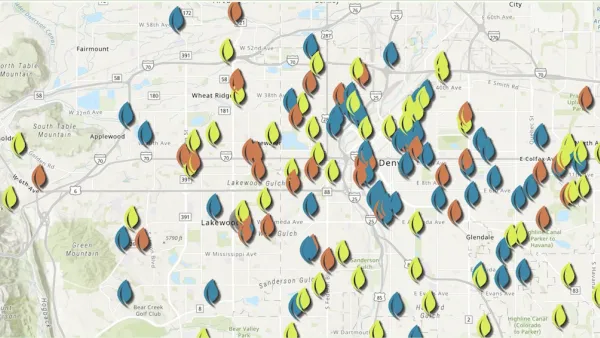
Denver, Colorado Bursts with Dozens of 'Food Forests'
Denver Urban Gardens is building green spaces that clean the air and offer free, fresh fruit to neighbors.
Guerilla Urbanism: Small Interventions, Big Impact
Citizen-led projects can lead to broader changes — if cities will listen.
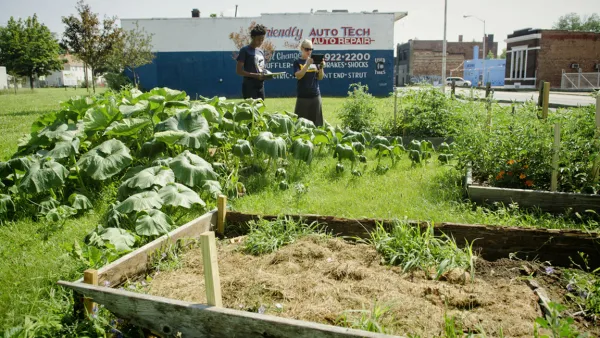
How Nonprofits Are Shaping Sustainable Cities
Learn about nonprofits' pivotal role in urban sustainability, from policy advocacy to launching eco-initiatives that are transforming cityscapes for the better.

Planetizen Federal Action Tracker
A weekly monitor of how Trump’s orders and actions are impacting planners and planning in America.

The state-sanctioned urbicide of Austin
People don’t kill cities. Freeways do.

US to reduce Colorado River water deliveries to Mexico
A new Colorado Treaty amendment reduces Mexico’s Colorado River water allocation by 250,000 acre feet.

5 New England states march closer to 800 megawatt wind energy project
Securing federal approval for the project may be complicated under the Trump administration, which has historically been hostile towards domestic wind power.

Baltimore to break ground on $50 million Transit Priority Project
The project will bring faster bus trips, safer streets and better bike connections to Baltimore.

Airbnb launches $250 million 'last-dollar financing' housing accelerator, makes first investment in Austin
The company will put $6.4 million towards affordable housing development in Texas’ capital.

FREE Course: Walkable City 1: Why Walkability?
After describing his path towards focusing on walkability as the essence of good planning, Jeff Speck marches through his five principal reasons for making more walkable places.
Reinventing Malls: Planning Alchemy—Turning Gray Fields Into Gold
The course focuses on the opportunities and imperatives that shape reinvention of mall sites.

Eagle County Government
Harvard University Graduate School of Design
Nashville Planning Department
The Architects Foundation
University of Cincinnati Online
The Pocatello Development Authority
The Urban Renewal Agency of the City of Pocatello
Journal of the American Planning Association