Private investors and developers must come forward and plan around proposed rail lines in Detroit if there is any hope of transit materializing, according to this editorial.


"Anonymously and behind the scenes, they have worked for more than a year on a plan separate from one the city unveiled this week. The sooner their efforts become public, the better. The city and the entire region need transparency to figure out how this proposal -- using private money to build light rail from Hart Plaza to Grand Boulevard -- can mesh with a larger plan being worked out by the Regional Transit Coordinating Council and its CEO, John Hertel."
"Unless these developers show their hand, they will be perceived, unfairly, as trying to compete with or even undermine Detroit's plan."
"However, no one should believe the city's plan is a done deal. To raise hopes again on transit, and then dash them, would be lethal for southeast Michigan, which desperately needs a success after decades of high-profile flops."
Read the full story: All aboveboard on light-rail plans!


Development Near Dallas Light Rail has ‘Directly Created’ Over 5,000 Jobs, Generated $18 Billion Over 25 Years
Transit-oriented development has spurred billions in economic activity along DART light rail.
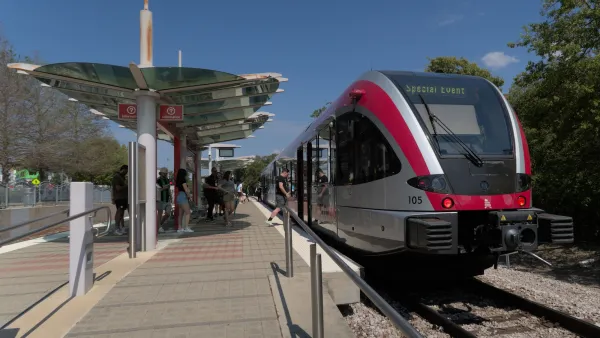
Austin's Project Connect has shrunk to less than half its proposed length — at a higher cost
A highly anticipated light rail project is quickly diminishing in scope as costs soar.
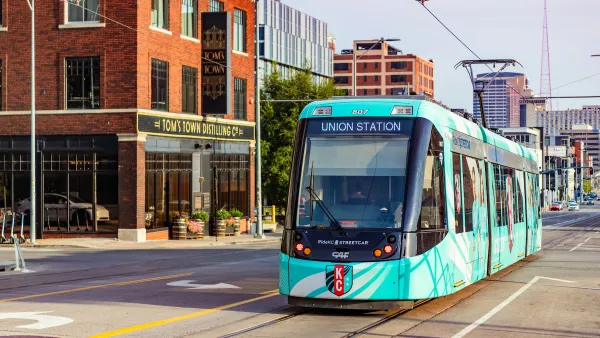
Kansas City completes riverfront streetcar extension
The streetcar line carries a third of the region's transit riders.

Planetizen Federal Action Tracker
A weekly monitor of how Trump’s orders and actions are impacting planners and planning in America.

‘Going backwards:’ Baltimore mayor, students rally against state's transit funding plan
Maryland's proposed six-year plan provides no funding for Baltimore’s BMORE bus program and reduces its road maintenance funding.

Detroit to transform waterfront with $2.2 billion investment
Developers will convert about 18 acres of unused parking lot space into civic spaces.

Newsom vetoes high-speed rail supervision bill after agency receives condemnatory audit
The audit found the CHSRA approved almost $600,000 in unallowable travel expenses.

Nation sees first electric plane-boat hybrid take off in public demo
The Viceroy Seaglider can fly at speeds of 180mph for up to 180 miles.

One of nation’s poorest counties to receive $6 billion data center
The developers estimate the project will create 200 permanent jobs and 1,000 temporary construction jobs.

FREE Course: Walkable City 1: Why Walkability?
After describing his path towards focusing on walkability as the essence of good planning, Jeff Speck marches through his five principal reasons for making more walkable places.
Reinventing Malls: Planning Alchemy—Turning Gray Fields Into Gold
The course focuses on the opportunities and imperatives that shape reinvention of mall sites.

City of Thousand Oaks
City of Wisconsin Rapids
Harvard University Graduate School of Design
The Architects Foundation
University of Cincinnati Online
Northern Illinois Transit Authority (NITA)
The Pocatello Development Authority
The Urban Renewal Agency of the City of Pocatello