Avoiding traffic congestion may soon be as easy as surfing the web, thanks to new web software that maps out congestion and calculates the best and most efficient driving routes.


"The new service's software technology, called Clearflow, was developed over the last five years by a group of artificial-intelligence researchers at the company's Microsoft Research laboratories. It is an ambitious attempt to apply machine-learning techniques to the problem of traffic congestion. The system is intended to reflect the complex traffic interactions that occur as traffic backs up on freeways and spills over onto city streets."
"The Clearflow system will be freely available as part of the company's Live.com site (maps.live.com) for 72 cities in the United States. Microsoft says it will give drivers alternative route information that is more accurate and attuned to current traffic patterns on both freeways and side streets."
"The new service will on occasion plan routes that might not be intuitive to a driver. For example, in some cases Clearflow will compute that a trip will be faster if a driver stays on a crowded highway, rather than taking a detour, because side streets are even more backed up by cars that have fled the original traffic jam."
"The new service is part of Microsoft's efforts to catch up with Google, the dominant search engine provider, by offering an attractive array of related services surrounding its Live search service."
Read the full story: Microsoft Introduces Tool for Avoiding Traffic Jams

San Francisco Resets the Bar with New Online Approvals Database
The online documentation of the San Francisco Planning Department's approval process received a huge upgrade.
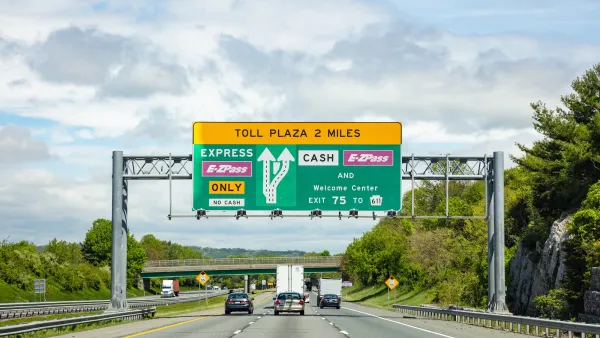
What do We Want, Speed or Affordability?
Conventional planning assumes that travellers want to save time, but evidence indicates that they usually prefer to save money. How can planning better reflect these preferences?
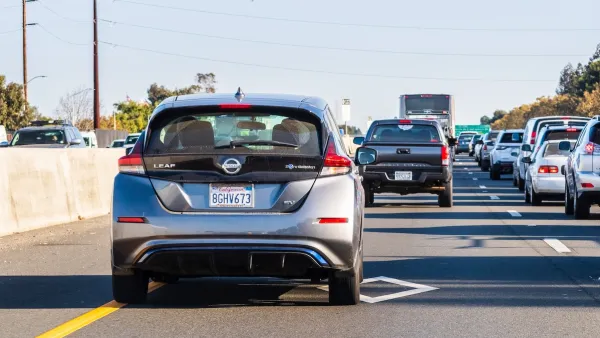
When Carpool Lanes Cause Mayhem
A newly widened Bay Area freeway serves as a reminder of the futility of HOV lanes. There are better ways to manage and mitigate traffic.

Amtrak, CN end decades-long dispute with eight-year agreement
The new operating agreement establishes an updated framework for the companies to work together, including processes to resolve disputes.

Judges permit Denver to divert 77,000 acre feet from the Colorado River for reservoir expansion
Overuse and climate change have caused the Colorado River’s water levels to plummet.

Nation's most wind-powered state turns to coal as data centers increase energy demand
For the first time in decades, Iowa has increased its generation of coal power.

Boston has spent millions making the Green Line more accessible — and there’s no end in sight
While the city has invested millions into expanding and adding platforms to the Green Line to make it more accessible, new train cars set to arrive next year will be too tall for disabled passengers to board without raising the current platforms.

Idaho may see an 18% drop in federal surface transit funding — the largest estimated cut in the US
Transit systems in rural communities are much more reliant on federal funding to provide their services.

How ‘post-disaster gentrification’ alters neighborhoods after natural calamities
After hurricanes, fires or other calamities, the original residents of a community are often replaced by younger, wealthier residents.

FREE Course: Walkable City 1: Why Walkability?
After describing his path towards focusing on walkability as the essence of good planning, Jeff Speck marches through his five principal reasons for making more walkable places.
Reinventing Malls: Planning Alchemy—Turning Gray Fields Into Gold
The course focuses on the opportunities and imperatives that shape reinvention of mall sites.

City of Wisconsin Rapids
Harvard University Graduate School of Design
KFH Group Inc.
The Architects Foundation
University of Cincinnati Online
The Pocatello Development Authority
The Urban Renewal Agency of the City of Pocatello