Urban issues and metropolitan policy are noticeably absent from the platforms of the three main presidential candidates.


"There are three times as many urbanites in America as country folk, yet you wouldn't know it listening to the three main presidential candidates, or perusing their Web sites. Instead, you might come away thinking the United States is a collection of Norman Rockwell small towns surrounded by picture-book farms.
For Democrats Hillary Rodham Clinton and Barack Obama, the plight of rural farm families ranks among the urgent crises facing America. Republican John McCain frets about veterans, the unborn, outer space. But you won't hear much about aging cities on Earth fighting to keep their downtowns alive and their overcrowded commuter buses on the road. Cities just don't figure in the political imagination anymore."
"Supposedly, the reason that candidates are loath to mention the C-word is that the Suburban Nation of grill-obsessed dads and van-driving moms dominates the electorate. Since it's assumed that cities will vote Democratic no matter how badly they're treated, there's no percentage for either party to talk up things like pocket parks, waterfront development, or - can you imagine? - wasteful sprawl. Besides, the discussion will only alienate voters who still associate an urban platform with cities in flames."
Read the full story: Changing Skyline: Campaigns ignoring city issues

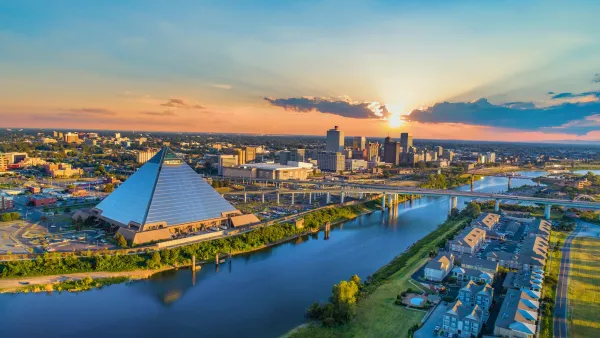
15 US cities and their global namesakes
Hundreds of cities around the United States are named after other places. We tour a few of them.
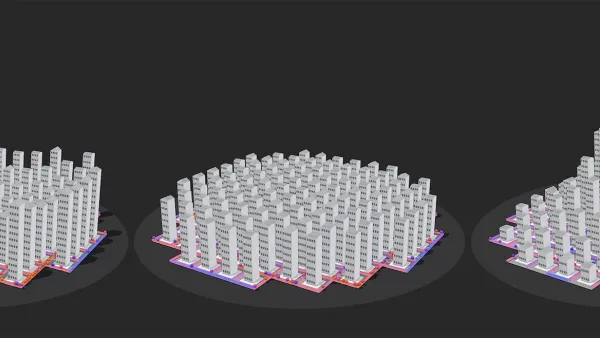
New study visualizes how city shapes impact mobility
Whether circular or linear, the shape and layout of cities affects how their residents get around.
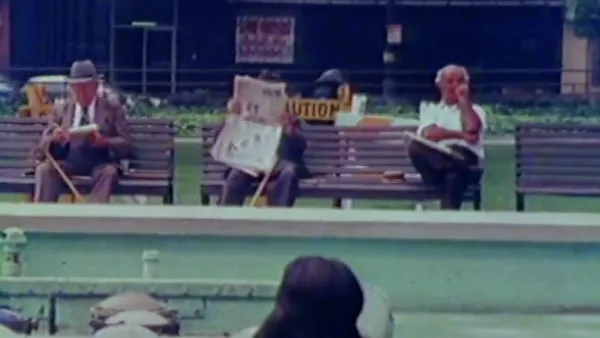
William Whyte’s Seminal Urban Film Restored
‘The Social Life of Small Urban Spaces’ changed the way planners view public space and ushered in a new way of understanding urban patterns.

Planetizen Federal Action Tracker
A weekly monitor of how Trump’s orders and actions are impacting planners and planning in America.

California plans to bury El Niño’s downpour
If the state plays its cards right, it may be able to store a billion acre-feet of El Niño’s water in aquifers.

Desperate measures: Advocates weigh draining Lake Powell to fill Colorado River
Draining the reservoir could reduce evaporation losses by a couple hundred thousand acre-feet.

How a Chicago-sized wind farm beat the odds and powered on
The project spanned five presidential administrations and a standoff with a U.S. military base.

MTA gives itself 30 days to transform pit into basketball court
The site has been under construction since 2022; the city originally estimated it would finish the court in 2024.

Non-stop party: Chicago voters weigh permanent festival grounds
A stable place for bleachers, stages and drainage may streamline the setup and teardown of large events.

FREE Course: Walkable City 1: Why Walkability?
After describing his path towards focusing on walkability as the essence of good planning, Jeff Speck marches through his five principal reasons for making more walkable places.
Reinventing Malls: Planning Alchemy—Turning Gray Fields Into Gold
The course focuses on the opportunities and imperatives that shape reinvention of mall sites.

City of Rosemead
Rutgers University, Edward J. Bloustein School of Planning and Public Policy
One Hundred Miles
Hunter College, City University of New York (CUNY)
The Architects Foundation
University of Cincinnati Online
City of Cambridge
Montrose County
The Pocatello Development Authority