New York City officials hope that a recently approved rezoning for Harlem will revive the neighborhood.


"Michael Bloomberg, New York's mayor, hopes to change this with the most sweeping rezoning of 125th Street since Kennedy was president. After working on the proposal for four years, the city's planning commission voted on March 10th to rezone some 24 blocks in and around 125th Street. The rezoning will allow at least one high-rise and more than 2,000 apartments as well as hotels, nightclubs and galleries. For the first time, it will set height limits and establish a plan for future development. It is hoped that the plan will create a cultural renaissance in Harlem as well as 8,000 badly needed jobs."
"Not everyone is happy. Some 70 small businesses could be forced to close and some historic buildings could be demolished. Critics fear long-term residents will be priced out of their homes. Gentrification over the past decade has certainly contributed to the increased cost of housing in Harlem. Others fear the neighbourhood's character will be irreparably changed because of luxury housing. The city's planning commission thinks the fears are unfounded, as 90% of the housing is rent-protected."
Read the full story: Harlem reborn


How Cities Are Resisting State Efforts To Increase Density
Cities are attempting to wrest back local control over land use and zoning via some ingenious—and sometimes disingenuous—strategies.
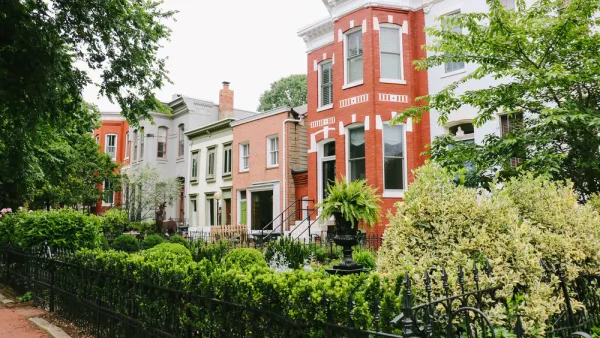
Balancing Aesthetics and Affordability
Policies too narrowly focused on design can drive up the cost of construction and prevent the development of affordable housing.
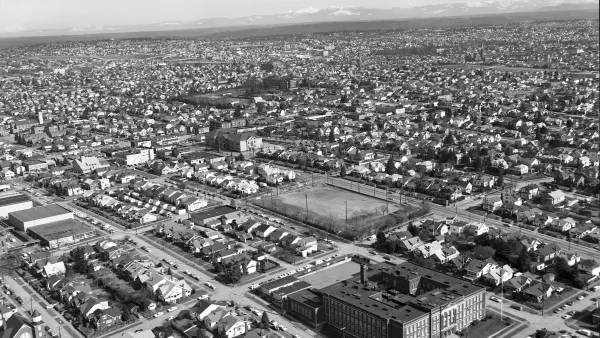
Historic Preservation as a Tool of Exclusion
The push for historic preservation districts often amounts to exclusionary zoning that exacerbates the housing affordability crisis.

Planetizen Federal Action Tracker
A weekly monitor of how Trump’s orders and actions are impacting planners and planning in America.

California plans to bury El Niño’s downpour
If the state plays its cards right, it may be able to store a billion acre-feet of El Niño’s water in aquifers.

Chicago breaks ground on $3 billion megadevelopment
The new neighborhood, titled Foundry Park, will one day host 3,700 residences.

Satanic Place Names
From streams and lakes to valleys and canyons, I mapped more than 1,000 places named after the Devil.

California High-Speed Rail Authority CEO resigns after $600,000 scandal
Under Ian Choudri, the authority used taxpayer dollars to fund first class flights and trips to nightclubs.

Want to study the Missouri River? Soon, you may need unanimous approval from 10 states
Legislation would require 10 governors’ permission to study or build projects moving water outside the basin.

FREE Course: Walkable City 1: Why Walkability?
After describing his path towards focusing on walkability as the essence of good planning, Jeff Speck marches through his five principal reasons for making more walkable places.
Reinventing Malls: Planning Alchemy—Turning Gray Fields Into Gold
The course focuses on the opportunities and imperatives that shape reinvention of mall sites.

City of Rosemead
Rutgers University, Edward J. Bloustein School of Planning and Public Policy
One Hundred Miles
Hunter College, City University of New York (CUNY)
The Architects Foundation
University of Cincinnati Online
City of Cambridge
Montrose County
The Pocatello Development Authority