A new report from a non-profit, non-partisan California think tank finds that immigrants, both legal and undocumented, have lower rates of incarceration and criminal activity in California than the U.S.-born population.


"The report by the Public Policy Institute of California, released Monday (Feb. 25), also suggests the foreign-born population, which makes up more than a third of the state's adults, plays a disproportionately smaller role in serious crime.
"Crime, Corrections, and California: What Does Immigration Have to Do with It?" gives one of the clearest glimpses yet into the impact of immigrants and immigration on the state's justice system.
It also aims to dispel the perception that cities with large foreign-born populations are criminal hot beds, with several California cities showing a dip in police activity amid recent immigration waves."
"The type of people who are immigrating are less likely to commit crimes because they're here for jobs," said Kristin Butcher, a professor at Wellesley College and a fellow for the non-partisan policy research group, and one of the report's co-authors."
"Among their findings:
• Foreign-born men make up about 35 percent of the state's adult male population, but they are roughly 17 percent of the state's overall prison inmates.
• U.S.-born men are jailed in state prisons at a rate more than three times higher than foreign-born men and are 10 times more likely to land behind bars."
However, a national Hispanic website reported last year that "according to a new report by The Sentencing Project, Hispanics are incarcerated twice as often as non Hispanic whites. The report, Uneven Justice: State Rates of Incarceration by Race and Ethnicity, examines the racial and ethnic dynamics of incarceration in the U.S..."
Thanks to Loren Spiekerman
Read the full story: Migrants unlikely to end up in prison; REPORT LINKS FEW FOREIGN-BORN TO CRIME
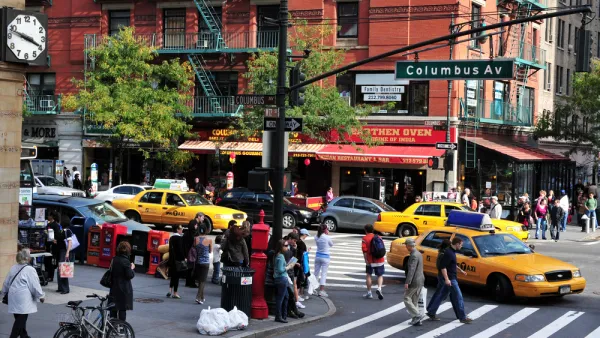
Falling Crime Rates Have Changed American Cities
The drop in crime in cities has extended American life expectancies, especially those of black men, and brought more wealthy people into urban areas.

Leaving Chicago
Why are folks fleeing from the city and the state in record numbers? Is domestic migration to blame for the Chicago region's population loss last year of over 6,000 and the state's loss of over 22,000 people?
California's Moderate Population Growth: The New Normal
New demographic data released Dec. 11 by the state Department of Finance shows the state grew by 335,000 people to 38.5 million, nearly one percent, despite a declining birth rate. While the most in six years, the growth rate has slowed overall.

Washington state to charge fee to drivers with fuel-efficient cars
Revenue from the fee will go towards supporting the state’s highways.

Illinois considers spending $1 billion in taxpayer money on data center
A quantum computing campus and data center are currently under construction in Chicago.

Trump to blast ‘hydrocarbon highway’ through ‘world’s longest art gallery’
Environmental and historic preservation groups are suing to stop the project.

NYC, state sue feds over mixed-immigration-status housing assistance rule
The state’s lawsuit argues that the rule change violates the Administrative Procedure Act.

Michigan to turn neighborhood into virtual power plant
Residents will soon be able to divert their excess energy to the grid in exchange for compensation.

Data center, mining project swarm to long-awaited Alaska railroad line
The state-owned railroad approved final plans for the spur line this week; the project is expected to cost $311 million, mostly funded by the federal government

FREE Course: Walkable City 1: Why Walkability?
After describing his path towards focusing on walkability as the essence of good planning, Jeff Speck marches through his five principal reasons for making more walkable places.
Reinventing Malls: Planning Alchemy—Turning Gray Fields Into Gold
The course focuses on the opportunities and imperatives that shape reinvention of mall sites.

City of Charlotte
City of Rosemead
Rutgers University, Edward J. Bloustein School of Planning and Public Policy
University of Michigan School for Environment and Sustainability (SEAS)
Hunter College, City University of New York (CUNY)
The Architects Foundation
University District Partnership