Plans for the rebuilding of America's busiest rail station, Pennsylvania Station in midtown Manhattan, expand to include enormous investment in surrounding area.


"In the next three weeks, two of the city's largest developers will unveil new plans for rebuilding the station, moving Madison Square Garden, replacing the Hotel Pennsylvania, and erecting a pair of skyscrapers, one of which would be taller than the Empire State Building, over the site of the existing station."
And the cost: "$14 billion, double that of the original plan, a real estate executive who has seen the plan said. It is also bigger than anticipated: the entire plan, involving buildings on six adjacent blocks, would create 10 million square feet of new office space off West 33rd Street, as much as in the old World Trade Center.
"Civic groups and the head of the City Planning Commission, Amanda M. Burden, had complained that last year's plan treated the underground station as an afterthought, without a grand public space worthy of the country's busiest transit hub.
The new plan would try to recapture the imposing aura of the original station inside the James A. Farley Post Office across the street, with a vast, street-level waiting room under a glass canopy that would spill sunlight onto the concourse two levels below."
"Mr. Roth, the chairman of Vornado Realty Trust, and Mr. Ross, chief executive of the Related Companies, would build 5.5 million square feet of office and retail space on the current site of Madison Square Garden...In addition, Mr. Roth's company plans to demolish the Hotel Pennsylvania, across Seventh Avenue from Madison Square Garden, to make way for a 2.5 million-square-foot building. Real estate executives and urban planners say that if the plan reaches fruition, Vornado, which already owns about seven million square feet in the neighborhood, will dominate one district like no other landlord in the city."
"The project," said Vishaan Chakrabarti, a vice president of Related, "will unlock billions of dollars in tax revenues, remake the dismal area surrounding Pennsylvania Station" and catalyze development on the Far West Side.
That is a sentiment shared by the Bloomberg administration as well as business and civic groups like the Partnership for New York City and the Regional Plan Association. But Kent L. Barwick, president of the Municipal Art Society, a civic group that has met with the developers, said that it was "inappropriate" for the state to put the project on the fast track and begin an environmental review before "the design, the financing and all the implications are on the table."
"It's a once-in-a-lifetime opportunity, and I think the stars are aligned to do this," said Patrick J. Foye, co-chairman of the Empire State Development Corporation, the state authority overseeing the project.
"It is far from a done deal."
Thanks to Mark Boshnack
Read the full story: New Grandeur for Penn Station in Latest Plan


Planetizen Federal Action Tracker
A weekly monitor of how Trump’s orders and actions are impacting planners and planning in America.

Colorado’s Largest Data Center Could Rise Next to Homes — Without a Public Hearing
The proposed campus would consume 11 times the power of Denver International Airport; as it has across the country, opposition mounts.

US to reduce Colorado River water deliveries to Mexico
A new Colorado Treaty amendment reduces Mexico’s Colorado River water allocation by 250,000 acre feet.
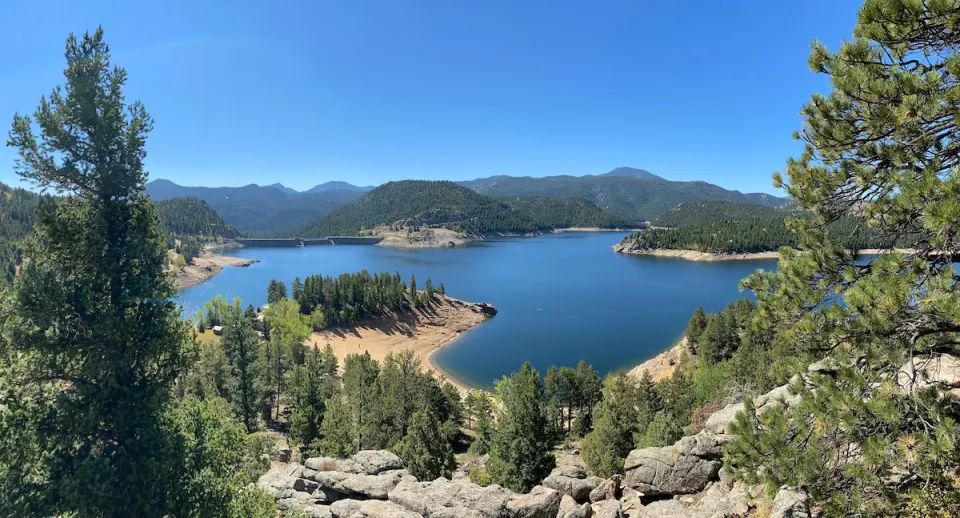
Judges permit Denver to divert 77,000 acre feet from the Colorado River for reservoir expansion
Overuse and climate change have caused the Colorado River’s water levels to plummet.

Amtrak, CN end decades-long dispute with eight-year agreement
The new operating agreement establishes an updated framework for the companies to work together, including processes to resolve disputes.
Raised interest rates may kill financially vulnerable construction projects
The chief economist at ConstructConnect warns that if construction project owners are negatively impacted by the raised rates, it could result in delayed payments to contractors.

FREE Course: Walkable City 1: Why Walkability?
After describing his path towards focusing on walkability as the essence of good planning, Jeff Speck marches through his five principal reasons for making more walkable places.
Reinventing Malls: Planning Alchemy—Turning Gray Fields Into Gold
The course focuses on the opportunities and imperatives that shape reinvention of mall sites.

KFH Group Inc.
Greater Baltimore Committee
Eagle County Government
The Architects Foundation
University of Cincinnati Online
The Pocatello Development Authority
The Urban Renewal Agency of the City of Pocatello