The Canada Lands Company refurbishes surplus military bases into New Urbanist neighborhoods.


"Currie Barracks, about five miles southwest of downtown Calgary, is the last of three major projects CLC will develop on 455 acres previously occupied by Canadian Forces Base Calgary. Since 1995, when CLC was established as a government-owned, independently operated real estate developer, the company has used new urbanist principles to varying degrees in projects spanning the nation, from Moncton, New Brunswick, to Chilliwack, British Columbia."
"CLC personnel began visiting and studying new urbanist projects, mainly in the eastern and southeastern US, in the mid-1990s. With increasing experience, the company has become more adept at applying New Urbanism's ideas. "We didn't really understand the New Urbanism movement in 1996-97," McCullough says, noting that there were fewer developments to examine a decade ago. At Currie, he says, "we want to create a more complete community," in comparison to some of CLC's earlier lower-density, largely residential developments."
Thanks to Gayle Ross
Read the full story: Canadian firm sets sights on New Urbanism


Planetizen Federal Action Tracker
A weekly monitor of how Trump’s orders and actions are impacting planners and planning in America.

Data reveals that NYC’s bet on congestion pricing has paid off
After almost two years of the program, reports show positive impacts on traffic and air quality and no disruptions to parking.
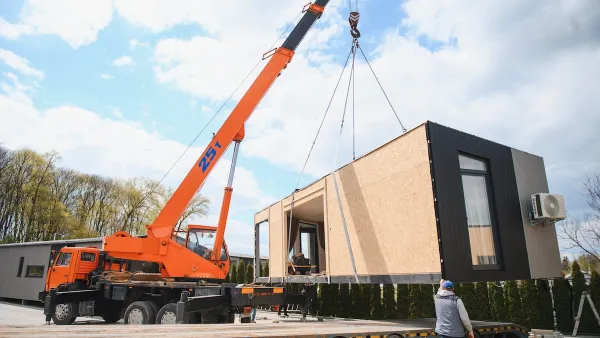
HUD modernizes 50-year-old manufactured housing framework
The Next Generation Manufactured Housing Action Plan establishes new energy-efficiency standards for manufactured homes, and new guidelines for anchoring them.

California voters weigh $11.25 billion housing bond
Prop. 1, combined with other funding, would support over 40,000 new rental units in California.

Connecticut is turning landfills into green infrastructure
Twenty-nine solar arrays have been built, or approved to be built, on top of Connecticut landfills.

Trump guts ‘win-win’ solar energy program for rural farmers
The U.S. Department of Agriculture’s changes have made virtually all solar power ineligible for funding through the Rural Energy for America Program.

FREE Course: Walkable City 1: Why Walkability?
After describing his path towards focusing on walkability as the essence of good planning, Jeff Speck marches through his five principal reasons for making more walkable places.
Reinventing Malls: Planning Alchemy—Turning Gray Fields Into Gold
The course focuses on the opportunities and imperatives that shape reinvention of mall sites.

One Hundred Miles
County of Mendocino
planning NEXT
The Architects Foundation
University of Cincinnati Online
Montrose County
Northern Illinois Transit Authority (NITA)
The Pocatello Development Authority