What is this thing we do called planning? Are we really planning or just reacting? And visioning? What’s that all about? These the questions that came to mind as I was reading yesterday’s - Ineffective Local Planning Efforts Push County To Seek Greater Control. And, also, how many articles like this are published on a daily basis?? If you were to add them all up from across the country, I’m sure the number wouldn’t be insignificant.



What is this thing we do called planning? Are we really planning or just reacting? And visioning? What's that all about? These the questions that came to mind as I was reading yesterday's - Ineffective Local Planning Efforts Push County To Seek Greater Control. And, also, how many articles like this are published on a daily basis?? If you were to add them all up from across the country, I'm sure the number wouldn't be insignificant.
To plan anything requires a goal; or at least a touchstone. With population growth, migration, changing demographics and subsequent market demands, how can an area's goal or vision be reached, especially, if it is to take 10 or 20 years to achieve the vision in the first place? How many changes will have occurred in that time frame? How would you then define success?
I don't know if there are ‘correct' answers to these questions, but it seems they are willfully ignored in many of today's conversations. The planning and development model seems to have changed from helping people create the communities they want to live in to one dominated by short-term interests. Get in, make a buck, and get out. Or if you're already living there, its wait until you can't possibly stand it any longer, then throw in the towel and to move where growth is less imminent. (Mind you, that's after cashing out for as much as possible.) Our individual self-interests operate at a different speed than what is sustainable and as long as we don't each have to pay for the consequences of our actions, then why not take all you can get?
It's the knowing, in the back of one's mind, that plans change over time and the resulting uncertainty drives people to make decisions that satisfy their short-term interests; even though it will likely cause them harm or inflict greater cost in the long run. Consider this: You invest in the stock market to build some wealth, maybe even to put your kids through college. You buy shares in a mutual fund; your fund owns stock in a homebuilding company. Now, ‘your' homebuilding company wants to put houses up in your neighborhood. But you don't want more houses there. But you do want to put your kids through school, right? Which will it be? Ok, put up the houses, I'll move somewhere else with a view. A simplistic example, sure, but it happens everyday.
There are too many disconnects and crossroads in today's planning and development to be sustainable perhaps even successful?

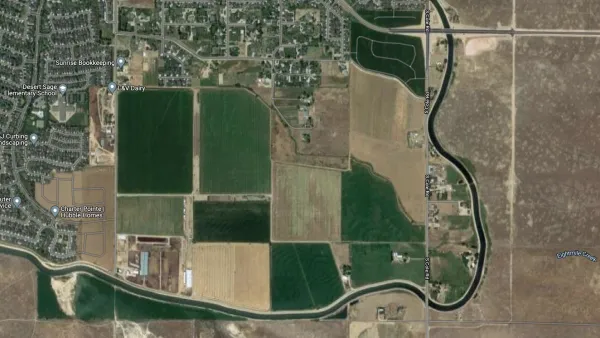
380-Acre Development Planned in Southwest Boise
One of the fastest-growing cities in the country could be making space for even more growth.
Everything you Need to Know from the APA’s 2026 Trend Report for Planners
Plus, a conversation with the APA’s Chief Foresight and Knowledge Officer, Petra Hurtado.
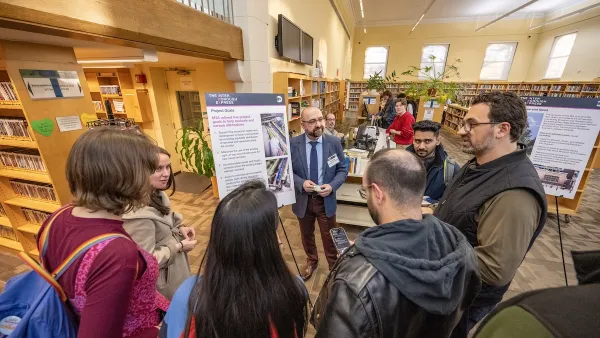
Will Urban Planners Lose Their Jobs to AI?
Let’s see what the data says.

Planetizen Federal Action Tracker
A weekly monitor of how Trump’s orders and actions are impacting planners and planning in America.

‘Going backwards:’ Baltimore mayor, students rally against state's transit funding plan
Maryland's proposed six-year plan provides no funding for Baltimore’s BMORE bus program and reduces its road maintenance funding.

Detroit to transform waterfront with $2.2 billion investment
Developers will convert about 18 acres of unused parking lot space into civic spaces.

25 states, cities sue the EPA over erased power plant emissions limits
The coalition also intends to sue the EPA for not regulating emissions from gas-fired power plants.

Newsom vetoes giving CA tribes greater voice in water projects
In his veto letter, Newsom said the bill would add ‘uncertainty’ to the state’s fight to secure Californians’ water supplies.

Michigan Senate votes to revise 'lax' dam safety laws
A Bridge Michigan investigation found more than 100,000 Michigan residents live in the floodpath of a high or significant-hazard dam.

FREE Course: Walkable City 1: Why Walkability?
After describing his path towards focusing on walkability as the essence of good planning, Jeff Speck marches through his five principal reasons for making more walkable places.
Reinventing Malls: Planning Alchemy—Turning Gray Fields Into Gold
The course focuses on the opportunities and imperatives that shape reinvention of mall sites.

City of Thousand Oaks
City of Wisconsin Rapids
Harvard University Graduate School of Design
The Architects Foundation
University of Cincinnati Online
Northern Illinois Transit Authority (NITA)
The Pocatello Development Authority
The Urban Renewal Agency of the City of Pocatello

