New statistics from the Canadian Urban Transit Association show that larger cities with better, more frequent transit service, and incentives such as universal bus passes for university students, saw major increases in ridership.


"Canadian Urban Transit Association tallied 30 million more transit trips -- a 3.42-per-cent increase -- on subways, buses and rapid-transit lines nationwide during the first six months of this year, compared with the same period in 2005.
Some municipalities, such as the Kitchener-Waterloo region of Ontario, saw big increases in ridership. There, Wilfrid Laurier University students were given a discount on U-Passes that has significantly contributed to the region's 11.41-per-cent increase to 7.1 million riders this year from 6.4 million in 2005.
Others didn't fare as well. In Cornwall, Ont., for instance, where average waiting times for buses increased to 40 minutes from half an hour, there was a 17.77-per-cent drop in ridership.
[CUTA President] Mr. Roschlau said it's no surprise that larger cities with greater transit demands have better service. Places with dwindling populations, particularly in the Prairies, are seeing slow, if any, increases in ridership.
'The quality of service is directly proportionate to the size of the city. In Toronto, you have buses that come by every three, four, five minutes on the main routes, but in a medium-sized city that might be 15 minutes, or a small city even half an hour,'" he said.
Read the full story: Public's aboard on using transit more


Planetizen Federal Action Tracker
A weekly monitor of how Trump’s orders and actions are impacting planners and planning in America.

Data reveals that NYC’s bet on congestion pricing has paid off
After almost two years of the program, reports show positive impacts on traffic and air quality and no disruptions to parking.
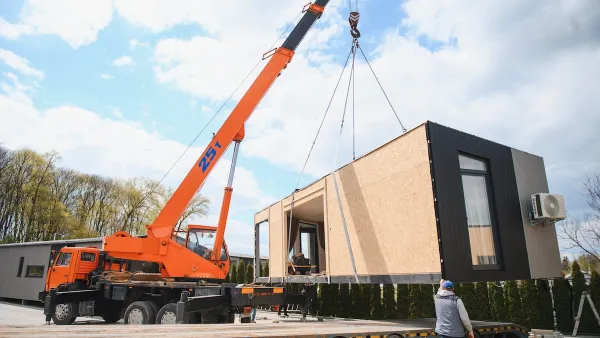
HUD modernizes 50-year-old manufactured housing framework
The Next Generation Manufactured Housing Action Plan establishes new energy-efficiency standards for manufactured homes, and new guidelines for anchoring them.

This Ohio town is using AI to speed up transit analysis
The Greater Dayton Regional Transit Authority’s new AI tool correctly determined riders’ preferred ways to reach key commuter routes.

Yet again, Seattle’s density zoning update is hit with delays
The city must now examine the ‘maximum possible development’ under a future zoning scenario, rather than the ‘maximum likely development.’

In the heart of suburbia, a Utah developer is building a high-density downtown from scratch
The project faces criticism from some city council members, who say the private developer is using taxpayer dollars to turn a profit.

FREE Course: Walkable City 1: Why Walkability?
After describing his path towards focusing on walkability as the essence of good planning, Jeff Speck marches through his five principal reasons for making more walkable places.
Reinventing Malls: Planning Alchemy—Turning Gray Fields Into Gold
The course focuses on the opportunities and imperatives that shape reinvention of mall sites.

One Hundred Miles
County of Mendocino
planning NEXT
The Architects Foundation
University of Cincinnati Online
Montrose County
Northern Illinois Transit Authority (NITA)
The Pocatello Development Authority