A study of 28 metropolitan regions reveals that the high commuting cost for living in outer-ring suburbs outweighs the low cost of the housing in the long term.


The Center for Housing Policy found that the costs of one-way commutes of 12 to 15 miles cancels any savings on lower-priced outer-suburban homes. Barbara J. Lipman, an author of the study, explains that people compare the price of a closer-in house from one in the outer suburbs, but they foreget how much they will spend on commuting costs, such as gas, tires and insurance. She says, "Even if you save a couple of hundred dollars a month on your mortgage, it doesn't nearly outweigh the costs of the cars you are driving." According to the American Automobile Association, the average cost of owning a 2006 Toyota Camry and driving it 15,000 miles a year with gas at $2.40 a gallon works out to $7,967 a year. People living in outer suburbs pay so much for transportation not just because of long commutes, but also because they have to use their cars for nearly every errand and trip.
Read the full story: Around D.C., a Cheaper House May Cost You


Planetizen Federal Action Tracker
A weekly monitor of how Trump’s orders and actions are impacting planners and planning in America.

Chicago breaks ground on $3 billion megadevelopment
The new neighborhood, titled Foundry Park, will one day host 3,700 residences.
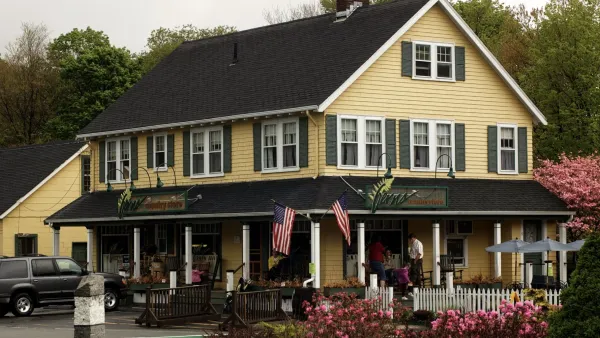
This MA town is drowning in its own sewage — and residents like it that way
Susan Murcott, a waste water expert, said if Carlisle didn't address their leaking sewage, the problem could turn “deadly.”

Feds to more closely scrutinize proposed Amtrak facility’s environmental impact
The Federal Railroad Administration had initially said the facility qualified for a less extensive environmental review.

Boston is hard to build housing in: its chief of planning wants to keep it that way
Chief of Planning Kairos Shen said she would not make changes to Boston’s affordability requirements for new housing, which critics say have slowed down development.

California plans to bury El Niño’s downpour
If the state plays its cards right, it may be able to store a billion acre-feet of El Niño’s water in aquifers.

FREE Course: Walkable City 1: Why Walkability?
After describing his path towards focusing on walkability as the essence of good planning, Jeff Speck marches through his five principal reasons for making more walkable places.
Reinventing Malls: Planning Alchemy—Turning Gray Fields Into Gold
The course focuses on the opportunities and imperatives that shape reinvention of mall sites.

City of Rosemead
Rutgers University, Edward J. Bloustein School of Planning and Public Policy
One Hundred Miles
Hunter College, City University of New York (CUNY)
The Architects Foundation
University of Cincinnati Online
Montrose County
The Pocatello Development Authority
The Urban Renewal Agency of the City of Pocatello