The geometry of transportation, people-centered preservation and the history of roads, homeownership and cities.



In any given year, it’s worthwhile to read new books not just in the context of their release, but also in the context in which they were written. Generally, that means winding back the clock 4-5 years. So, for our 2026 picks, it's worth remembering what was happening in 2021-22. Aside from the wind-down of the pandemic — which was horrible for cities but, by anecdotal accounts, great for writers’ productivity — it was also the moment that Substack broke. For every book on this list, there are dozens or hundreds of blog posts by scholars, journalists and practitioners. Some of them are excellent.
This is a long way of saying that many of the books on this year’s list are unusually contemplative. They are thoughtful, long-term projects and not the polemical, political calls-to-action that have appeared on previous year’s lists — for instance: Abundance, Stuck, and Why Nothing Works from 2025. This year gives planners abundant opportunities to think about urban history. More than half the books on this list are histories, or they contain significant historical discussions. These are the types of books that take years and decades to research and assemble. The city of today may yet make its way into some great books, but, for now, it’s on the blogs and socials.
Another reason why this year’s books hew toward history may be that many writers are tired of writing about the present. Arguably, the consensus among progressive urbanists is that many elements of past cities — i.e. those that developed before the age of the automobile — are among the most desirable urban qualities. There’s an appetite to understand past approaches to urbanism, for at least two reasons: first, to understand how, exactly, today’s cities evolved and, in many cases, achieved their current levels of mediocrity; and, second, to consider which elements of the past we want to revive, reintroduce and adapt to our current and future needs. Just as books are old-fashioned ways of disseminating knowledge and sidewalks are old-fashioned modes of transportation, we shouldn’t count either of them out yet.
City on the Edge: Technology, Politics, and the Fight for the Soul of San Francisco
Jonathan Weber
Atria Books
June 9, 2026, 423 pages
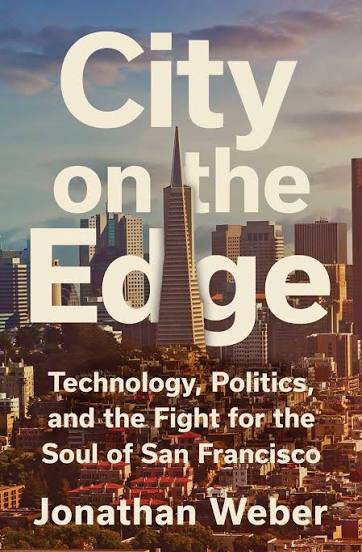
The Los Angeles Times’ first Silicon Valley beat writer, and the founding editor-in-chief of the San Francisco Standard, has plenty of experience writing about San Francisco. In his first book, Jonathan Weber takes readers through the rise and almost-fall of San Francisco, chronicling both the tech boom that revived the city, and the consequences of the tech economy that nearly brought it to its knees.
In “City on the Edge,” Weber unravels what brought San Francisco’s fall from grace. He writes that Republicans, moderate Democrats and progressive Democrats all have their own diagnoses for San Francisco's woes — blaming everyone from left-wing politicians to greedy billionaires — but that none of them captured the whole story, or techno-capitalism's overarching role in it. The book offers a perspective on the city that is fresh, human and written with immense love for San Francisco. Weber writes:
“It is easy to imagine a cleaner, brighter, better-run city, one where market forces rule freely and there’s less tolerance for bad behavior. Tech innovations, from self-driving cars to robot food delivery to medical interventions for extending human life, would be welcomed without a fuss. It would be a nicer, safer place, better for tourists, conventioneers and tech companies, the envy of many other cities, and undoubtedly preferable in the eyes of many residents. But would it be San Francisco?”
Weber weaves together San Francisco's narrative by using over 200 interviews, including the voices of everyone from CEOs to artists to activists. San Fransisco comes to life through their stories, providing the reader an intimate look at the city’s successes and failures, and the people who witnessed it all.
Transportation and the Shape of Cities
Christof Spieler, David Copeland Loredo, Mandi Chapa
Princeton University Press
August 4, 2026, 313 pages
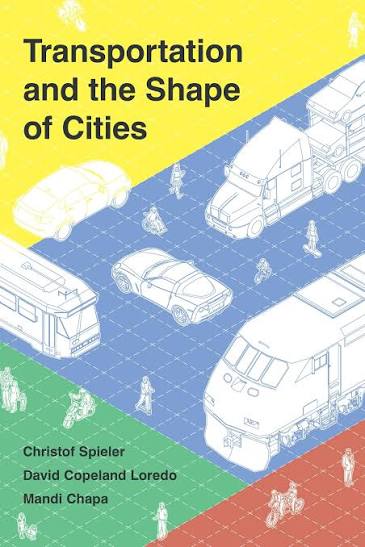 Transportation and the Shape of Cities is a delightful look at the geometry that makes transit run. It explores the geometric properties of bike paths, highways, rail lines, transit routes and more, and examines how each mode of transportation fits into cities in the United States. The text is accompanied by illustrations and photographs on almost every page, bringing the authors’ lessons on transportation to life.
The authors’ state that their book could be used as a textbook, but would be equally at home atop a coffee table. There is no need to explore the pages in order, each one offers a new lesson for the reader, and the text itself is accessible enough for anyone with any level of planning experience to dive right in. The book covers pedestrian infrastructure, micromobility, cars, trains and transit, looking at the role each one plays in urban design.
“[This book] is a tool to help people plan cities. The limitations of space and the geometrical characteristics of each mode make transportation a design problem. But we cannot leave that problem only to the design professionals because the decisions made impact us all. We have worked to provide enough information so that planners, designers, advocates, and leaders can determine what is possible,” the authors write.
Managing the Magic of Old Places: Crafting Public Policies for People-Centered Historic Preservation
Jeremy C. Wells
University of Tennessee Press
Oct. 13, 2025, 266 pages
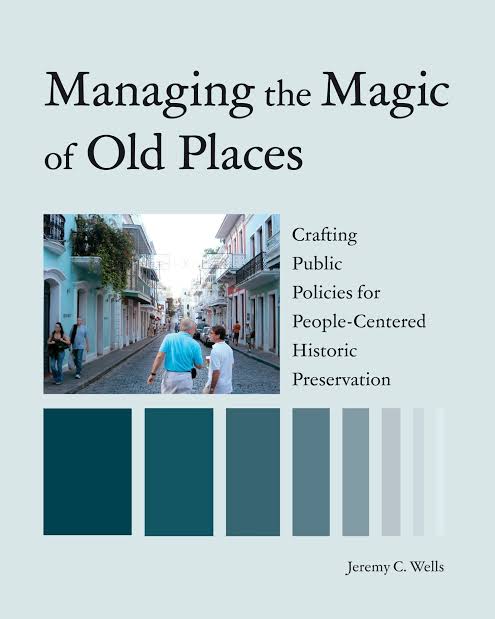 In his introduction, Jeremy C. Wells describes “Managing the Magic of Old Places” as possibly being “the first of its kind ever published on the holistic analysis of public historic preservation policy in the United States.” The text pushes for a revolutionary shift in federal preservation policy, moving the industry from "prioritizing fabric to prioritizing people,” and hopes to bring together preservationists willing to act in the interest of human nature.
The ideas presented in this book were not done so without obstacle: Wells describes threatening letters that claimed his work would “hurt the field,” and that he would “destroy his career if he pursued it. He writes that he felt like a “whistleblower” for his field of practice, and how the constant attacks and lack of support led him to walk away from a tenured position.
The author’s passion for people-centered preservation is evident throughout the text: Wells argues that people perceive older places as filled with “magic” and “charm,” and that built heritage doctrine and policy is purposefully ignorant of the deep psychological impact older buildings have on people. If the field remains ignorant, Wells expertly argues that the public will become “increasingly hostile to the well-meaning, but naïve" actions from heritage conservation practitioners.
The Lost and the Found: A True Story of Homelessness, Found Family, and Second Chances
Kevin Fagan
Atria Books
February 10, 2026, 288 pages
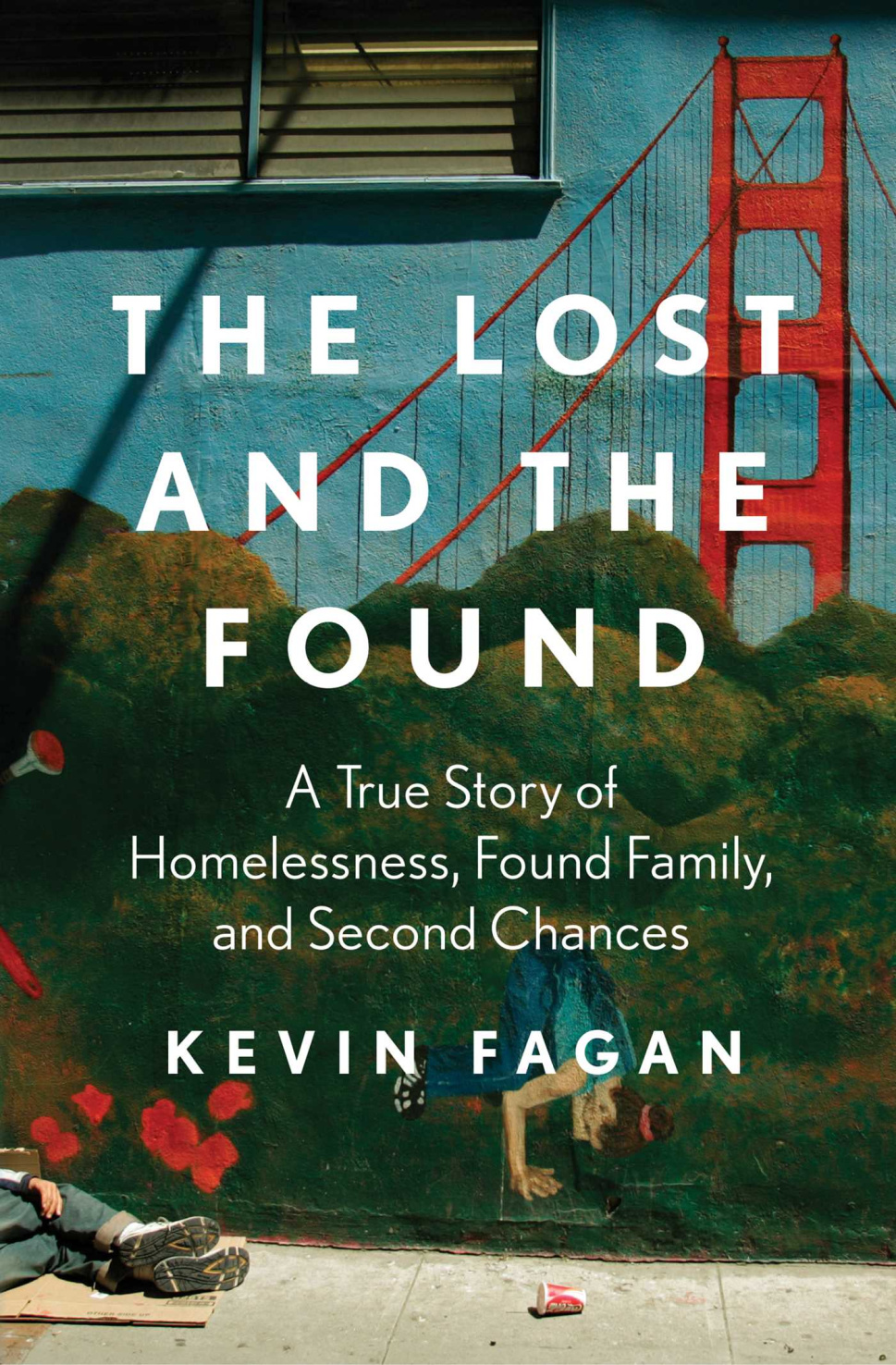 Understanding homelessness and the factors that lead to and keep someone trapped in a cycle of rehab, relapse, and living on the street can be a challenge. Veteran San Francisco journalist Kevin Fagan’s book "The Lost and the Found: A True Story of Homelessness, Found Family, and Second Chances," delivers a powerful, deeply reported narrative that balances raw, human-centered storytelling with a sharp critique of urban housing policies. At the center of this narrative are the harrowing but resilient journeys of two homeless individuals, Rita and Tyson.
Fagan uses Rita and Tyson's experiences as a lens to examine the structural failures of the American housing market and the evolution of municipal policy responses. He illustrates that homelessness is not merely an individual failure, but a direct consequence of a housing market that treats shelter strictly as a speculative financial asset rather than a basic human need. For anyone looking to understand the intersection of housing affordability, systemic policy gaps and human dignity, Fagan’s book is an eye-opening read that charts a clear, empathic path forward for civic leaders and activists alike.
Road to Nowhere: How a Highway Map Wrecked Baltimore
Emily Lieb
University of Chicago Press
November 6, 2025, 240 pages
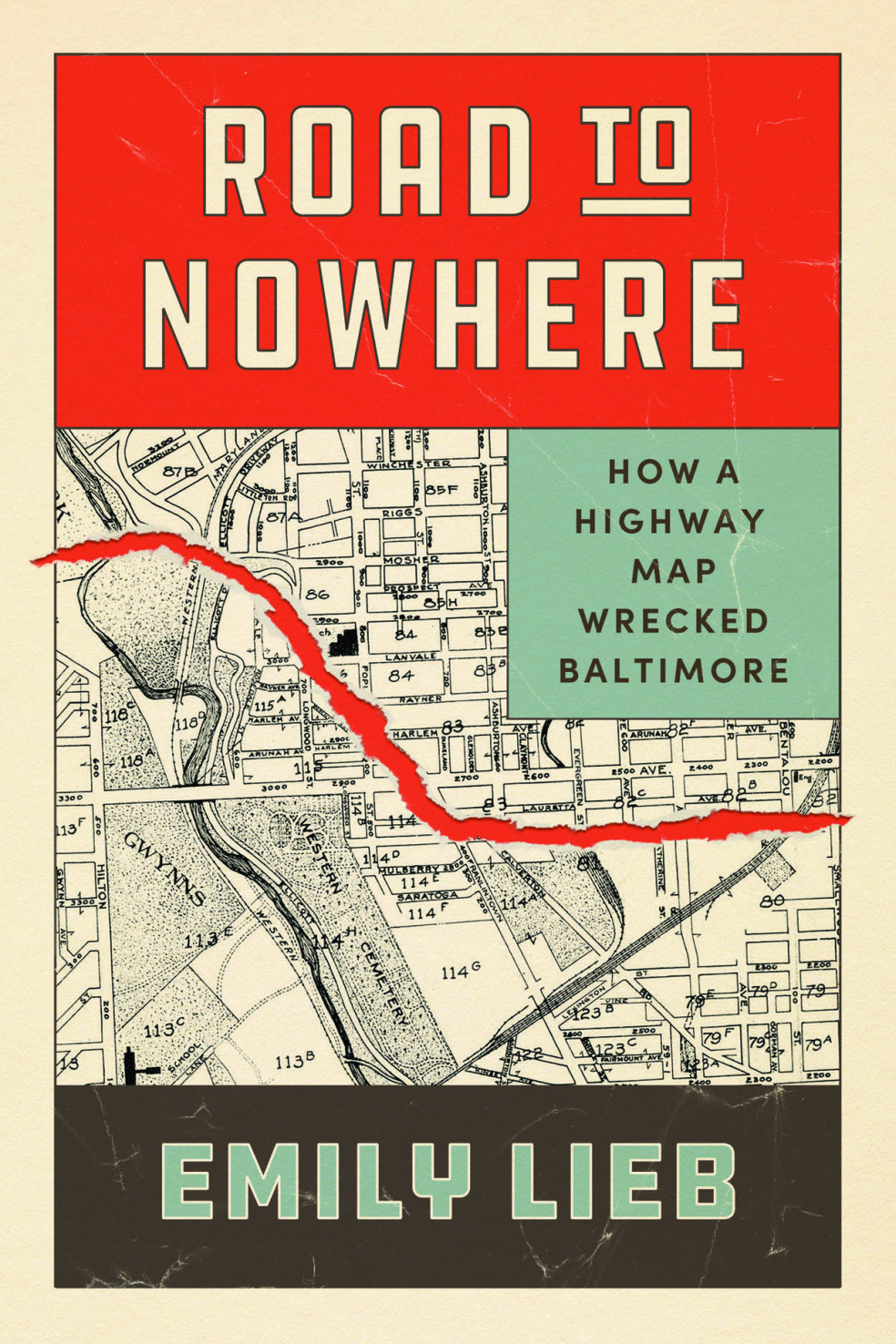 Every planner knows the devastation midcentury highway projects wrought on neighborhoods across the country in cities like New York City, Boston and Seattle. But what about the highway projects never started? Can a simple line on a map be catastrophic to a neighborhood? In "Road to Nowhere: How a Highway Map Wrecked Baltimore," historian Emily Lieb delivers a masterful autopsy of urban planning gone wrong. While many histories of the American interstate system focus on the physical destruction caused by bulldozers, Lieb’s work offers a more haunting revelation: a community can be dismantled by a mere line on a map, even if a single yard of concrete is never poured. At the heart of the book is Rosemont, a West Baltimore neighborhood.
Lieb reveals the interwoven tragedies of how segregated school policies, redlining and prejudicial lending worked in tandem to trap the residents of Rosemont in a cycle of disinvestment. "Road to Nowhere" challenges the notion that residents are responsible for their neighborhood's decay, placing the blame squarely on the shoulders of the planners, politicians and power brokers who refused to see the humanity of the people in their path.
For Customers Only: Public Bathrooms and the Making of American Inequality
Simon Bryant
University of Chicago Press
September 8, 2026, 376 pages
 We all know the Napoleon quip: an army fights on its stomach. A marauding platoon that’s well fed can do its business anywhere it wants. Not so for cities. In "For Customers Only," Temple University Professor of History Simon Bryant addresses a potentially unseemly but utterly fundamental aspect of urban life: whether they are out for a night on the town or living rough, people need to go to the bathroom.
Thanks to his exhaustive research, Bryant explains how public toilets used to be de rigueur in center cities, where they were more infrastructure than amenity. They were also magnets for trouble, providing oddly private spaces — even in the middle of a downtown — where crime, drug use and illicit sex could take place. Those stigmas led to the widespread closure of public bathrooms throughout the 20th century. Making matters worse, social justice activists in the 1970s demanded that public toilets be free, rather than accessible for a quarter or a buck, so cities closed them entirely.
Simon is not a planner or an urbanist per se. But, his research and commentary has deep implications for the livability of cities, specially for their most marginalized residents. Without available toilets, a city is a less welcoming, less functional, less sanitary place. Simon ends with a few nods to the revival of public toilets, though he doesn’t go so far as to cheer new modular, self-cleaning options that have cropped up. Nonetheless, by zooming in on a minute, seemingly incidental part of urban life (much as last year’s Top Books pick "Shade" did), Bryant gives planners important food for thought.
Paul Goldberger
Knopf
November 16, 2026, 288 pages
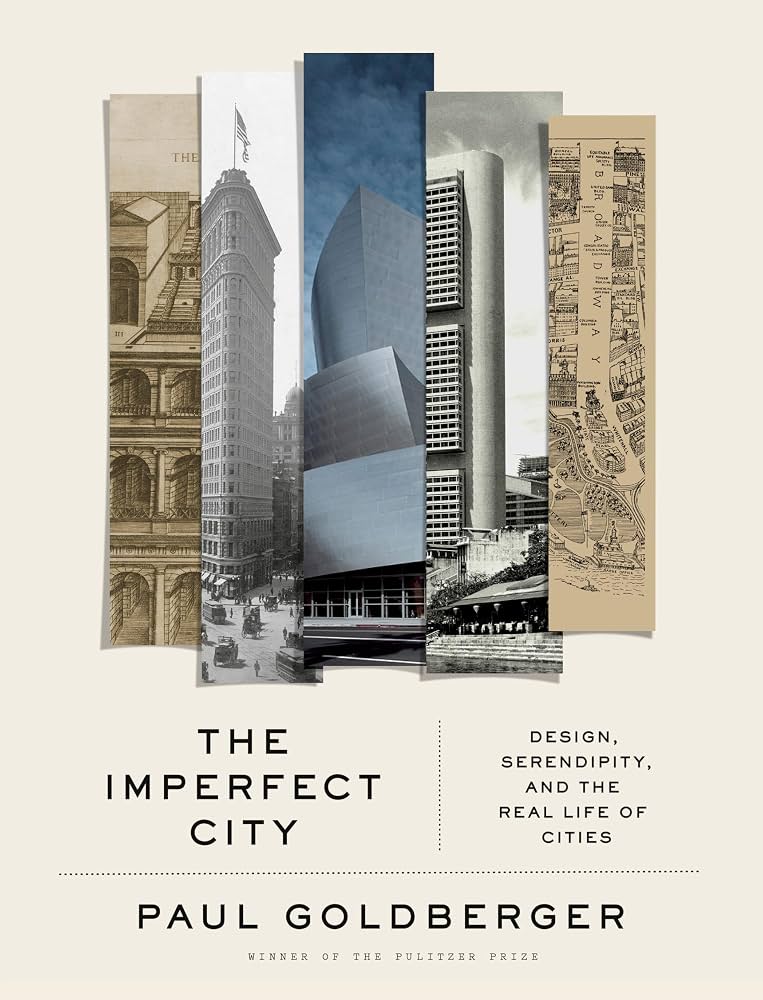 Paul Goldberger does expertly, and naturally, what every urbanist should at least try to do: behold the entire history of a city all at once. An eminent architecture critic with the likes of The New York Times and The New Yorker, Goldberger takes a tour of a handful of great world cities — in equal numbers of American and non-American cities — in "The Imperfect City" to investigate how the past plans and past designs have evolved into the present-day and mingle with recent architecture and current uses. He takes a realistic view of planning: sometimes delightful, sometimes detrimental, always at least a few paces out of step with reality.
Each chapter is something of an augmented reality view of past and present — and, indeed, pre-past, when you count his attention to topography and geography. He celebrates the “fallacy of order” that emerges when different styles, needs and technologies accrete over the decades. Monumental plans and minute details are, for Goldberger, equally fascinating. He investigates Hausmann’s Modern-era surgery on Paris and Burnham’s comprehensive plan for Chicago — and celebrates how both have evolved in the past century or two. Through it all, he seeks and muses on “authenticity” — the idea that a place can be itself without being overwhelmed by capitalist speculation or other homogenizing forces — or by stifling regulation.
Arguably, "The Imperfect City" is mildly disappointing for featuring predictable cities, including Chicago, Los Angeles, Paris and Goldberger’s native New York — in three of his 12 chapters. But, the point worth inferring from him is that every city, from historic gems that are a little too well preserved to modern plains of speculative investment, have real lives that no planner or architect can or should control.
The Land Trap: A New History of the World's Oldest Asset
Mike Bird
Portfolio
November 5, 2026, 336 pages
 Planners would do well to remember that at least part of everything they work on is, by definition, a fiction. The ground may be tangible and solid underfoot. But, the control of land ultimately depends on ownership, and ownership depends on ... whatever scheme a given jurisdiction or government happens to have dreamed up. "The Land Trap" is a selective history of land ownership, exploring just a few of the ways that the law enables entities — be they private citizens or governments — to own and control land. Bird explores the capitalist ownership in the early United States (when Manifest Destiny made it seem like the supply of land was infinite) to public ownership in tiny, but well managed, Singapore. He offers a refreshingly clear biography of cult hero Henry George and summary of his land value tax, and he delves into various attempts at land reform, especially in Japan and China. He discusses the perverse economics of overbuilding in China, and underbuilding in California.
At each turn, the increasing scarcity of appealing land makes ownership and control more complex and, potentially, more perilous, especially for speculators. Bird’s message for planners is that, no matter what they might envision or dictate for a certain corner of the city, their plans run in parallel with land owners’ economic concerns. And those concerns will almost always take precedence over the greater good. As Bird notes, land is a zero-sum game. A piece of land cannot please everyone all at once.
Dwelling on Earth: The Past and Future of Places We Call Home
Stefan Al
W. W. Norton & Company
April 14, 2026, 320 pages
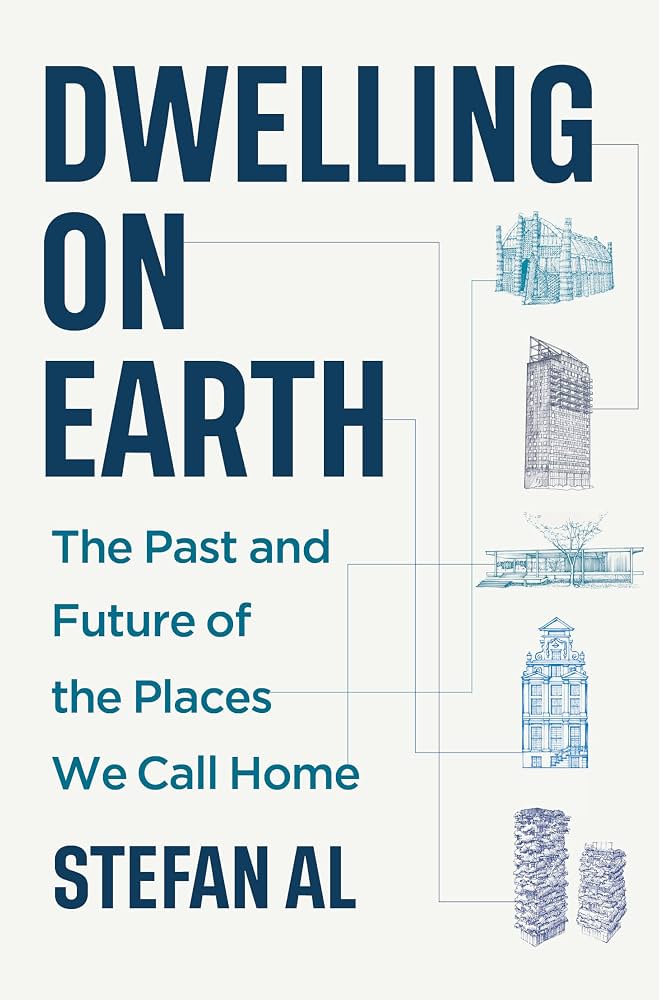 Stefan Al’s last major book reached for the heavens. It was "Supertall," a history and appraisal of skyscrapers, including the new generation of attenuated towers that have shot past the 500-meter mark. This time, Al starts much lower — literally underground. "Dwelling on Earth" ambitiously explores the entire history of permanent human habitations, starting with the semi-subterranean “cities” of ancient Anatolia, like Jericho and the Natufian culture, and ending with ecologically friendly dense communities that architects are designing to undo some of the damage that was inflicted on the planet in the intervening 14,000 years.
With the eye of both an architect and historian, he explores the ways societies have responded to their environments and evolved toward ornament, economy and functionality. Especially when he gets to the Early Modern period, with dwellings like Beijing courtyard homes, Dutch canal homes and Victorian row homes, many urbanists might wonder why architects and planners can't just turn back the clock and build the way they used to. Indeed, the three- and four-story apartment buildings of ancient Rome, circa 150 AD, could fit into any major American city (if the zoning allowed it). More recently, Al touches on Levittown, superblock apartment buildings and more biophilic designs like the Culdusac development in Tempe, Arizona and mass-timber towers. He offers a reminder for planners — in whatever city they might work — that the range of human habitation is likely far more broad than anything their zoning might allow and that the dwellings that are allowed are not necessarily optimal, attractive or efficient. It’s an implicit call to get more creative and think longer-term. Maybe not 14,000 years, though.
Property Values: The Rise and Fall of the American Homeowner
Joshua Specht
Princeton University
September 15, 2026, 440 pages
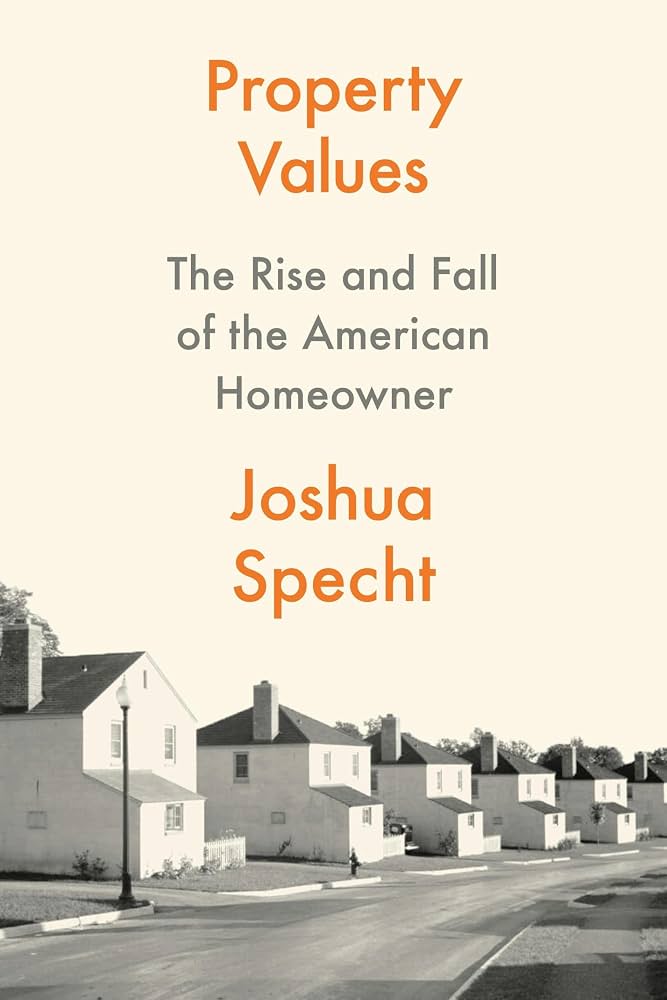 The mythical closing of the American Frontier, traditionally pegged to the 1890s, marks the United States’ transition from a “landed democracy” to an “ownership society,” in Joshua Specht’s "Property Values," a history of American land- and homeownership. In the first half, Specht, a professor of history at Notre Dame, visits upstate New York, Kansas, Chicago and Savannah, Georgia, to recount the various ways that (white) Americans conquered the continent and took dominion over its abundance.
The ownership society began in earnest with the federal loan programs of the New Deal, giving more Americans access to wealth and financing the post-World War II suburban boom — described in Specht’s chapter on Levittown, Pennsylvania. Specht visits 1978 Los Angeles to mark the passage of California’s Proposition 13, in which homeowners rejected property tax increases pegged to increases in home values. It was this moment when the commoditization of housing became fully realized, and it was in 2008 when the losers outnumbered the winners, as discussed in Specht’s chapter on Las Vegas.
Specht closes with the observation that “density can function the same as fresh land once did.” It’s an appealing vision, to channel the exuberance of the Frontier into actual city-building rather than plunder and environmental degradation. In Specht’s telling, the economic arrangements that facilitate the development and ownership of housing are far more powerful than those of planning. Indeed, the financial mechanisms that enable Americans to put down roots and inhabit the cities that planners envision are often taken for granted, or viewed as something far removed from planning’s prescriptive inclinations.
The Invention of the Future: A History of Cites in the Modern World
Bruno Carvalho
Princeton University Press
January 13, 2026, 440 pages
 To loosely summarize Bruno Carvalho’s tantalizing thesis in "The Invention of the Future," it was not until the mid-1700s (specifically in Lisbon, after a devastating earthquake) that cities began to grow not according to the needs and whims of the present-day, but in anticipation that the people living in one moment might give way to new people in future moments — and that their future may be very different from whatever the present may be.
Carvalho, a polymathic professor of both literature and design at Harvard, explores a diverse range of world cities between the mid-18th and mid-20th centuries to discern what sort of futures planners and leaders envisioned and what lengths they went to prepare their cities accordingly. Manhattan’s predetermined street grid, London’s Crystal Palace exhibition hall, America’s superhighways and Le Corbusier’s aggressive Modernism are all examples — plus ambitious Fascist and Space Age plans that were (fortunately) never realized. Carvalho concludes by noting that, perhaps, the best, most resilient cities of our age will be those that go back to the past — by emphasizing pedestrianism, for example — rather than those that chase an elusive, ever-receding future.
A History of Roads in 100 Maps
Jeremy Black
University of Chicago Press
October 8, 2026, 288 pages
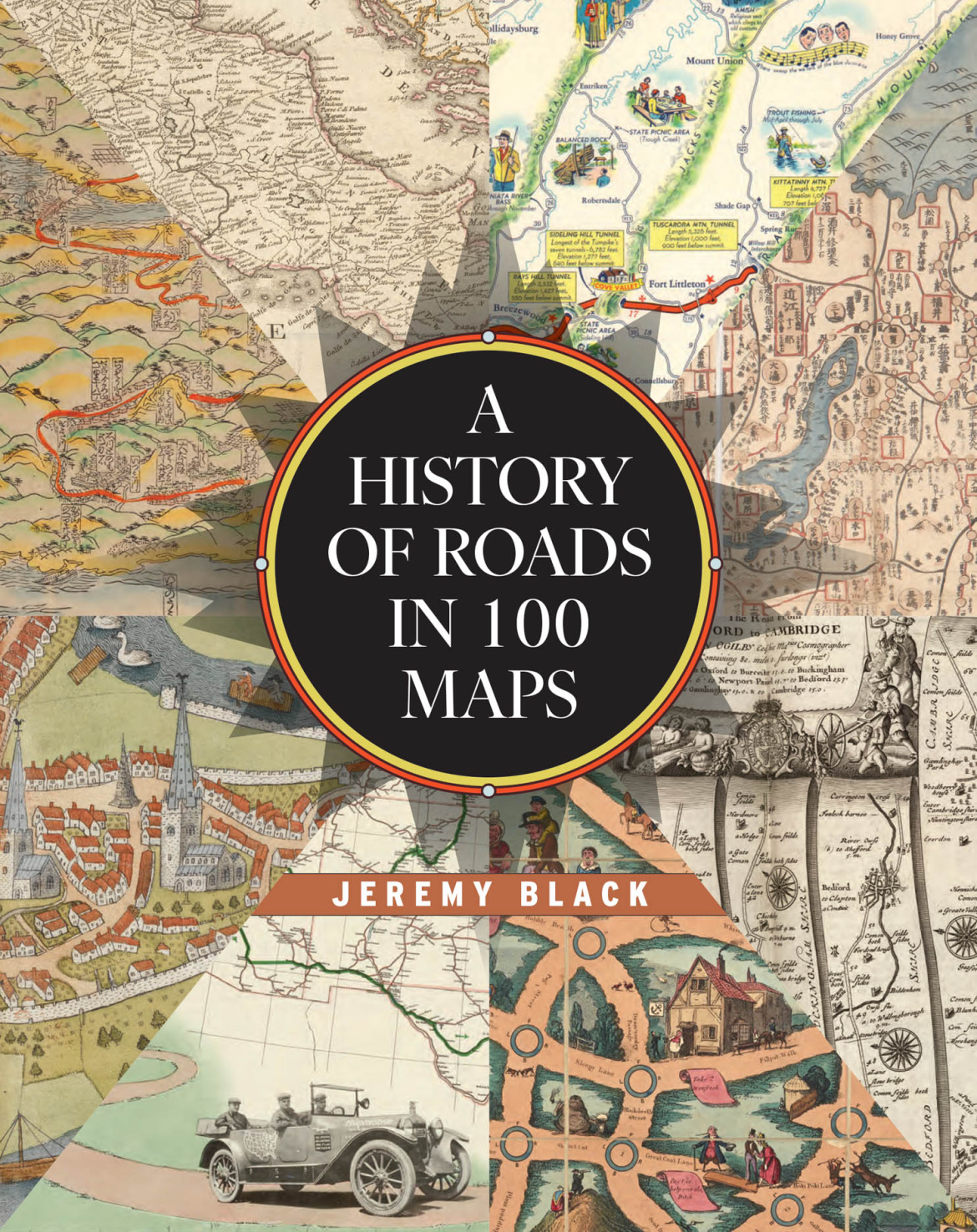 There may be some exceptions out there, but it’s nearly axiomatic that maps are the fundamental currency of planning — and that, to be a planner, you pretty much have to love them. "A History of Roads in 100 Maps" is an eminently lovable romp through every imaginable type of map, going as far back as hand-drawn maps of ancient Rome, schematics depicting the Silk Road and illuminated manuscripts. They illustrate the many ways that ancient and Early Modern cultures conceived of and organized their landscapes and movements.
Author Jeremy Black, a UK-based historian, shares city maps of Mexico City just after the Spanish invasion, illustrated parcel maps of towns of Renaissance England and maps of national road networks in Japan, Germany and France depicting how people traveled long distances when foot and hoof were the only viable transport methods. Many maps are thematic, conveying volumes of information with often clever notation, and others are richly illustrated, bordering on art. From 1900 onward, most maps depict automobile routes, including America’s Lincoln Highway, and tourist maps beckoning travelers to take to the road. Eventually, the modern highway maps appear, which were crucial for almost any drive of more than a few miles — right up until Mapquest came out. There are urban maps, depicting the growth of cities including 1980s-era beltways in Paris and Washington, D.C. Roads in developing countries are particularly fascinating, often depicting the ways that colonizers shaped the mobility landscape to their needs. In each case, planners will have to infer what they want about urban history, mobility, governance and commerce from the potentially encyclopedic amount of information that can be depicted on a single page.
Honorable mentions
We did not put "The Other Housing Crisis: Ending the Deterioration and Loss of Affordable Homes" on the main list because, as a rule, we do not list anthologies. But, "The Other Housing Crisis" highlights an increasingly important facet of America’s urban housing supply: the crisis of deterioration and the need for renovation. No planner will be surprised by any of the "inventions" in "A Brief History of Cities in 32 Inventions." Most of them, including the grid, the elevator, streetcars and sewers are not earth-shattering. But, it’s a fine gift for the parent, partner or friend who wants to understand urbanism but doesn’t want to read, say, "The Power Broker." Finally, it’s important to remember that, no matter how built up urban areas might be, they are still just overlays on someone else’s habitat. "Roam: Wild Animals and the Race to Repair Our Fractured World" outlines the territories and migratory patterns of key species, including robust discussions of the ways that animals coexist, successfully or otherwise, in the concrete jumble.

Planetizen’s Top Urban Planning Books of 2025
How thoughtful deregulation could unlock a housing and infrastructure boom, the social histories that lie behind a globalizing economy, and the growing role of artificial intelligence in planning.
Planetizen’s Top Urban Planning Books of 2024
Top of mind in 2024 were the far-reaching impacts of climate displacement, zoning as a solution to the housing crisis, and the potential for safer roads and better public transit in American cities.
Planetizen’s Top Planning Books of 2023
The world is changing, and planning with it.

Washington state to charge fee to drivers with fuel-efficient cars
Revenue from the fee will go towards supporting the state’s highways.

Illinois considers spending $1 billion in taxpayer money on data center
A quantum computing campus and data center are currently under construction in Chicago.

Trump to blast ‘hydrocarbon highway’ through ‘world’s longest art gallery’
Environmental and historic preservation groups are suing to stop the project.

U.S. Army plan to explode reactive lead waste in Iowa postponed indefinitely
The Army will detonate the lead inside underground concrete chambers.

Data centers may drain 4 billion gallons of water annually from U.S.’s driest state
Nevada already has three dozen data centers; several dozen more are planned.

Boston City Council votes to no longer mandate parking in residential developments
The Boston Zoning Commission still needs to approve the proposal.

FREE Course: Walkable City 1: Why Walkability?
After describing his path towards focusing on walkability as the essence of good planning, Jeff Speck marches through his five principal reasons for making more walkable places.
Reinventing Malls: Planning Alchemy—Turning Gray Fields Into Gold
The course focuses on the opportunities and imperatives that shape reinvention of mall sites.

City of Charlotte
City of Rosemead
Rutgers University, Edward J. Bloustein School of Planning and Public Policy
University of Michigan School for Environment and Sustainability (SEAS)
Hunter College, City University of New York (CUNY)
The Architects Foundation
University District Partnership

