Susan Murcott, a waste water expert, said if Carlisle didn't address their leaking sewage, the problem could turn “deadly.”


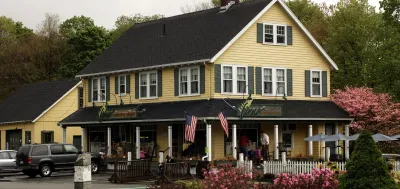
The picturesque town of Carlisle, Massachusetts, which is virtually unchanged from colonial times, has a dirty secret: there is no hygienic, or safe, way to dispose of sewage. The result is E. coli in the town’s wells, contaminated drinking water and refuse seeping into the groundwater. Ben and Amy Pirri, who moved to Carlisle during the pandemic and hope to reopen the town’s general store, are fighting to solve Carlisle's sewage problem. Residents, however, aren't so sure they want a solution.
“Have [the Pirri’s] been welcomed as heroes? Not quite. Their efforts have created a controversy, and they now find themselves contending with a particular strain of Carlisle NIMBYism. If they fix the sewerage, their critics say, won’t developers build more housing? And what about the town’s character?” Mike Damiano writes for the Boston Globe.
Susan Murcott, a waste water expert and lecturer at the Massachusetts Institute of Technology, said if the town's sewage continued to leak, the problem could turn “deadly.” However, addressing it could be complicated: Resident Angus Beasley described Carlisle's government as “Gridlocracy” to the Boston Globe, with a never-ending list of committees overriding each other until any new project ground to a halt — including wastewater infrastructure.
Read the full story: Carlisle is a pristine Colonial gem. But a ‘doomsday’ sewage problem could make its village center uninhabitable.

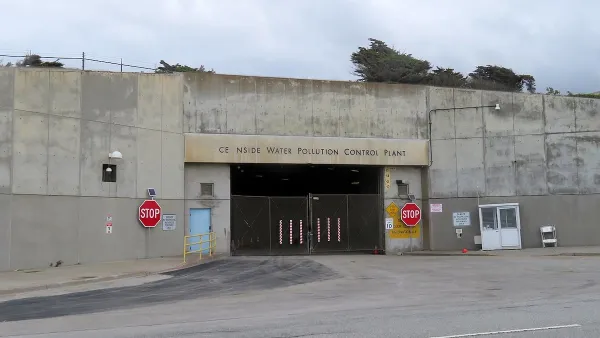
San Francisco Takes on EPA in Supreme Court Case
The Court has agreed to hear an appeal challenging federal water pollution regulations.
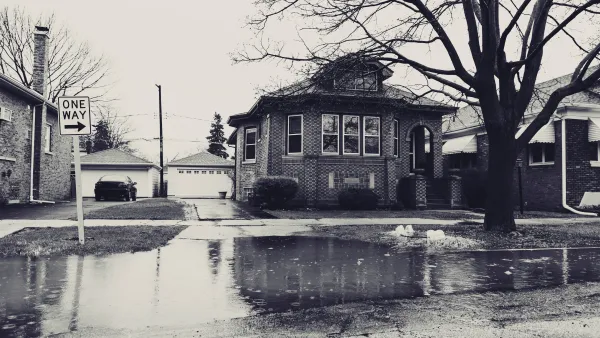
Chicago Flood Mitigation Scrambles to Keep up With Climate Change
The city’s geography and the growing intensity of storms due to climate change are making it difficult for local officials to prevent neighborhood flooding and wastewater spills.
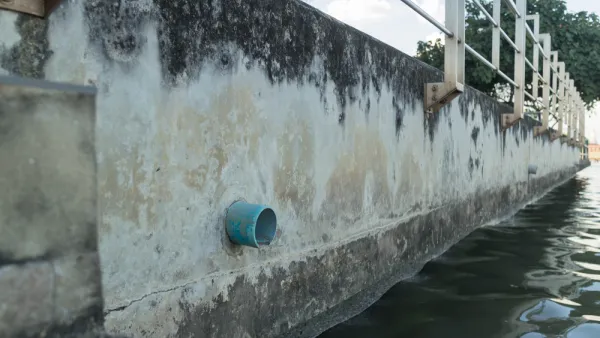
Florida Plagued by Sewage Spills
The state’s aging sewage infrastructure is failing, but the cost to replace it would be monumental.

Planetizen Federal Action Tracker
A weekly monitor of how Trump’s orders and actions are impacting planners and planning in America.

Data reveals that NYC’s bet on congestion pricing has paid off
After almost two years of the program, reports show positive impacts on traffic and air quality and no disruptions to parking.

Denver is solving homelessness. Why aren't the rest of us?
Since 2023, Denver's street homeless population has decreased by 64%, proving that effective tools exist to support those in need of housing.

Michigan needs billions to save its water infrastructure. The state won't fund it
Michigan needs to invest $2.8 billion per year over the next 20 years to fix its water infrastructure. The FY 2027 budget allocates only $27.9 million.

Trump asks Supreme Court to allow border wall through Texas national park
Judge Kathleen Cardone previously blocked the Big Bend border wall project, and Texas’ Land Commissioner has spoken out against it as well.

This MA town is drowning in its own sewage — and residents like it that way
Susan Murcott, a waste water expert, said if Carlisle didn't address their leaking sewage, the problem could turn “deadly.”

FREE Course: Walkable City 1: Why Walkability?
After describing his path towards focusing on walkability as the essence of good planning, Jeff Speck marches through his five principal reasons for making more walkable places.
Reinventing Malls: Planning Alchemy—Turning Gray Fields Into Gold
The course focuses on the opportunities and imperatives that shape reinvention of mall sites.

City of Rosemead
Rutgers University, Edward J. Bloustein School of Planning and Public Policy
One Hundred Miles
The Architects Foundation
University of Cincinnati Online
Montrose County
Northern Illinois Transit Authority (NITA)
The Pocatello Development Authority