The Court has agreed to hear an appeal challenging federal water pollution regulations.


The City of San Francisco’s case against federal environmental regulators is going to the Supreme Court, reports Bob Egelko in the San Francisco Chronicle. “The Supreme Court agreed Tuesday to hear San Francisco’s appeal of a ruling that tightened offshore water pollution standards and said the city was failing to adequately protect swimmers and bathers from discharges of sewage into the Pacific.”
The case, San Francisco v. EPA, stems from a May 1 lawsuit by the EPA and the California Regional Quality Board charging San Francisco with failing to protect its offshore waters and “seeking orders requiring the city to change its practices and hundreds of millions of dollars in penalties.”
The city says it is only bound to “limit water pollution to amounts set in advance, such as specific discharges per million parts of water,” but federal regulators said the city needed to do more to meet its obligations. The 9th U.S. Circuit Court of Appeals agreed with federal agencies, citing their “broad authority” to regulate waste discharge and pollution. “The Supreme Court’s ruling will set legal standards for the suit and for pollution-control agencies nationwide.”
Read the full story: Supreme Court agrees to hear water pollution fight between San Francisco, EPA

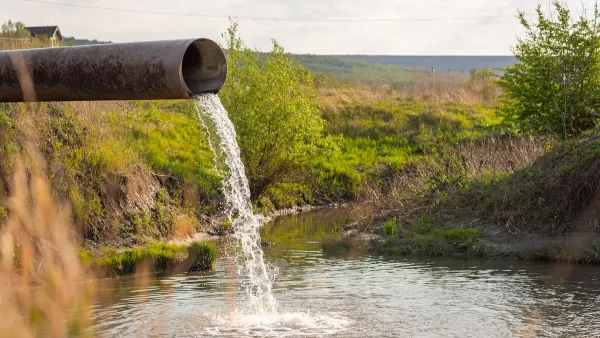
Supreme Court Could Curb EPA’s Water Quality Regulation Powers
A suit brought by the city of San Francisco argues that the agency’s language around water treatment and discharge is too vague and imposes retroactive penalties.
Comment: EPA Cuts will Send Atlanta Back to Eye-burning Ozone, Lung-damaging Smog, and Raw Sewage in the Chattahoochee River
A veteran political journalist takes stock of the hard-earned ground Georgia stands to lose with slashed environmental protection.

This MA town is drowning in its own sewage — and residents like it that way
Susan Murcott, a waste water expert, said if Carlisle didn't address their leaking sewage, the problem could turn “deadly.”

Planetizen Federal Action Tracker
A weekly monitor of how Trump’s orders and actions are impacting planners and planning in America.

California plans to bury El Niño’s downpour
If the state plays its cards right, it may be able to store a billion acre-feet of El Niño’s water in aquifers.

Desperate measures: Advocates weigh draining Lake Powell to fill Colorado River
Draining the reservoir could reduce evaporation losses by a couple hundred thousand acre-feet.

How a Chicago-sized wind farm beat the odds and powered on
The project spanned five presidential administrations and a standoff with a U.S. military base.

MTA gives itself 30 days to transform pit into basketball court
The site has been under construction since 2022; the city originally estimated it would finish the court in 2024.

Non-stop party: Chicago voters weigh permanent festival grounds
A stable place for bleachers, stages and drainage may streamline the setup and teardown of large events.

FREE Course: Walkable City 1: Why Walkability?
After describing his path towards focusing on walkability as the essence of good planning, Jeff Speck marches through his five principal reasons for making more walkable places.
Reinventing Malls: Planning Alchemy—Turning Gray Fields Into Gold
The course focuses on the opportunities and imperatives that shape reinvention of mall sites.


City of Rosemead
Rutgers University, Edward J. Bloustein School of Planning and Public Policy
One Hundred Miles
Hunter College, City University of New York (CUNY)
The Architects Foundation
University of Cincinnati Online
City of Cambridge
Montrose County
The Pocatello Development Authority