Researchers concluded that most lithium mines won't have enough water to meet industry demands by 2050.


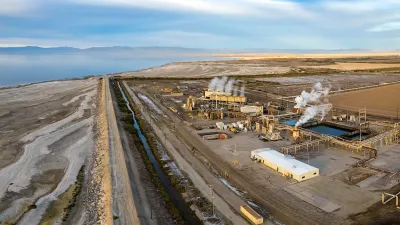
A lithium deposit beneath the Salton Sea is bringing droves of mine developers to California’s Imperial County — and they may have a devastating impact on the county's natural resources. Inside Climate News reports that lithium mines' water demands, combined with the scarcity of water in Imperial County, may lead to water bill spikes for residents who already face high unemployment rates.
There are about 100 proposed mining projects in the United States, two-thirds of which are adjacent to economically and socially vulnerable communities, according to an analysis by Columbia Journalism Investigations and Inside Climate News of demographic measures. Imperial County has greenlit two.
Inside Climate News reports:
Across the West, the lithium boom is on a collision course with climate-driven declines in rivers and aquifers. Federal data shows that almost all proposed or developing lithium projects are in counties where risk of drought is expected to rise sharply—much more so than in most of the nation. Nearly six in 10 are in places where drought is projected to cause some of the most severe impacts.
A recent study concludes that most lithium mining areas won’t have enough water by mid-century to meet the industry’s demands.
Read the full story: The Race for Lithium Is Becoming a Race for Water

Heart of California's Agriculture on Life-Support
Water restrictions on farms in the state have atrophied jobs in the fertile Central Valley, giving communities some of the highest rates of unemployment in the state. As jobs dry up, the need for aid is surpassing what's there to give.
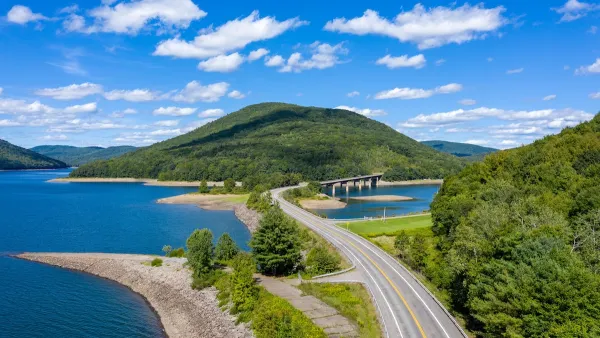
NYC may expand key reservoir after devastating drought
The aqueduct that carries water from the reservoir to New York City has been leaking 35 million gallons of water per day since the 1990s.

If Corpus Christi can’t revive desalination plant project, it may owe Texas $235 million
Earlier this month, city officials declined to pursue developing the plant for the second time in a year.

Planetizen Federal Action Tracker
A weekly monitor of how Trump’s orders and actions are impacting planners and planning in America.

‘Going backwards:’ Baltimore mayor, students rally against state's transit funding plan
Maryland's proposed six-year plan provides no funding for Baltimore’s BMORE bus program and reduces its road maintenance funding.

Detroit to transform waterfront with $2.2 billion investment
Developers will convert about 18 acres of unused parking lot space into civic spaces.

After $600,000 wasted, CA high-speed rail board limits CEO’s power
Ian Choudri will no longer be able to sign, change or manage contracts.

Lithium mines leech water from surrounding communities. Soon, they’ll run dry
Researchers concluded that most lithium mines won't have enough water to meet industry demands by 2050.

El Niño takes lives, infrastructure as U.S. storm systems prove ill-prepared
About two-thirds of America's culverts are in states with outdated design standards.

FREE Course: Walkable City 1: Why Walkability?
After describing his path towards focusing on walkability as the essence of good planning, Jeff Speck marches through his five principal reasons for making more walkable places.
Reinventing Malls: Planning Alchemy—Turning Gray Fields Into Gold
The course focuses on the opportunities and imperatives that shape reinvention of mall sites.

One Hundred Miles
County of Mendocino
planning NEXT
The Architects Foundation
University of Cincinnati Online
Montrose County
Northern Illinois Transit Authority (NITA)
The Pocatello Development Authority