Water restrictions on farms in the state have atrophied jobs in the fertile Central Valley, giving communities some of the highest rates of unemployment in the state. As jobs dry up, the need for aid is surpassing what's there to give.


The drought is a major aspect of the current dire situation in these farming communities near Fresno. Water allocations have been cut back all over the region, in some areas by as much as 90%.
"For the 12-month period ended June 30, the Fresno Community Food Bank distributed a record 14.5 million pounds of food to residents of a three-county area -- double the previous year. So many people mobbed one food-distribution center two weeks ago that some who had waited in triple-digit heat for hours were turned away empty-handed after the food ran out. Unemployment in the counties in July ranged from 13.9% to 15%, compared with 11.9% for California as a whole, state officials say.
'There's never been this kind of need in the Central Valley, ever,' said Dana Wilkie, chief executive of the Fresno food bank. 'In some communities, we're serving 80% of the residents.'"
Thanks to Curbed L.A.
Read the full story: Food Aid Grows in California's Agricultural Heart

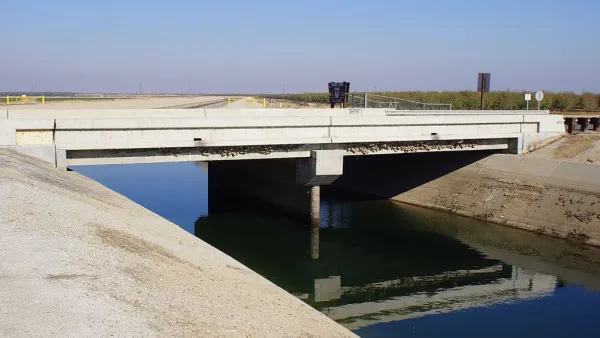
Voters to Decide on Repair of Vital Aqueduct for San Joaquin Valley
California voters in November will have the opportunity to help repair the Friant-Kern Canal, damaged by subsidence, as well as invest in watershed conservation programs, by passing a citizen-initiated $8.9 billion general obligation bond measure.
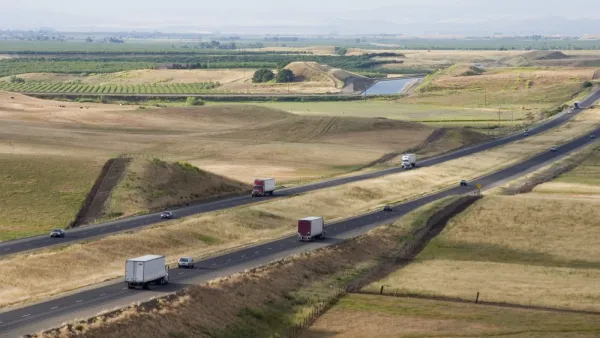
Grant Program Will Pay California Farmers To Repurpose Fallow Land
A new state grant program will help California farmers convert idle land to new purposes in an effort to mitigate the environmental and economic effects of drought on the state's Central Valley.
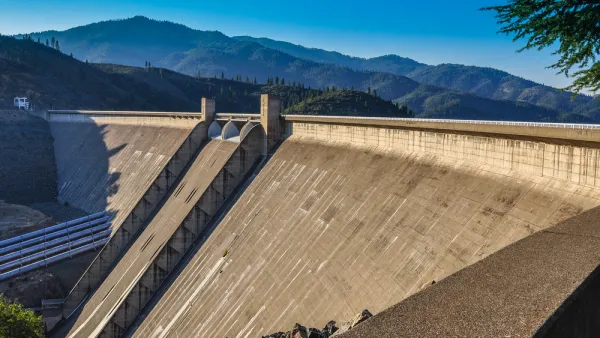
Why Are the Feds Suddenly in Favor of Raising the Shasta Dam?
Despite state opposition and potential violations of California law, the Trump Administration has revived a project that was deemed impracticable only a few years ago.

Planetizen Federal Action Tracker
A weekly monitor of how Trump’s orders and actions are impacting planners and planning in America.

California plans to bury El Niño’s downpour
If the state plays its cards right, it may be able to store a billion acre-feet of El Niño’s water in aquifers.

Chicago breaks ground on $3 billion megadevelopment
The new neighborhood, titled Foundry Park, will one day host 3,700 residences.

This road in NYC is infamously dangerous — and Mamdani can't fix it
New York City's Ocean Parkway is known for reckless driving, but the power to implement safety measures lies with the state rather than the city.

One of Denver’s busiest corridors to gain BRT
The project will span 18 miles and contain 74 bus rapid transit stations.

275,000 bus trips are at stake on Seattle's ballot
If passed, the Seattle Transit Measure would trigger a 0.3% sales tax and raise an average of $138 million per year to maintain and expand Seattle’s bus services.

FREE Course: Walkable City 1: Why Walkability?
After describing his path towards focusing on walkability as the essence of good planning, Jeff Speck marches through his five principal reasons for making more walkable places.
Reinventing Malls: Planning Alchemy—Turning Gray Fields Into Gold
The course focuses on the opportunities and imperatives that shape reinvention of mall sites.

City of Rosemead
Rutgers University, Edward J. Bloustein School of Planning and Public Policy
One Hundred Miles
Hunter College, City University of New York (CUNY)
The Architects Foundation
University of Cincinnati Online
City of Cambridge
Montrose County
The Pocatello Development Authority