A city report shows that free parking, not congestion pricing, is the main driver of limited parking demand in the city.


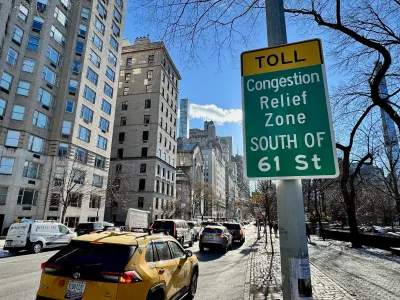
A study from the New York City Department of Transportation shows that the city's new congestion pricing scheme has not affected demand for parking outside the toll area, reports William Thorpe in Cities Today.
According to Thorpe, "The report found little evidence that motorists were avoiding the toll by parking outside the zone and completing their journeys by public transport. Instead, it concludes that longstanding pressure on kerbside parking, particularly free on-street spaces, remains the primary cause of parking shortages across the city."
The report found that parking occupancy outside the congestion zone increased modestly, usually under less than 5 percentage points. Additionally, "occupancy rose across all time periods, including evenings and overnight, suggesting park-and-ride behaviour was not the primary factor behind the increase."
According to Transportation Commissioner Mike Flynn, "the preponderance of free parking across New York City is, by far, the prime driver of limited parking availability and drives the endless battle for curb space."
Read the full story: Study finds no parking surge from New York congestion pricing

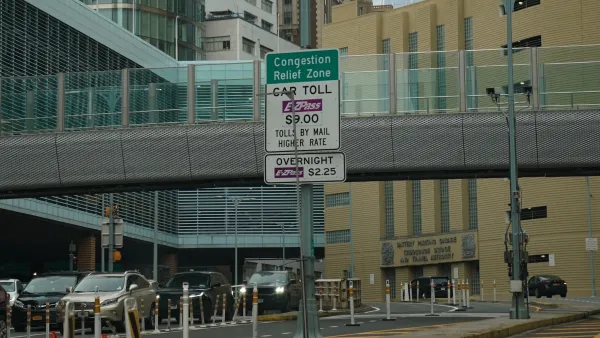
Judge Rules to Keep NYC Congestion Pricing, Ending Trump's Legal Challenge
The decision likely deals a fatal blow to efforts to end the program, but the Trump administration says it will explore other avenues for reversing the congestion pricing scheme.
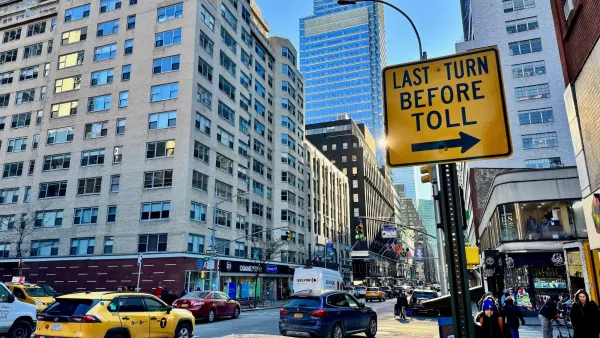
NYC Congestion Pricing Cut Air Pollution by 22% in 6 Months
The program reduced vehicle entries into the toll zone by 11 percent.
NYC Congestion Pricing: Still Working
10 million fewer vehicles entered the congestion pricing zone in the first six months of the program than last year, while pedestrian fatalities are at ‘historic lows.’

Planetizen Federal Action Tracker
A weekly monitor of how Trump’s orders and actions are impacting planners and planning in America.

The state-sanctioned urbicide of Austin
People don’t kill cities. Freeways do.

US to reduce Colorado River water deliveries to Mexico
A new Colorado Treaty amendment reduces Mexico’s Colorado River water allocation by 250,000 acre feet.

NYC cools commuters with city's first rain garden above a bus stop
New York City officials say the plants in the rain garden can absorb 16 gallons of rainwater during heavy storms.

Brightline West’s future may rely on $6 billion federal loan
The company has until Nov. 2 to make a $400 million equity investment into its proposed high-speed rail line.

LA Metro’s ultimatum: no extra buses for LA28 if federal funding isn’t imminently secured
If Metro does not provide additional buses, LA28 organizers will have to find a new way to manage Olympic traffic. LA28’s budget does not include a line item for transit.

FREE Course: Walkable City 1: Why Walkability?
After describing his path towards focusing on walkability as the essence of good planning, Jeff Speck marches through his five principal reasons for making more walkable places.
Reinventing Malls: Planning Alchemy—Turning Gray Fields Into Gold
The course focuses on the opportunities and imperatives that shape reinvention of mall sites.

Eagle County Government
Harvard University Graduate School of Design
Nashville Planning Department
The Architects Foundation
University of Cincinnati Online
The Pocatello Development Authority
The Urban Renewal Agency of the City of Pocatello
Journal of the American Planning Association