Rubber particles that wear off tires combine with other chemicals to create harmful airborne pollutants.


A new study shows that tiny particles of a rubber additive cast off by car tires combine with ozone pollution to pose a health risk to humans and animals.
According to an article in Yale Environment 360, "To understand the potential health risks from tire pollution, researchers exposed human immune cells to a mixture of tire-derived pollutants as well as 6PPD-quinone on its own. The mixture caused rapid cell death, among other harms, according to the research, published in the journal Environment International."
The findings indicate that the risk from airborne tire pollutants may be higher than scientists believed. 6PPD-quinone has been previously implicated in the deaths of spawning salmon in the Pacific Northwest.
According to the study's lead author, another notable finding — that 6PPD-quinone is not particularly harmful to human cells on its own — suggests that "focusing on a single compound may substantially underestimate the real health risks associated with tire-derived air pollution."
FULL STORY: Tire Pollution May Threaten Human Health, Study Finds

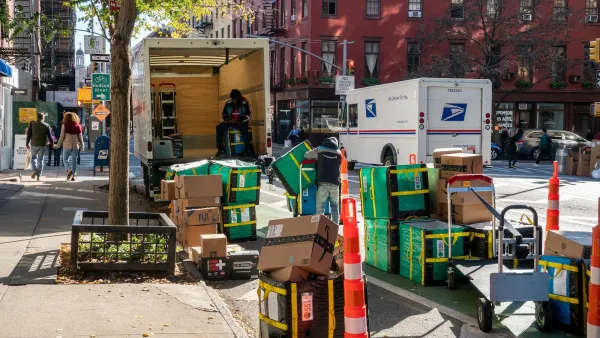
Report: 75% of NYC warehouses are in 'disadvantaged communities'
Low-income New Yorkers are 1.2 times more likely to live within half a mile of a warehouse.

Study: Pavement covers 40% of Phoenix
A new study reveals how ultrafine particles emitted by pavement worsen air quality.
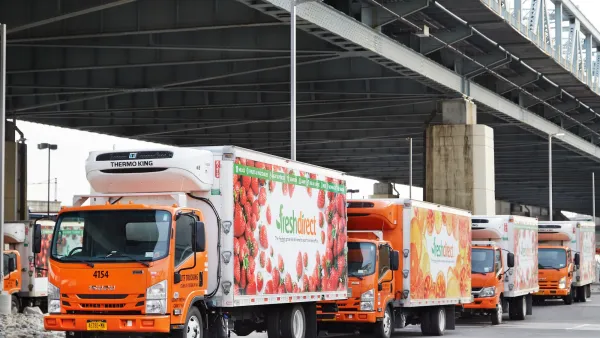
NYC Congestion Pricing Revenue Will Fund up to 1,000 Hybrid Refrigerated Trucks
Traffic to the Hunts Point Produce Market causes increased rates of asthma in surrounding neighborhoods.

Planetizen Federal Action Tracker
A weekly monitor of how Trump’s orders and actions are impacting planners and planning in America.

The state-sanctioned urbicide of Austin
People don’t kill cities. Freeways do.

US to reduce Colorado River water deliveries to Mexico
A new Colorado Treaty amendment reduces Mexico’s Colorado River water allocation by 250,000 acre feet.

5 New England states march closer to 800 megawatt wind energy project
Securing federal approval for the project may be complicated under the Trump administration, which has historically been hostile towards domestic wind power.

Baltimore to break ground on $50 million Transit Priority Project
The project will bring faster bus trips, safer streets and better bike connections to Baltimore.

Airbnb launches $250 million 'last-dollar financing' housing accelerator, makes first investment in Austin
The company will put $6.4 million towards affordable housing development in Texas’ capital.

FREE Course: Walkable City 1: Why Walkability?
After describing his path towards focusing on walkability as the essence of good planning, Jeff Speck marches through his five principal reasons for making more walkable places.
Reinventing Malls: Planning Alchemy—Turning Gray Fields Into Gold
The course focuses on the opportunities and imperatives that shape reinvention of mall sites.

Eagle County Government
Harvard University Graduate School of Design
Nashville Planning Department
The Architects Foundation
University of Cincinnati Online
The Pocatello Development Authority
The Urban Renewal Agency of the City of Pocatello
Journal of the American Planning Association