A new study reveals how ultrafine particles emitted by pavement worsen air quality.


New research from the Arizona State University reveals that 40% of the city of Phoenix is covered in pavement. According to an article by Joanna Allhands for ASU News, this is enough to cover the entire city of San Francisco four times over.
Researcher Elham Fini decided to assess an overlooked impact of asphalt: "volatile organic compounds that escape from bitumen, the black, sticky petroleum byproduct that holds asphalt together." As these compounds escape from pavement during warm days, they form ultrafine particles that worsen air quality and can cause dizziness and long-term damage to human lungs. "Tests and a modeling analysis also suggest that they can cause significant neurological damage in humans, particularly among women and the elderly."
Fini hopes research like hers will lead to better protections for workers and communities exposed to asphalt on a daily basis. "She has teamed up with Peter Lammers, chief scientist at the Arizona Center for Algae Technology and Innovation, to begin growing a strain of algae that could reduce VOC emissions using wastewater from a Phoenix treatment plant." The algae has been shown to reduce the toxicity of asphalt emissions by roughly 100-fold and can slow how quickly asphalt breaks down.
According to Allhands, "Fini is exploring other binder options, including a product made from the leftover branches of forest-thinning projects, and working with Phoenix to pave a section of road with algae-infused asphalt."
FULL STORY: Asphalt is everywhere, but is it bad for our health?

Report: 25 Percent of Americans Live With Poor Air Quality
Fires and extreme heat are generating more harmful particulate matter.
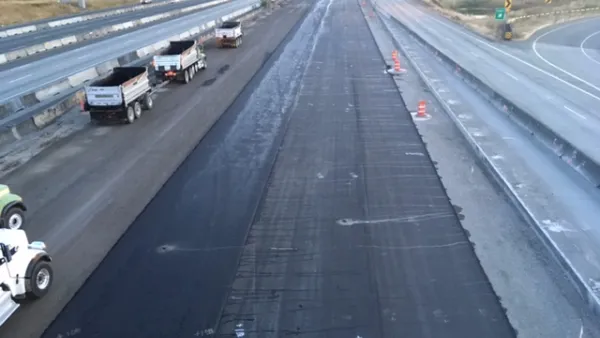
Hot Asphalt May Increase Air Pollution in Urban Areas
Research shows that road asphalt exposed to heat and sunlight may eventually become a significant emissions source.
Cool Routes app plots shady walks in arid Arizona
Alternate routes provided by the app reduced the heat experienced during the walk by an average of 4.5 degrees.

The state-sanctioned urbicide of Austin
People don’t kill cities. Freeways do.

US to reduce Colorado River water deliveries to Mexico
A new Colorado Treaty amendment reduces Mexico’s Colorado River water allocation by 250,000 acre feet.

New Jersey’s second-largest city bans standalone data centers
Jersey City will continue to allow co-location facilities, such as those meant for research institutions that store their own data.

Amtrak not solely to blame for New Jersey commuter rail's unreliability, report finds
A new study from the Garden State Initiative found that NJ Transit’s budget grew 20% across a 4 year period, but reliability declined significantly over the same period.

EPA erases limits on planet-warming pollution from power plants
Under Monday’s plan, power plants would still have some limits on how much mercury, arsenic and other contaminants they can emit.

Phoenix announces new on-demand transit service, more frequent RAPID buses
Both new services will launch in October, and are part of Phoenix's Project Effective Access Solutions for Easing Congestion.

FREE Course: Walkable City 1: Why Walkability?
After describing his path towards focusing on walkability as the essence of good planning, Jeff Speck marches through his five principal reasons for making more walkable places.
Reinventing Malls: Planning Alchemy—Turning Gray Fields Into Gold
The course focuses on the opportunities and imperatives that shape reinvention of mall sites.

Eagle County Government
Harvard University Graduate School of Design
Nashville Planning Department
The Architects Foundation
University of Cincinnati Online
The Pocatello Development Authority
The Urban Renewal Agency of the City of Pocatello
Journal of the American Planning Association