A small group of beavers is increasing biodiversity and creating cost-free flood mitigation infrastructure.


A West London Tube station that experienced frequent flooding turned to an unusual mitigation measure: beavers.
As Erik Barnes explains in a Good article, "A family of five beavers was released through the Ealing Beaver Project to act as “nature’s engineers” and help solve London’s flooding problem. Within weeks, the beavers built a dam in the creek, causing it to pool into a pond. Along with that, the beavers created new pathways and tributaries that further diverted water from the main creek."
The beavers built seven dams in their first year and led to expanded biodiversity in the area. According to Barnes, "This beaver introduction hasn’t just solved a climate-related flooding problem, but it has also brought other benefits. Visitors and residents enjoy the newly biodiverse nature reserves by going on 'beaver safaris' to see the creatures at work in person. Then there is the obvious benefit of the beavers solving these flooding problems effectively free of charge."
FULL STORY: As climate change causes flooding in London, experts found an effective, low-cost solution: beavers

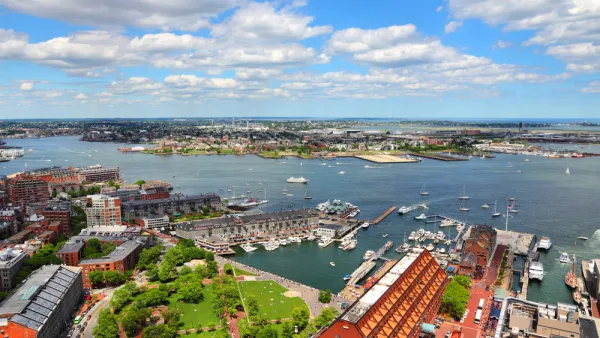
Study To Assess Climate Mitigation Options for East Boston
A grant-funded research team will evaluate solutions for shoring up the area’s flood protection strategies and improving access and service on the Blue Line for local residents.

$22 Billion Elizabeth Line Finally Opens in London, With the Queen in Attendance
May 17, 2022 was a big day for transit in London.

Beavers and bobcats populate a 210-acre 'secret garden' in Las Vegas
The Clark County Wetlands Park is home to over 300 species of birds and 70 species of mammals.

Planetizen Federal Action Tracker
A weekly monitor of how Trump’s orders and actions are impacting planners and planning in America.

The state-sanctioned urbicide of Austin
People don’t kill cities. Freeways do.

US to reduce Colorado River water deliveries to Mexico
A new Colorado Treaty amendment reduces Mexico’s Colorado River water allocation by 250,000 acre feet.

5 New England states march closer to 800 megawatt wind energy project
Securing federal approval for the project may be complicated under the Trump administration, which has historically been hostile towards domestic wind power.

Baltimore to break ground on $50 million Transit Priority Project
The project will bring faster bus trips, safer streets and better bike connections to Baltimore.

Airbnb launches $250 million 'last-dollar financing' housing accelerator, makes first investment in Austin
The company will put $6.4 million towards affordable housing development in Texas’ capital.

FREE Course: Walkable City 1: Why Walkability?
After describing his path towards focusing on walkability as the essence of good planning, Jeff Speck marches through his five principal reasons for making more walkable places.
Reinventing Malls: Planning Alchemy—Turning Gray Fields Into Gold
The course focuses on the opportunities and imperatives that shape reinvention of mall sites.

Eagle County Government
Harvard University Graduate School of Design
Nashville Planning Department
The Architects Foundation
University of Cincinnati Online
The Pocatello Development Authority
The Urban Renewal Agency of the City of Pocatello
Journal of the American Planning Association