The proposed budget allocates $2 million to Summer Streets and Open Streets, less than the $2.1 million allocated by the Adams administration last year.


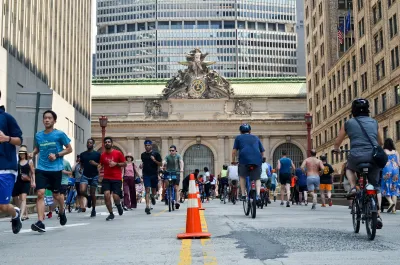
New York City Mayor Zohran Mamdani’s proposed budget does not include expanded funding for Open Streets despite the mayor’s promise to grow the program, reports David Meyer in Streetsblog NYC.
The program is allocated just $2 million, less than the $2.1 million budgeted by the Adams administration for last year and far below the $5 million that DOT officials say is needed to keep the program running at pandemic-era capacity. According to the Mamdani administration, the $2 million is “a down payment to support the programs as the administration explores bold new ideas for our streets.”
“It's not clear how much of Mamdani's proposed $2 million will go to Open Streets versus Summer Streets, an older program that bars cars on miles of roadways for recreational activities on five Saturdays in summer,” Meyer adds.
Open Streets has been shown to help increase jobs and reduce storefront vacancies, giving the city more tax revenue. “Another study, released last month by State Comptroller Tom DiNapoli, found job growth on non-school Open Streets also outpaced other parts of the city.”
FULL STORY: Mamdani Falls Short of Campaign Pledge to Expand Open Streets Funding Amid Budget Crunch

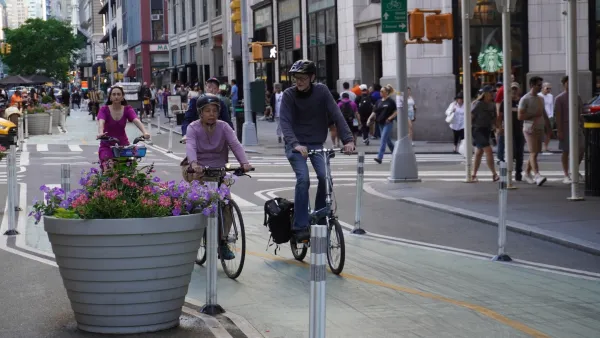
Janette Sadik-Khan has Some Advice for Zohran Mamdani
The former NYC transportation commissioner says Mamdani’s streets plan is ambitious, but not impossible.
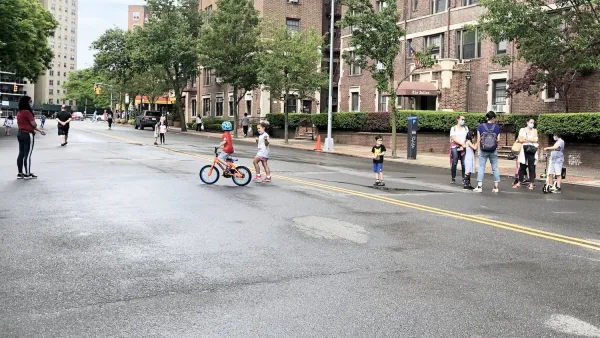
NYC Open Streets Organizers Call for City Support
The number of open streets projects has dropped year after year as volunteer groups struggle to fund and staff them.
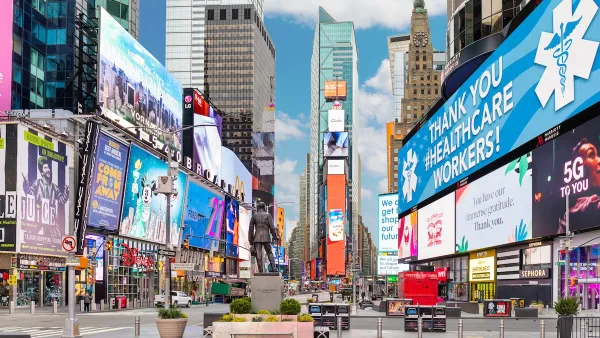
NYC Officials Announce Broadway Pedestrianization Project
Two blocks of the marquee street will become mostly car-free public spaces.

Planetizen Federal Action Tracker
A weekly monitor of how Trump’s orders and actions are impacting planners and planning in America.

The state-sanctioned urbicide of Austin
People don’t kill cities. Freeways do.

US to reduce Colorado River water deliveries to Mexico
A new Colorado Treaty amendment reduces Mexico’s Colorado River water allocation by 250,000 acre feet.

5 New England states march closer to 800 megawatt wind energy project
Securing federal approval for the project may be complicated under the Trump administration, which has historically been hostile towards domestic wind power.

Baltimore to break ground on $50 million Transit Priority Project
The project will bring faster bus trips, safer streets and better bike connections to Baltimore.

Airbnb launches $250 million 'last-dollar financing' housing accelerator, makes first investment in Austin
The company will put $6.4 million towards affordable housing development in Texas’ capital.

FREE Course: Walkable City 1: Why Walkability?
After describing his path towards focusing on walkability as the essence of good planning, Jeff Speck marches through his five principal reasons for making more walkable places.
Reinventing Malls: Planning Alchemy—Turning Gray Fields Into Gold
The course focuses on the opportunities and imperatives that shape reinvention of mall sites.

Eagle County Government
Harvard University Graduate School of Design
Nashville Planning Department
The Architects Foundation
University of Cincinnati Online
The Pocatello Development Authority
The Urban Renewal Agency of the City of Pocatello
Journal of the American Planning Association