By framing car-free as the only way forward, we have made the perfect the enemy of the good. It’s time we emphasize — and promote — small progress.



Within the urbanist movement, there is a big push to leave the car behind and embrace alternative modes of transportation. I am a big fan of ending car dependency in the United States, yet on the path to ending this long reign, some things need to be considered. Yes, being car-free is ideal, yet the state of this country will just not make it possible for all of us to live in an environment where this happens.
Take the New Urbanist Transect diagram below, for example. You could very well argue most of America lives in suburban neighborhoods such as T3. Some of them may have a downtown that looks like T4 or T5 even. When transforming the urban landscape we need to have this in mind. How feasible would it be to transform a sub-urban zone (T3) to an urban core zone (T5) or just an urban center zone (T5)? Or how feasible would it be to transform a suburban municipality in its entirety for it to look mostly like its downtown? The point is that passing from T3 to T6/T5 is hard. While there are certain places where this has indeed happened, it is not the norm.
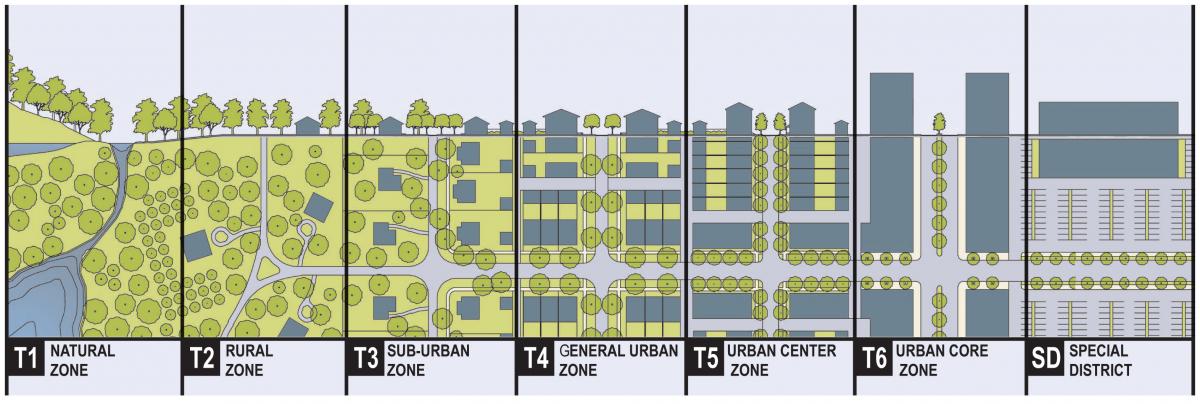
When changing the built environment there needs to be an order, and in this regard it means going through each phase one by one. No one will support the idea of their suburban town (T3) transforming into an urban area overnight (T5/T6) — it is just too big of a change. American architect (and one of the founders of the Congress for the New Urbanism) Andres Duany understands this: “Every other Transect zone, T2, T4, and T6, are actually transition zones. They're what in environmentalism is called an ecotone, the overlap of two ecozones. For example, T4 is a combination of T3 and T5. And T2 is a piece of nature that's actually been slightly urbanized. It's also in transition.” This is an important idea because it emphasizes that transformation is sequential, helping explain why incremental change is not only realistic, but necessary.
Now, in T3 no one is ditching their car. In T4 you may see some brave souls ditching their cars and T5 more so, since it has many characteristics for efficient transit. Finally T6 (given an efficient local rapid transit system) is where you could easily live “car free.” This is an oversimplification of course, but it captures the main idea. How are you going to tell someone living in T3 to be car free?
So here is the thesis: Yes, being car free is ideal, but being car light is probably a more achievable goal for most of the country. To achieve change, compromises need to be made, and this is something we need to consider. Do not underestimate the good of convincing people to be more car light — it will still make a significant difference.
“Dynamic norms”
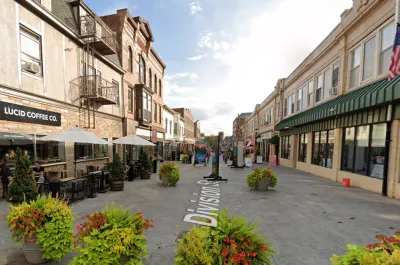
Take the wonderful New Jersey Transit Villages, for example. These are all mostly located in suburban neighborhoods (T3), with denser downtowns (T4, T5). The initiative redevelops downtowns into denser and more resilient communities via the redevelopment of underused/unused lots into apartment buildings and commercial establishments, making sometimes mixed-use developments as well. In my opinion this is a great way to start the transition from a very suburban area into higher density. Now, several of these transit villages have enough businesses that residents do not need to go far into other towns for every single thing.
The development of the Division Street plaza in Somerville, NJ, was part of its Transit Village transformation
Combine this with a carefully curated selection of commercial establishments downtown, including basic necessities such as grocery stores, and people will ditch their car. If the town has a regional transit hub, then people may just walk to it! The more you think about it, more opportunities pop out. Of course, beach, hiking, and trying a new restaurant (in that specific town you have been meaning to visit for 2 months) trips will still happen. But several others will not. The result is still a community that is less reliant on its motor vehicles. The vital factor is that you are not accepting the reality, but reforming it — even if only a little.
From a marketing perspective, incentivizing car-loving Americans to reduce their dependence on the automobile is a better slogan than “sell your car and bike to work every day.” Framing your proposals is powerful and should not be ignored. A great parallel can be made in the effort to make society consume less red meat. A 2021 study published in the Journal of Environmental Psychology, found that “We find that a scalable intervention that uses dynamic norms with direct appeals to reduce meat consumption in an op-ed led to a decrease in meat consumed by 7–9 percent over a 5-month period. However, similar op-eds that contain appeals to eliminate meat consumption were not effective.”
This means that persuasions to eat less meat were more effective than persuasions to totally cut meat from the study participants’ lives. This is no surprise, humans do not like instant change — we love our routines. Gradual change is tolerated while instant change is usually rejected. In this way, our approach to get more people into the urbanist movement should be a milder version than “get rid of your car.”
Honey and vinegar
Additionally, incentives are incredibly vital for this mission as well. One thing is understanding the benefits of being car-free, but another is to see a direct benefit. For instance, in the “High Cost of Free Parking,” the late Donald Shoup emphasizes the high cost of parking by giving the cost back to consumers in exchange to not driving to work. We know some places charge for parking, but what would happen if you paid people not to use a car? Some employers give monthly incentives to all employees who do not commute by car. It is the same logic as the government giving tax credits for EVs. The best part is that it works!
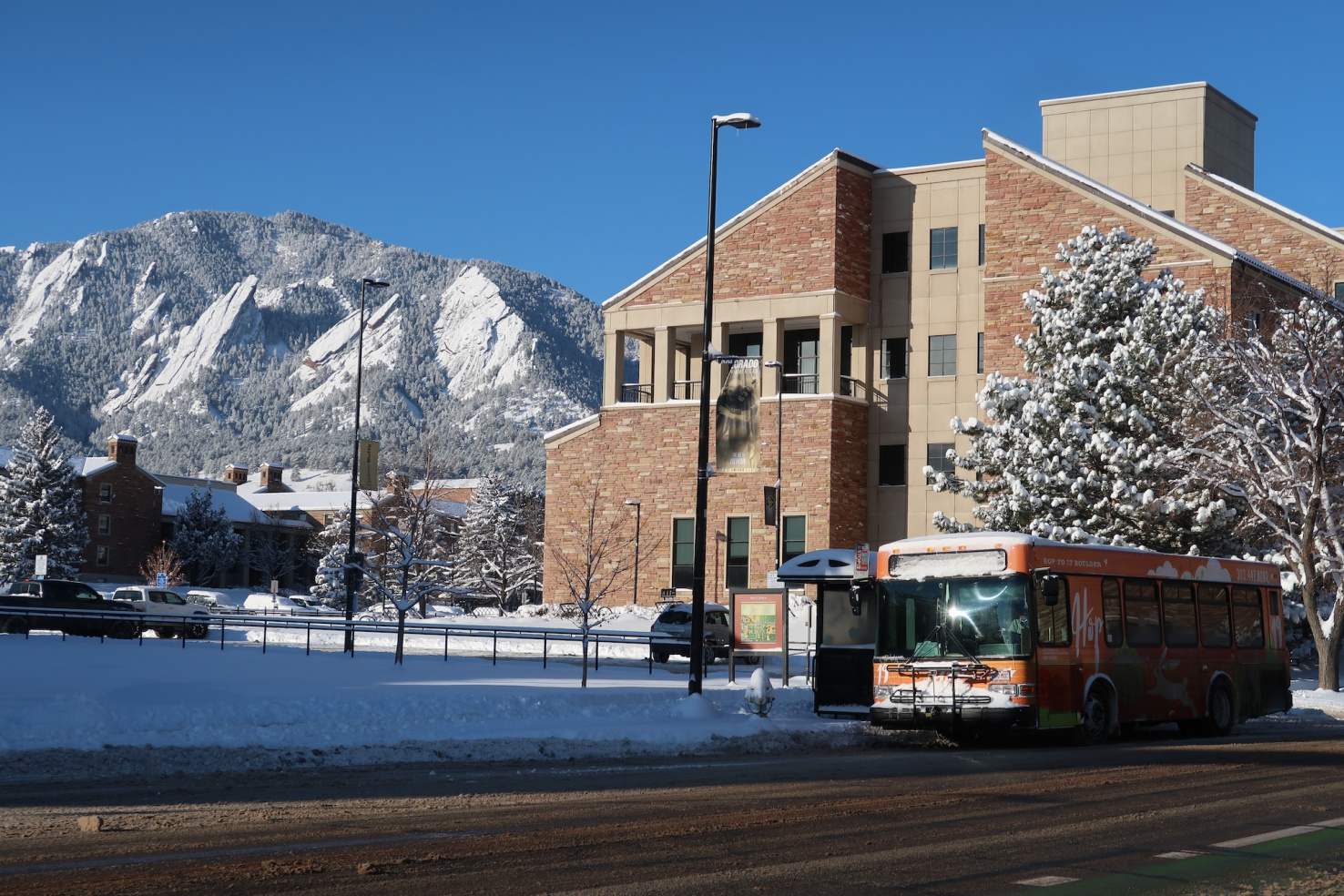
For instance Boulder, Colorado uses downtown parking revenue, to buy transit passes for all downtown workers. This is smart for two things. First, the same way free parking incentivizes driving, free transit passes incentivize riding transit. Second, seeing a direct benefit out of a policy (such as charging for parking), is an excellent way for people to support your policy. A great way of achieving this is Parking Benefit Districts (PBDs), which allow the retention of money from parking meters locally. In this way Shoup suggests PBDs could be used to “put the money from parking fees back into the neighborhood — whether in the form of more frequent bus service, tree plantings, or just cash rebates — so that people didn’t perceive charging for parking as yet another tax.” Hence it is not only free transit passes — people could literally get reimbursed for not driving.
By framing and rewarding people who do not drive — rather than punishing those who do — we can get more people to rely less on the automobile. And these issues are not binary. There is no black and white. In-between positions exist, and if you are able to convince one person to do one fewer trip per week by car, it is better than nothing. Do not let perfection hinder progress. You catch more flies with honey than you do with vinegar.

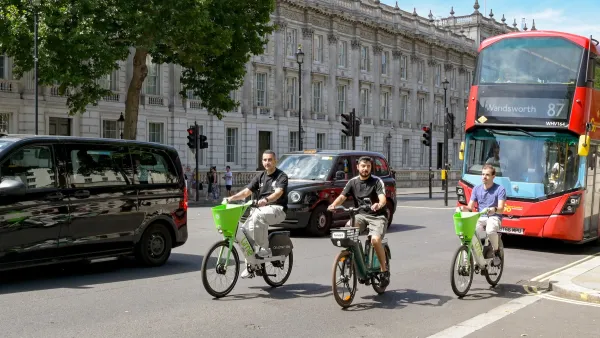
Bike use in London grew by 43% since 2019, but car use remains roughly the same
The city's efforts to reduce car use have stalled despite ambitious programs like congestion pricing and low-traffic neighborhoods.

Study: Half of Global Commutes Made by Car; Rates Vary Widely
The United States is conspicuously consistent in its high rates of car usage, a new analysis finds.
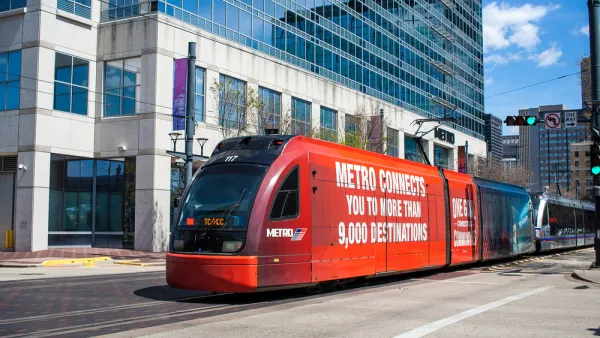
Houston Inches Toward Reduced Car Dependency
The city is investing more in biking, walking, and public transit, but a lack of funding and counterproductive moves from the Texas Department of Transportation are slowing the process of shifting away from personal automobile dependency.

Planetizen Federal Action Tracker
A weekly monitor of how Trump’s orders and actions are impacting planners and planning in America.

‘Going backwards:’ Baltimore mayor, students rally against state's transit funding plan
Maryland's proposed six-year plan provides no funding for Baltimore’s BMORE bus program and reduces its road maintenance funding.

Detroit to transform waterfront with $2.2 billion investment
Developers will convert about 18 acres of unused parking lot space into civic spaces.

HUD modernizes 50-year-old manufactured housing framework
The Next Generation Manufactured Housing Action Plan establishes new energy-efficiency standards for manufactured homes, and new guidelines for anchoring them.

New CA housing laws tear down development red tape
Recently-signed legislation makes building starter homes and ADUs cheaper and faster in California.

Metrolink finishes first expansion in 20 years
The transit agency is now one of very few in the United States to connect two major airports.

FREE Course: Walkable City 1: Why Walkability?
After describing his path towards focusing on walkability as the essence of good planning, Jeff Speck marches through his five principal reasons for making more walkable places.
Reinventing Malls: Planning Alchemy—Turning Gray Fields Into Gold
The course focuses on the opportunities and imperatives that shape reinvention of mall sites.

One Hundred Miles
County of Mendocino
planning NEXT
The Architects Foundation
University of Cincinnati Online
Montrose County
Northern Illinois Transit Authority (NITA)
The Pocatello Development Authority

