When “America is Building Again” while decentering equity, the ghost of Robert Moses haunts us.



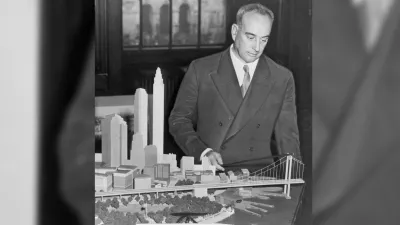
This column is the first in a new Planetizen exclusive monthly series by Seattle-based transportation safety planner, Kristina Curtiss. Learn more about Kristina here.
Many of my friends hate Robert Moses. Those who do not simply do not know of his existence. Seeing Robert Moses’ legacy as a villain in the history of New York City development is a common take for those who work in the built environment. To some extent, that opinion is accompanied by an acknowledgment that we have built institutional safeguards that could prevent someone like Robert Moses from emerging again.
However, that can be a dangerous assumption in the current political era in the United States. With the current administration’s motivation to build traditional highway projects, movement toward removing “red tape,” and focus on rolling back diversity, equity, and inclusion (DEI) requirements, many of the foundational, institutional safeguards that our infrastructure projects rely on are in jeopardy. The culmination of this could be another era of Robert Moses-like policies and infrastructure plans.
Developing infrastructure projects in the style of Robert Moses risks disrupting communities, separating neighbors, and recreating a legacy of infrastructure-based segregation. Communities deserve infrastructure projects that work for them, not against them; practitioners in the built environment should build projects that listen to the needs of the communities in which they work; and the federal government should invest in policies that prioritize people over the convenience of building infrastructure projects quickly.

The legacy of Robert Moses
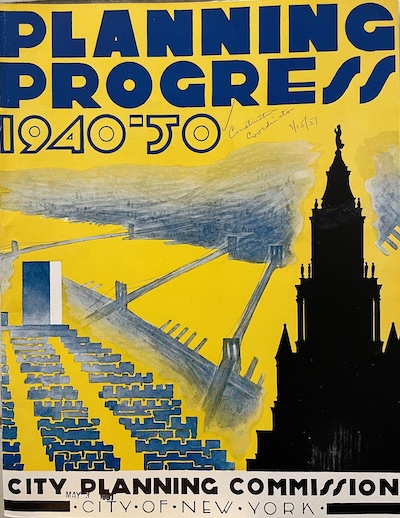
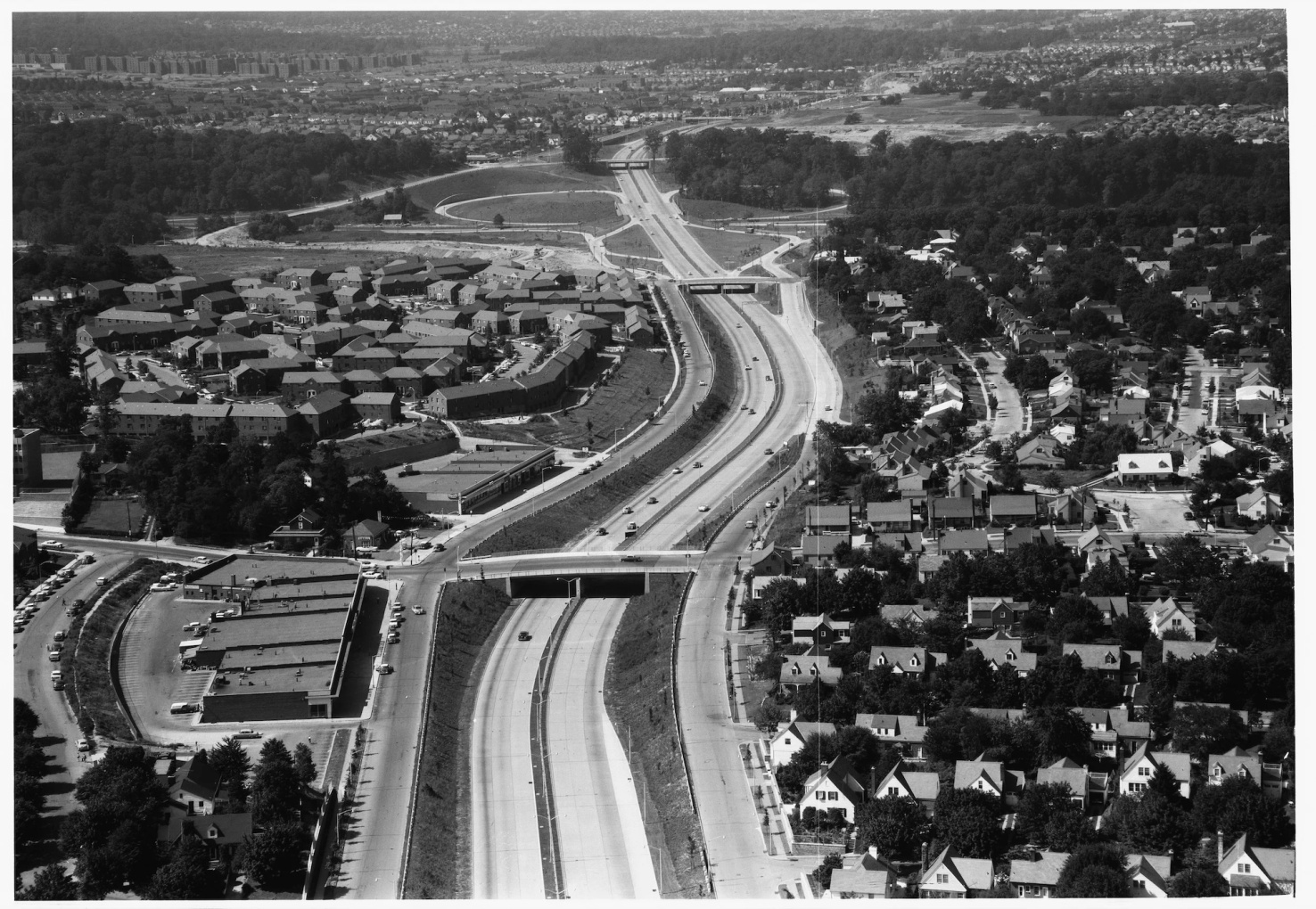
For those unfamiliar, Robert Moses was an influential character in defining New York City’s current built environment. He was a champion for ongoing intra-urban highway expansion and helped with the design and build of just about every highway in New York City, including the Cross Bronx Expressway, Long Island Expressway, the Memorial Highway, and the Belt Parkway.
While Moses was effective at building infrastructure projects at a time when there was demand, it came at the expense of New York City’s low-income communities of color. His infrastructure projects displaced over 60,000 people in the Bronx, who received buyouts well below market rate upon losing their homes. Moses saw many of these neighborhoods as “slums” or “blight” and advocated for their removal. In a 1959 speech, he said, “Our categorical imperative is action to clear the slums. We can't let minorities dictate that this century-old chore will be put off another generation or finally abandoned.”
Moses harmed New York City’s neighborhoods by steamrolling through areas with little political power or say. Political structures that required integrating community feedback were nonexistent. Modern safeguards like environmental protections, which could have protected low-income communities of color, did not exist. Most importantly, Moses defined a planning process for interstate highways that had little to no regard for those who construction displaced. He relied on it being easier to build an infrastructure project than to tear it out. To this day, we still see the impacts of his designs, most notably the displacement and segregation they caused.
America is “building again”
Press releases from the Trump administration’s transportation department proclaim “America is Building Again.” The administration has focused its priority on “build[ing] bigger and bolder than ever before” and removing “costly red tape” related to environmental review to make it easier and faster to build construction projects. Press releases also refer to infrastructure projects as “big” and “beautiful,” which will “propel America forward for generations.” The Trump administration has also set its priority for infrastructure spending over the next reauthorization: a “traditional highway bill” which, according to the Chair of the House Transportation and Infrastructure Committee Rep. Sam Graves, “means building roads and bridges, laying asphalt, pouring concrete.” The prioritization of building as much and as easily as possible, with a focus on traditional highway spending, signals that the Administration’s priority is miles of roads paved and not those that could be impacted by it. If “America is Building Again” is not the most Moses-esque phrase you have heard this year, I do not know what else is.
Public engagement as a safeguard against Robert Moses
It is widely regarded that inclusive and participatory planning processes, including community engagement as a check and balance to government, are tools that could have prevented or lessened the harm of Moses’s work and ideology in communities. Many practitioners now see the importance of transparency and public participation as essential to holding inherently governmental decision-making accountable.
Through a series of policy changes, the Trump administration has undermined the importance of public engagement in infrastructure development and has limited required comment periods under the National Environmental Policy Act (NEPA) procedures. NEPA requires environmental review for federal projects, which changed the role that state and local governments play in planning and building infrastructure. Because of NEPA, there is a requirement for public involvement and community engagement for large infrastructure projects that use federal funds and go through the impact analysis process. However, as the administration slashes the aforementioned “red tape,” they seek to update the NEPA process to “expedite and simplify” infrastructure investment. Others propose to fully eliminate it. These challenges to community engagement could be just the beginning. The Trump administration could continue to roll back regulations and safeguards that are designed to make sure communities have a voice and grounds to stand on to challenge infrastructure projects.
While it is important to note that NEPA-focused community engagement, as it exists in the status quo, can be a broken process that maintains the power of white and wealthy neighborhoods, the existence of engagement as a requirement for checks and balances is still important. Marc J. Dunkelman writes that “the determination to protect against latter-day Robert Moses-types now serves not only to thwart abuse, but also to undermine government’s ability to do big things.” However, Dunkelman’s argument assumes that the government’s ability to do big things is rooted in doing good. When the wrong government, with the wrong motive, is able to build projects without regard for the repercussions, abuse has not been thwarted.
Removing equity or rewriting history?
Influencing public engagement is just one of the many actions the Trump administration has taken at the Federal level to challenge safeguards and progress made to protect the equity needs of all Americans in infrastructure projects. The administration has also repealed all of the Biden-era DEI Directives, fired equity-focused staff, defunded equity-focused research, and removed equity-focused materials from public websites.
What happens when we build infrastructure projects without acknowledging equity and learning from the inequitable and segregationist decision-making process of the past? We risk recreating the same choices that harmed low-income communities of color to begin with.
Trying to reconnect our communities
To this day, cities are working to address the impact of Robert Moses’ strategy of infrastructural segregation. New Rochelle, New York, received funding through the Bipartisan Infrastructure Law’s Reconnecting Communities Pilot Grant Program to calm and reduce traffic on Moses’ Memorial Highway. Thanks to programs like Reconnecting Communities, cities across the United States that modeled Moses’ legacy of infrastructural segregation can also take steps towards reversing that harm.
The legacy to prevent modern-day Moses is no more evident than in the fight to thwart Reconnecting Communities’ power. The grant program provided $20 billion to reconnect neighborhoods cut off by historic infrastructure investments, including those perpetuated by Moses’ legacy. This program was the first of its kind to acknowledge the legacy of infrastructural segregation and the psychological impact it had on communities, while seeking to rectify historical harms and redesign infrastructure to promote connectedness. Naturally, the Trump administration is putting this grant’s funding at risk and aims to cut $2.46 billion in unobligated funding.
The ideology of Robert Moses is not dead
Even though Robert Moses died almost half a century ago, his legacy risks living on through his harmful infrastructure practices. In a modern transportation infrastructure environment focused on building, decentering equity, and undoing progress in the name of traditional highway construction, the ghost of Robert Moses haunts us. It is up to advocates and practitioners to fight the good fight to prevent the re-creation of the same infrastructure legacy of the American highway system's expansion.

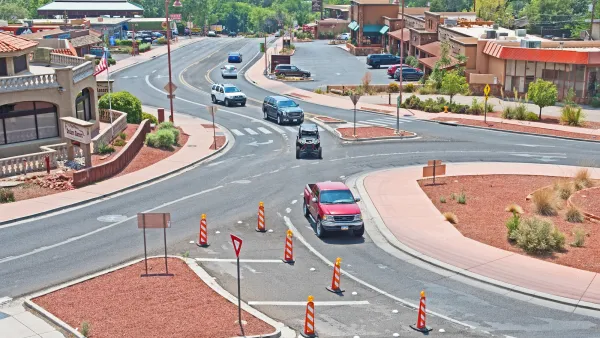
Study: Roundabouts are Primarily in Wealthier Neighborhoods
A North Carolina study sheds light on inequities in road safety interventions.
Reclaiming Transportation as a Place of Resistance
The systems that move us are not neutral — and we don’t have to pretend like they are.
Historic Black Alabama Community Fights Displacement for Concrete Plant
Residents of Mobile’s Africatown neighborhood say building a concrete plant near homes and a historic site is “a step backwards.”

Planetizen Federal Action Tracker
A weekly monitor of how Trump’s orders and actions are impacting planners and planning in America.

The state-sanctioned urbicide of Austin
People don’t kill cities. Freeways do.

Colorado’s Largest Data Center Could Rise Next to Homes — Without a Public Hearing
The proposed campus would consume 11 times the power of Denver International Airport; as it has across the country, opposition mounts.
Judges permit Denver to divert 77,000 acre feet from the Colorado River for reservoir expansion
Overuse and climate change have caused the Colorado River’s water levels to plummet.
Amtrak, CN end decades-long dispute with eight-year agreement
The new operating agreement establishes an updated framework for the companies to work together, including processes to resolve disputes.
Raised interest rates may kill financially vulnerable construction projects
The chief economist at ConstructConnect warns that if construction project owners are negatively impacted by the raised rates, it could result in delayed payments to contractors.

FREE Course: Walkable City 1: Why Walkability?
After describing his path towards focusing on walkability as the essence of good planning, Jeff Speck marches through his five principal reasons for making more walkable places.
Reinventing Malls: Planning Alchemy—Turning Gray Fields Into Gold
The course focuses on the opportunities and imperatives that shape reinvention of mall sites.

KFH Group Inc.
Greater Baltimore Committee
Eagle County Government
The Architects Foundation
University of Cincinnati Online
The Pocatello Development Authority
The Urban Renewal Agency of the City of Pocatello


