The systems that move us are not neutral — and we don’t have to pretend like they are.



When you think about a transportation network, you think of the infrastructure that supports the people who walk, bike, drive, and take transit. Often, when planning that transportation network, practitioners consider moving the volume of people driving, the comfort of people walking and biking, the safety of the roadway design, or the ability of the transportation system to encourage people to change their travel behavior. This month, we are also seeing a re-emerging theme that is essential to note when thinking about a transportation network: it is a place of resistance.
If you are a person who drives every day, you may see your commute with your privately owned vehicle through your transportation network as apolitical and thus far from an act of resistance. However, this has never been the case. The ability for you to own your private car is political. Highways were built as political decisions, whether through cornfields to support national defense or through Black neighborhoods to connect inner cities. Roads were often prioritized for white communities with the intention to exclude their diverse neighbors. To this day, infrastructure funding to repair the very roads that were built on exclusion continues to be a political issue as our infrastructure ages, which disproportionately impacts low-income communities of color. Even your ability to find free parking is inherently political.
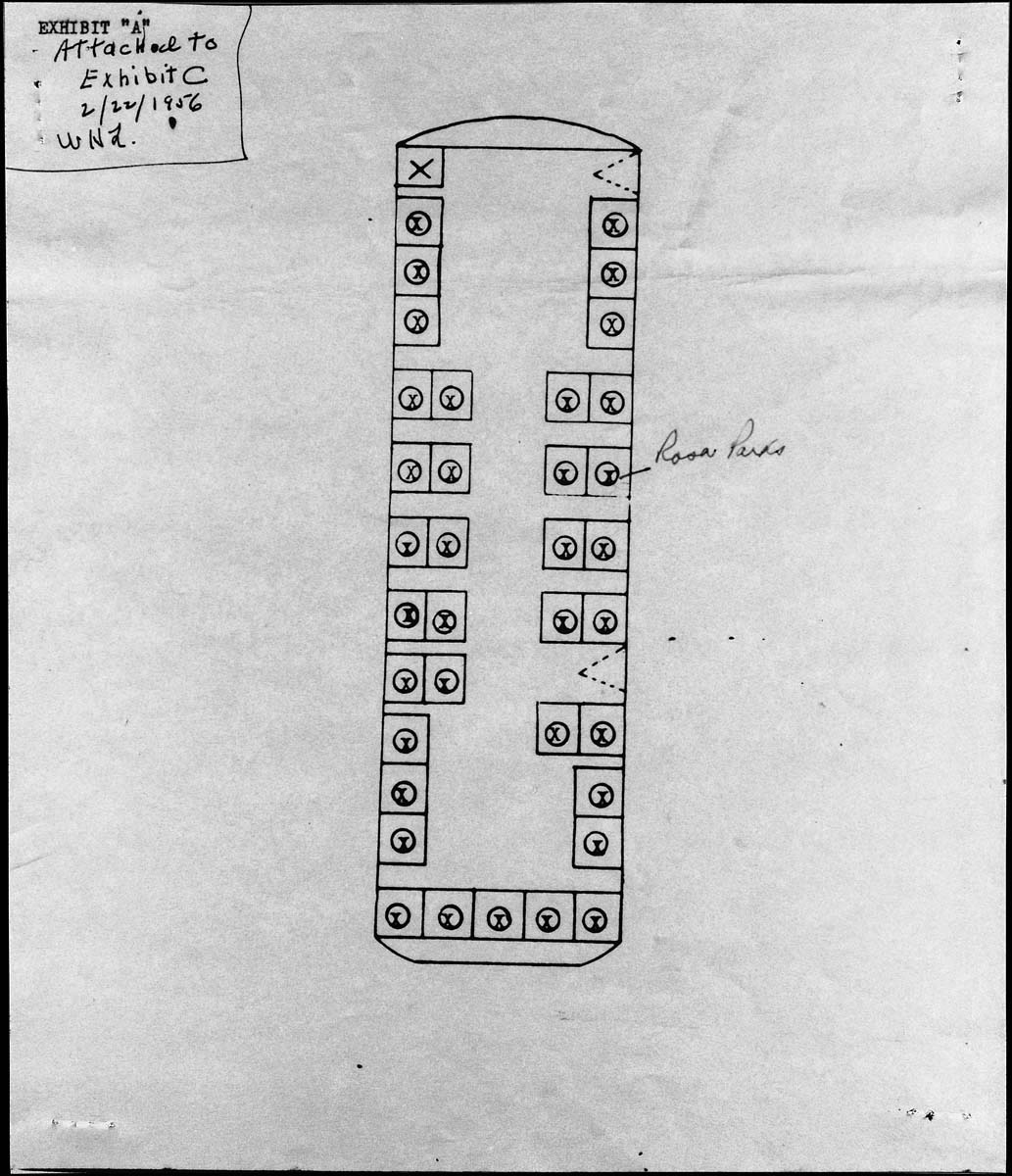
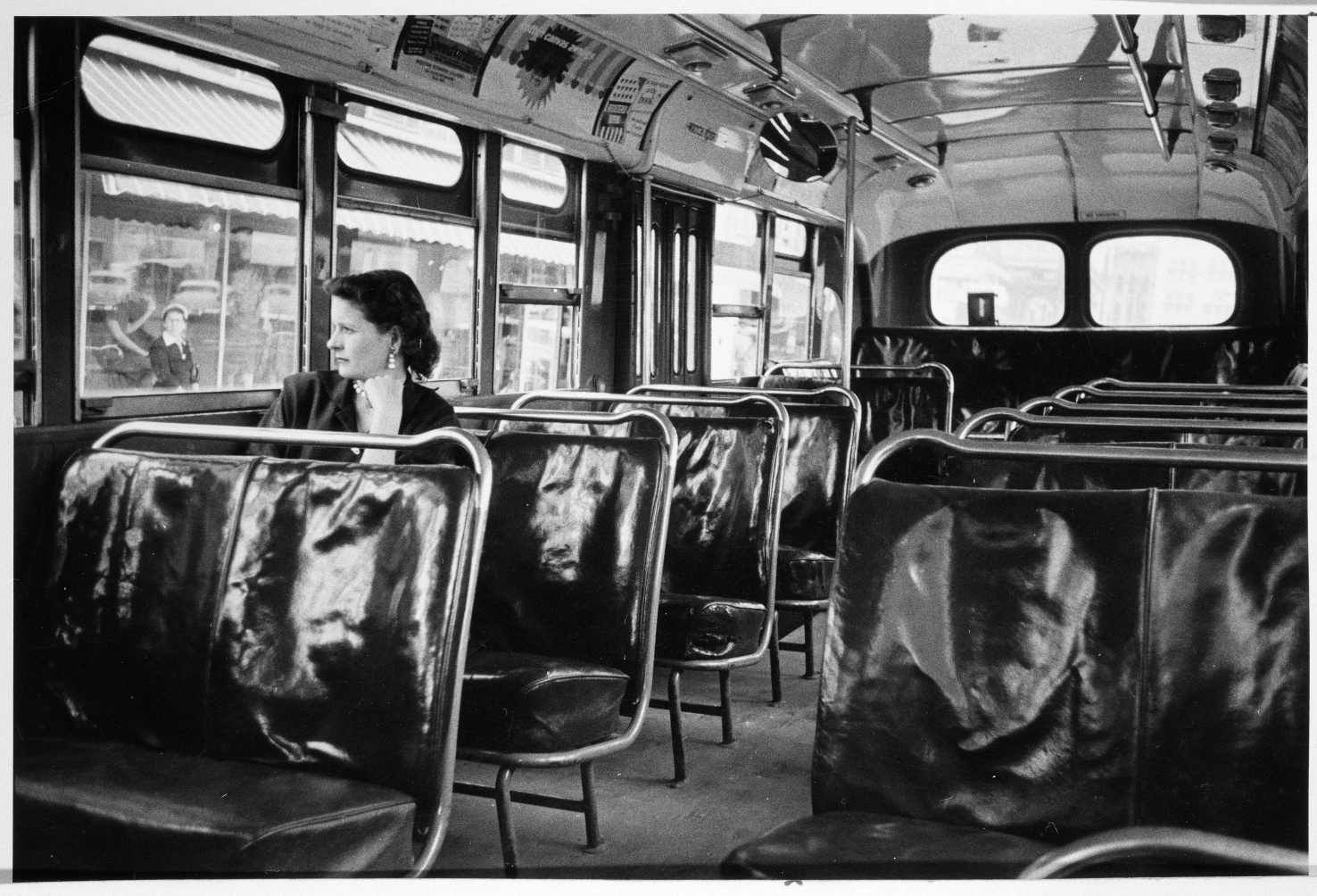
It is not just our roads that are politicized. The idea of ‘separate but equal’ bus service fueled Jim Crow. Cycling infrastructure can be clouded by “systemic issues of racism, classism, and displacement.” And, as U.S. Immigration and Customs Enforcement (ICE) has continued to prove this month, the very act of someone driving a privately owned vehicle is subject to inequitable enforcement.
Our transportation network, including the privately owned vehicles that use it, can be politicized, and thus weaponized. In the United States, the current magnitude of ICE in this context cannot be overstated. ICE politicizes streets when they make sweeping street arrests within a community. In Minneapolis, one video showed ICE officers smashing a woman’s passenger side window on her way to a medical appointment while others cut her seatbelt and dragged her out of the car. While observing another attempted arrest, ICE fatally shot Renee Good, who was attempting to drive her vehicle away from an ICE agent. ICE has even been forced to settle before for conducting warrantless arrests through vehicle stops. These instances all bring to light that a transportation network is a public good that can be politicized, reclaimed, and utilized as a place of resistance.
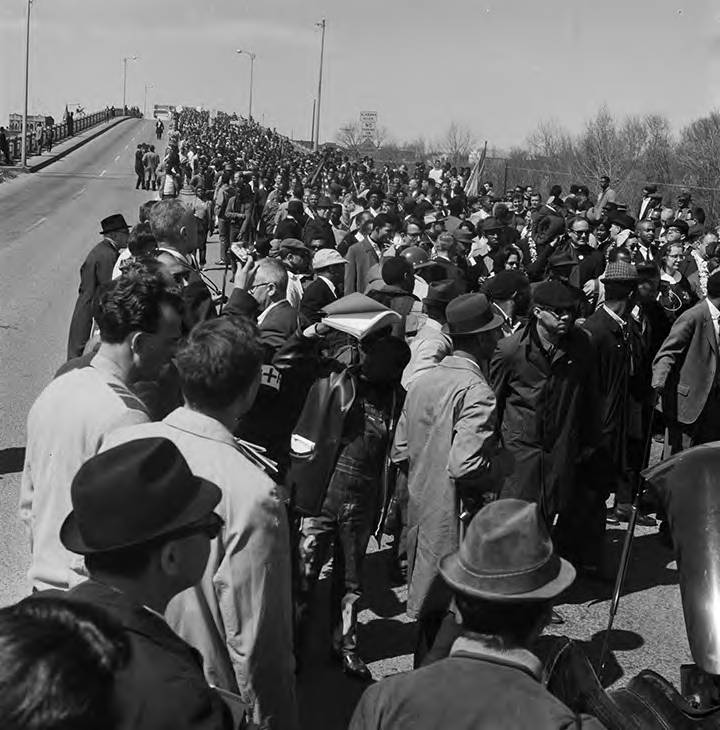
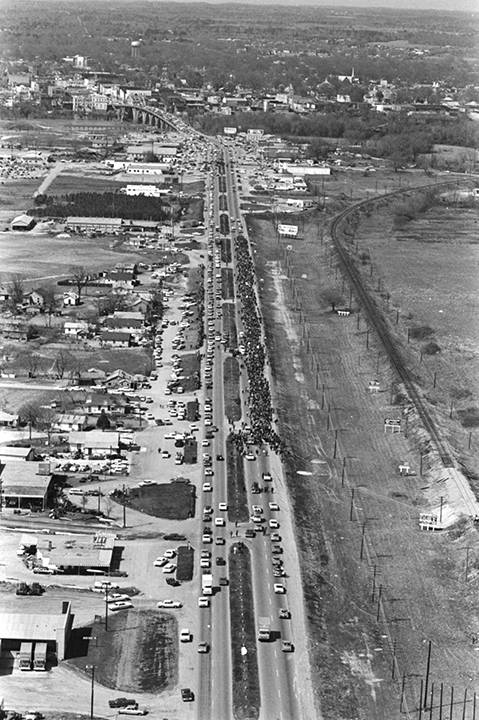
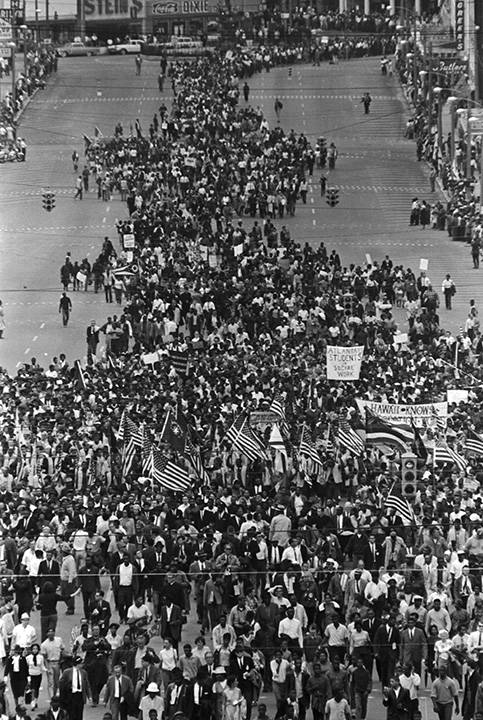
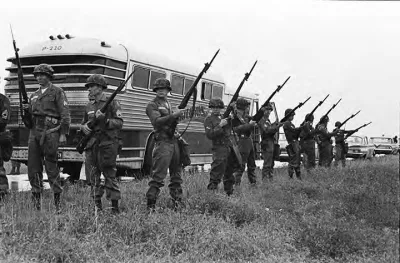
The idea of reclaiming transportation for resistance has existed for centuries in the United States. When highway planners built U.S. Route 80, they had no idea that it would be the site of the Selma to Montgomery March. The protest turned a highway that upheld segregation into a place that worked to dismantle it. Since then, the history of “tying up traffic for Civil Rights” is a well-documented and proven protest strategy. The history of transportation as a mode for protest does not end with highways. It is seen in transit through bus boycotts and Freedom Rides, through efforts to stop transit service to fight for accessibility, and through attempts to desegregate our rail network as early as 1840.
When transportation practitioners design roadways, transit services and our built environment we, maybe unknowingly, design places of resistance. Even today, we see people protesting in our streets, taking transit to resistance locations, or utilizing scooters to create physical barriers. In this sense, access to transportation enables individuals to express and defend themselves when it is most needed.
It could be easy to say “I’m just a transportation practitioner — I do not have control over the current political events.” However, I challenge you to change that narrative and support our work as a place of resistance. When you think about the role you play, you could consider deploying more scooters in neighborhoods where we know ICE is policing, providing street-closure permits more liberally for resistance movements, or even increasing transit frequency to get to and from protests. By leaning into reclaiming and utilizing our transportation network as a place of resistance, we as practitioners can support a movement that needs our support more than ever.
For me, as a Vision Zero planner I see my role as supporting the movement through the ethos of a commitment to zero serious injuries or fatalities on our roadways. While the ethos of Vision Zero is often interpreted as preventing serious injuries or fatalities from car crashes, we can ask why this ethos does not extend further when it is most needed. If it is possible to accept that zero serious injuries or fatalities on our roads from crashes is the goal, it opens the question of why we accept other kinds of deaths and injuries on our roads, too. If zero is the goal, Renee and Alex should still be here.
While it may be harder to build a safety project that prevents the politicization or weaponization of our transportation network, I can extend this ethos to supporting rapid response community organizing or mutual aid, which are often movements that need the skills that planners have to support their mission.
A transportation network is a political place. It is time for practitioners to realize that and come to the front lines. Our planning in this current moment does not exist in an echo chamber. In fact, it creates sites of resistance and provides the freedom to move. Consider asking yourself: What will you do to acknowledge this reality? How can you support the current moment through your work? Once you have an answer, consider acting on it too.

MPO Boards Don’t Reflect Their Constituencies
Metropolitan planning organizations make important transportation planning decisions, but their memberships often don’t reflect their region’s demographics.
Pedestrian Safety Still Not a Priority in the United States
Dangerous by Design 2021 quantifies the transportation sector's ongoing neglect of the health and safety of people performing that basic human action of taking a walk.
L.A. Metro Plans for an Equitable Recovery
The pandemic has forced difficult confrontations with inequities that existed long before the novel coronavirus. L.A. Metro planners are responding by charting a path toward a transportation system that reverses and improves those previous realities.

The state-sanctioned urbicide of Austin
People don’t kill cities. Freeways do.

US to reduce Colorado River water deliveries to Mexico
A new Colorado Treaty amendment reduces Mexico’s Colorado River water allocation by 250,000 acre feet.

New Jersey’s second-largest city bans standalone data centers
Jersey City will continue to allow co-location facilities, such as those meant for research institutions that store their own data.

Amtrak not solely to blame for New Jersey commuter rail's unreliability, report finds
A new study from the Garden State Initiative found that NJ Transit’s budget grew 20% across a 4 year period, but reliability declined significantly over the same period.

EPA erases limits on planet-warming pollution from power plants
Under Monday’s plan, power plants would still have some limits on how much mercury, arsenic and other contaminants they can emit.

Phoenix announces new on-demand transit service, more frequent RAPID buses
Both new services will launch in October, and are part of Phoenix's Project Effective Access Solutions for Easing Congestion.

FREE Course: Walkable City 1: Why Walkability?
After describing his path towards focusing on walkability as the essence of good planning, Jeff Speck marches through his five principal reasons for making more walkable places.
Reinventing Malls: Planning Alchemy—Turning Gray Fields Into Gold
The course focuses on the opportunities and imperatives that shape reinvention of mall sites.

Eagle County Government
Harvard University Graduate School of Design
Nashville Planning Department
The Architects Foundation
University of Cincinnati Online
The Pocatello Development Authority
The Urban Renewal Agency of the City of Pocatello
Journal of the American Planning Association


