In a new monthly column, Kristina Curtiss will “nerd out” (her words, not ours) on transportation system safety, active transportation planning, sustainability — and how it all hangs together.


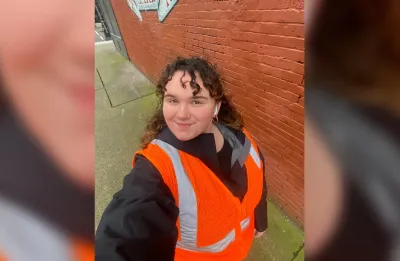
Hi vis vest? Check. Steel toed boots? Check. A transportation system that guarantees safety for all of its users? Hmmmm. That one still needs a little work. And if our new columnist has anything to do with it, we’ll get cracking on that. Pronto.
Today, Planetizen launched a brand new monthly column with Seattle-based Vision Zero planner Kristina Curtiss — a passionate advocate for transportation systems that are affordable, accessible, equitable, sustainable and safe. In her new column, Kristina will write about how to rethink these fundamentals of system design and how planners can push the boundaries of moving away from car-centric design, all while bringing a little much-needed Gen Z flair to your newsfeed.
The first installment of her column is officially out today with a teaser-worthy headline: “We are Perfectly Poised for Another Robert Moses.” In advance, we caught up with Kristina to learn more about her and why she thinks we should all find transportation safety a LOT more interesting.
Planetizen: What made you become a transportation planner? What got you into this work?
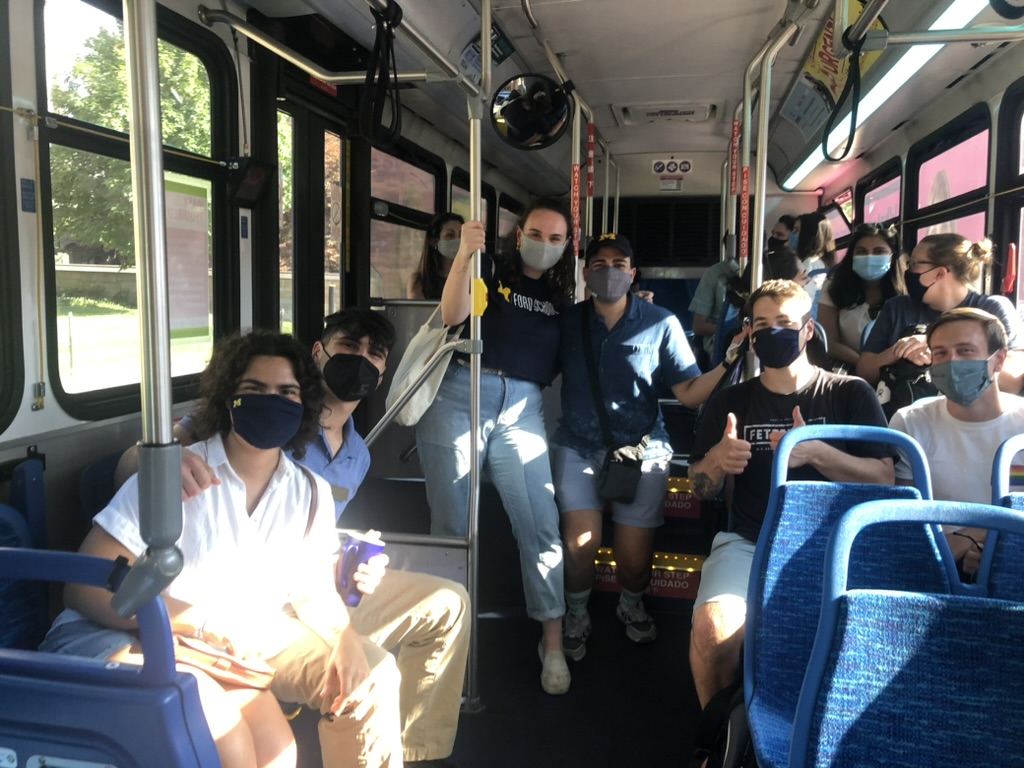
Kristina: I became a transportation planner when I, kind of by accident, moved to Detroit in 2016 without a car. I pretty quickly realized that the decisions that we make in transportation planning are intentional. It made me really passionate about making better decisions that help improve the quality of life for people who live in Detroit. Living in the city without a car also taught me the importance of walkability, and really brought me into the safety space. I got into transportation activism as a byproduct of having long headways and waiting a long time for the bus. My activism in transit really kind of brought me to understand how decisions are made in the transportation space and pushed me to become a planner. And, now I'm working towards building better systems where you don't have to wait an hour for the bus, regardless of where you live!
Planetizen: Tell me why you care so much about safety… and why should I believe that safety is not boring?
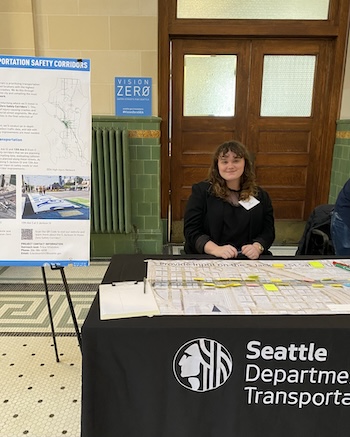
Kristina: Safety is essential to ensuring that we're creating a system that people can use. In the United States, in 2024, a little less than 40,000 people lost their lives on our roadways — that's about the number of people that could fill a professional MLB stadium. I think it's really easy to say that safety is boring, because it's not something we've focused on for a very long time, but in reality having a safe transportation system is our prerequisite to ensuring that we can create a transportation system that everyone feels comfortable using. Like, what's the point in having electric vehicle buses that are able to help us decarbonize our transportation system if people don't feel comfortable riding those buses in the first place because they feel unsafe?
Planetizen: It sounds like it makes you a little bit mad.
Kristina: I wouldn't say that the safety problem makes me mad. I would say that it makes me disappointed. I think that generations of poor transportation planning decisions that prioritized efficiency over people's ability to get from point A to point B have really put us in the position that we're in now, so I’m disappointed in the legacy of our decisions. I guess I would say that I am actually mad that we're returning to some of the norms of transportation planning that we've tried to move away from. I am oftentimes mad at the current administration's decisions to refocus on efficiency, or move away from focusing on safety from being something that is person-centric to something that is design-centric — such as reducing clutter of billboards on our roads, which is not a proven safety problem, but something that the administration thinks is. We, in many ways, are moving in the wrong direction, and that direction makes me really concerned.
Planetizen: I'm curious how you are thinking about safety as it relates to automation.
Kristina: Yeah, safety and automation, in some people's worlds, go hand in hand. Waymo did a pretty notable interview a few months ago, though, that mentioned that it's not a question of if a Waymo is going to kill a person, it's a question of when. And I think that that framing is pretty unacceptable. When you think about how many people in my household would I like to die in a car crash, the answer should be zero. And it is zero. It's deeply personal for so many of us. And if we're going to create a better transportation system that focuses on things like automation, we should be striving for a system that has zero fatalities and not a system that still continues to make mistakes.
In transportation safety, we utilize something called the Safe System Approach. It's 5 elements and 6 principles that define how we create a safe transportation system. And one of the principles of the Safe System Approach is that humans make mistakes, which means sometimes that crashes happen. Our goal is when a crash does happen, that it is not a serious injury or fatal crash, but is instead a property damage crash. However, automation doesn't get the same excuse. Automation shouldn't make mistakes.
![“Being young, going through the pandemic at such a formative age… that shaped the way we [Gen Z] connect with each other and the way we use transportation systems.”](/files/inline-images/Kristina%27s%20headshot.jpeg)
Planetizen: Okay, talk to me about your age. You’ve mentioned that your age is an important part of why you’ve started this column. Why?
Kristina: Yes, I am 28 years old and I think that being a Gen Z planner is a really unique experience that I have. Oftentimes in planning, and especially in planning school, we learn a lot of planning norms that have dated back, especially for transportation, since the creation of the highway system. I am a young planner. I followed the trend of many Gen Z people who are uninterested in owning a car, prioritize things like walkability, want things like third spaces in our cities to be able to connect with our communities, and also who have struggled to break into a job market that, for many reasons, is just unable to kind of facilitate the growth of younger planners.
I think that's a really important perspective to bring to the table. A lot of times, experts speak from their years of experience, but in my instance I am excited to speak from my lived experience in understanding how we create a transportation system that kind of beats some of these old notions that we've historically used to define what a transportation system looks like.
Planetizen: Okay, on to some fun questions. When you travel or you're in new cities, what do you enjoy exploring?
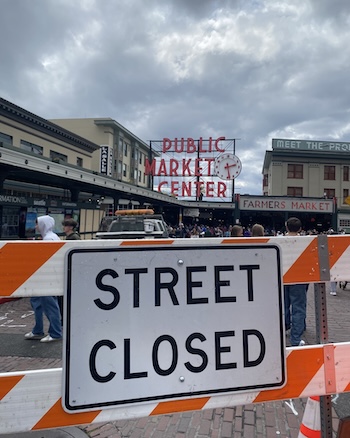
Kristina: I have an entire photo album on my phone of photos that I've taken from other cities called Urbanist Inspiration and whenever I travel I'm constantly looking for: what's the best new practice, or something that's innovative that a city has done in order to push the envelope in the way that we design our built environment. For me, oftentimes, it’s things like looking at protected left turn phasing, or signal size, or how many bike lanes there are and how interconnected their network is, or even things like understanding how do you incentivize someone to hit a push button to activate a rectangular rapid flashing beacon, or how do you get people across a crosswalk safely? Like, I'll never forget my first time seeing a protected intersection for the first time when I was traveling and really realizing that there are so many ways in the United States that we can take best practices from European cities.
Planetizen: What's your favorite city?
Kristina: If I had to pick a non-American city, one of my favorite cities is actually Montréal. For many reasons, but most notably because when they dredged their subway system they used all the materials that they dredged out of their urban area and created a little island, which is an excellent music venue. It’s one of my favorite places to see concerts, probably, across the world. My favorite American city is definitely Washington, D.C. WMATA has done an incredible job of creating a really connected system across the city and, despite what we're seeing in Washington, D.C. today, the built environment is really good for so many people who want to be able to walk or bike or get around.
Planetizen: Favorite historical urbanist character?
Kristina: I mean, I feel like everyone's answer should be Jane Jacobs. I think a lot about Robert Moses and the damage that he's done to the legacy of American cities across the country. I think that for someone who wasn't a trained urbanist, she was ahead of her time and also really proves that people who do urban planning don't need to be urban planners. It's essential that when we do planning, we're thinking about the lived experience of residents and people who are passionate and know the best about how they're able to get around in the areas that they live in.
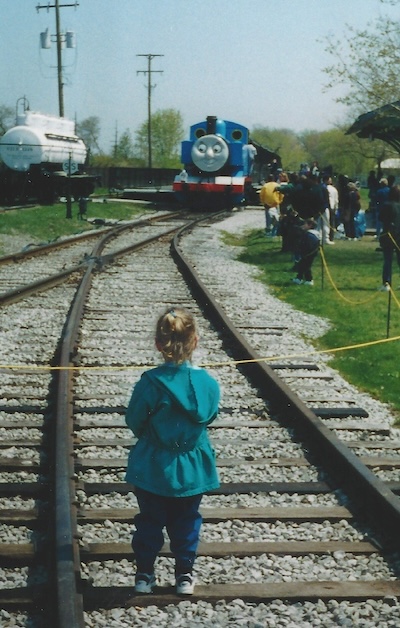
Planetizen: If you had to pick one intervention that every city would do, what would it be? It could be very small or very big.
Kristina: I think if I had to pick one thing that every city should do to help make transportation systems better, it would be frequency of transit access. Well, I guess the first would be allowing transit access to exist, and the second would be creating a good frequency of that transit in order to help people get around.
Planetizen: And finally, from this column, what are you hoping for?
Kristina: There are two things I'm really hoping that people will get out of the column. The first is understanding that all of these key pieces that fit into a transportation system are important, be it accessibility, safety, affordability, equity — all of these pieces fit into creating an interconnected system that people can use, and that ensures that they're able to have choices that allow them to change their behaviors and move away from things like driving.
The second is that transportation as an industry needs to realize that all of our projects are safety projects. If we're building projects — be it a repaving project, a bus rapid transit lane project, whatever — that safety needs to be a consideration in the design. We have a fundamental roadway safety problem in the United States, and it's important that we are able to tackle that as transportation planners and practitioners and engineers from every level, and not just for the few of us who do set-aside safety work.

Study: Roundabouts are Primarily in Wealthier Neighborhoods
A North Carolina study sheds light on inequities in road safety interventions.
2025’s Biggest Transportation Wins
Even in a rough year, there are victories worth celebrating.
Unleashing the Power of Cycling With Smart Messaging
Lloyd Alter describes how creative design and copywriting can flip the script and promote active transport.

Planetizen Federal Action Tracker
A weekly monitor of how Trump’s orders and actions are impacting planners and planning in America.

The state-sanctioned urbicide of Austin
People don’t kill cities. Freeways do.

US to reduce Colorado River water deliveries to Mexico
A new Colorado Treaty amendment reduces Mexico’s Colorado River water allocation by 250,000 acre feet.

5 New England states march closer to 800 megawatt wind energy project
Securing federal approval for the project may be complicated under the Trump administration, which has historically been hostile towards domestic wind power.

Baltimore to break ground on $50 million Transit Priority Project
The project will bring faster bus trips, safer streets and better bike connections to Baltimore.

Airbnb launches $250 million 'last-dollar financing' housing accelerator, makes first investment in Austin
The company will put $6.4 million towards affordable housing development in Texas’ capital.

FREE Course: Walkable City 1: Why Walkability?
After describing his path towards focusing on walkability as the essence of good planning, Jeff Speck marches through his five principal reasons for making more walkable places.
Reinventing Malls: Planning Alchemy—Turning Gray Fields Into Gold
The course focuses on the opportunities and imperatives that shape reinvention of mall sites.

Eagle County Government
Harvard University Graduate School of Design
Nashville Planning Department
The Architects Foundation
University of Cincinnati Online
The Pocatello Development Authority
The Urban Renewal Agency of the City of Pocatello
Journal of the American Planning Association

