New Jersey launched the nation’s first statewide Vision Zero plan last year.


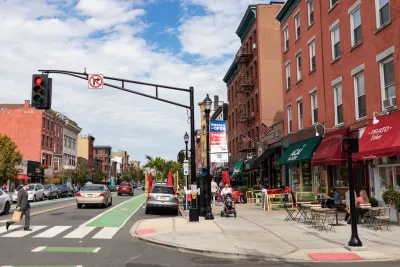
After an alarming rise in traffic fatalities in 2024, when crashes on New Jersey roads killed the highest number of people in three decades, the number of traffic deaths dropped by 15 percent in 2025.
As Larry Higgs reports for NJ.com, the New Jersey State Police preliminarily projects 575 deaths in 2025, compared to 684 in 2024. The state met its goal of reducing traffic deaths to 577 and exceeded NHTSA predictions that it would decrease fatalities by 10 percent.
In January 2025, New Jersey Governor Phil Murphy signed the nation’s first statewide Vision Zero initiative, creating a commission to develop a statewide plan to eliminate traffic deaths by 2040. “The 72-page plan, described as the nation’s first statewide strategy to end roadway fatalities, laid out an ambitious roadmap.”
The report makes specific recommendations in seven areas: “driver education, pedestrian safety, road design, driver awareness of safety laws, speed management, vehicle safety and post-crash care.”
FULL STORY: N.J. traffic deaths drop 15% in 2025 from 30-year high in previous year

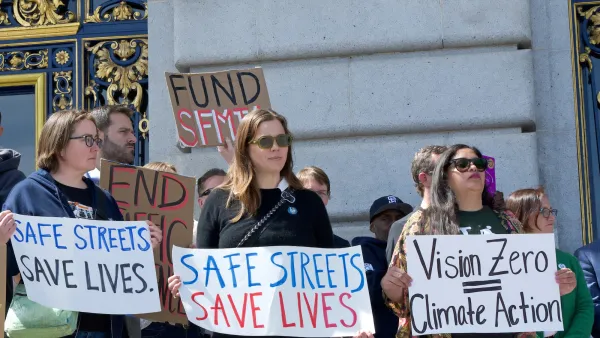
San Francisco Cut Traffic Deaths Almost in Half in 2025
The city credits its Vision Zero strategy and new traffic cameras for reducing the number of deaths and serious injuries on its roads.
Dallas Cut Traffic Deaths Nearly in Half in 2025
The city saw 107 fatal crashes this year, down from 208 in 2024.
Portland Traffic Deaths Surpass 2022 Number
This year, 69 people have died in traffic crashes in Portland, Oregon, nearly twice as many as in 2018, when the city began its Vision Zero program.

Planetizen Federal Action Tracker
A weekly monitor of how Trump’s orders and actions are impacting planners and planning in America.

The state-sanctioned urbicide of Austin
People don’t kill cities. Freeways do.

US to reduce Colorado River water deliveries to Mexico
A new Colorado Treaty amendment reduces Mexico’s Colorado River water allocation by 250,000 acre feet.

Mamdani overhauls NYC's Vision Zero plan with 100 new policy goals
The overhaul aims to reduce traffic deaths and make streets safer for pedestrians, cyclists and drivers through lower speed limits, new safety infrastructure and more.

Amtrak not solely to blame for New Jersey commuter rail's unreliability, report finds
A new study from the Garden State Initiative found that NJ Transit’s budget grew 20% across a 4 year period, but reliability declined significantly over the same period.

EPA erases limits on planet-warming pollution from power plants
Under Monday’s plan, power plants would still have some limits on how much mercury, arsenic and other contaminants they can emit.

FREE Course: Walkable City 1: Why Walkability?
After describing his path towards focusing on walkability as the essence of good planning, Jeff Speck marches through his five principal reasons for making more walkable places.
Reinventing Malls: Planning Alchemy—Turning Gray Fields Into Gold
The course focuses on the opportunities and imperatives that shape reinvention of mall sites.

Eagle County Government
Harvard University Graduate School of Design
Nashville Planning Department
The Architects Foundation
University of Cincinnati Online
The Pocatello Development Authority
The Urban Renewal Agency of the City of Pocatello
Journal of the American Planning Association