A group of local businesses and a school sued the city, arguing that NYCDOT didn’t follow appropriate procedures and failed to address safety concerns before going ahead with the project.


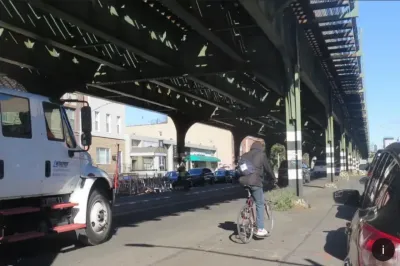
Editor's Note: This article originally stated the bike lane was on 31st Avenue. It is actually on 31st Street. The street name and image has been changed to show the correct street.
A Queens judge ruled against the city in a suit over a bike lane on 31st Street, saying that the Department of Transportation “violated proper procedures” in its installation of the protected lane.
As Ryan Kost explains in Gothamist, “The ruling is an unusual legal victory for plaintiffs in the decades-long fight between local businesses and the steady expansion of bike lanes throughout New York City.”
DOT says the project is part of its Vision Zero program, and that they identified the stretch of street in question as one of the borough’s most dangerous. Between 2019 and 2024, 190 people were injured and two died on the corridor. “But when work on a stretch of the bike lane began in August, a group of businesses and a local school sued the city, arguing the transportation department had rushed the redesign and ignored potential dangers for pedestrians — especially schoolchildren, the elderly and people with disabilities — who would have to cross a busy bike lane.”
The judge agreed with the plaintiffs that DOT didn’t comply with mandatory consultation and certification requirements, and did not adequately address the school’s concerns or FDNY’s assessment that the bike lane would make it harder for emergency responders to reach upper floors of buildings.
FULL STORY: Queens judge orders Astoria bike lane removed, says city fell short on safety measures

Take a Tour of the New 111th Street Protected Bike Lane in Queens
Streetfilms was on hand to celebrate a hard-fought win for the community.
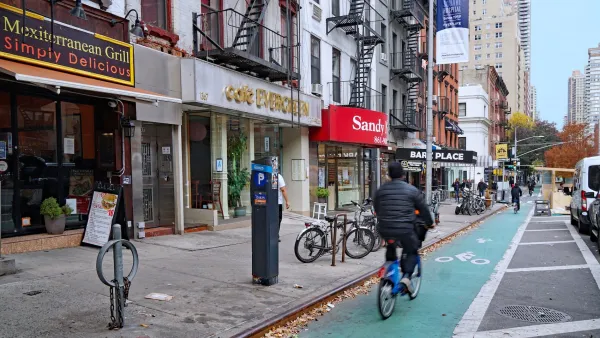
Study: Protected bike lanes increase Citi Bike rides by nearly 400 rides a month
An analysis of millions of NYC bike share rides reveals that only protected bike lanes have a 'statistically significant' increase in ridership.
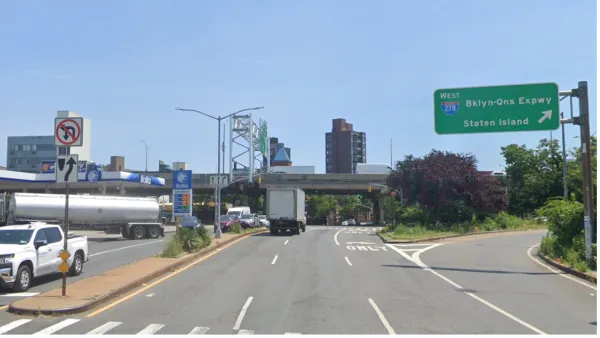
New York Bike Lane Generates Confusion
A compromise road diet with “flex lanes” falls short of its promise.

Planetizen Federal Action Tracker
A weekly monitor of how Trump’s orders and actions are impacting planners and planning in America.

The state-sanctioned urbicide of Austin
People don’t kill cities. Freeways do.

US to reduce Colorado River water deliveries to Mexico
A new Colorado Treaty amendment reduces Mexico’s Colorado River water allocation by 250,000 acre feet.

5 New England states march closer to 800 megawatt wind energy project
Securing federal approval for the project may be complicated under the Trump administration, which has historically been hostile towards domestic wind power.

Baltimore to break ground on $50 million Transit Priority Project
The project will bring faster bus trips, safer streets and better bike connections to Baltimore.

Airbnb launches $250 million 'last-dollar financing' housing accelerator, makes first investment in Austin
The company will put $6.4 million towards affordable housing development in Texas’ capital.

FREE Course: Walkable City 1: Why Walkability?
After describing his path towards focusing on walkability as the essence of good planning, Jeff Speck marches through his five principal reasons for making more walkable places.
Reinventing Malls: Planning Alchemy—Turning Gray Fields Into Gold
The course focuses on the opportunities and imperatives that shape reinvention of mall sites.

Eagle County Government
Harvard University Graduate School of Design
Nashville Planning Department
The Architects Foundation
University of Cincinnati Online
The Pocatello Development Authority
The Urban Renewal Agency of the City of Pocatello
Journal of the American Planning Association