The city’s Vision Zero effort hasn’t quite reached its goal of eliminating traffic deaths, but it has made impressive strides in improving road safety in its first year.


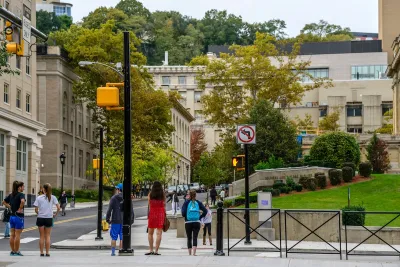
At a Vision Zero summit last week, Pittsburgh leaders highlighted the city’s success in reducing traffic deaths in the year since it implemented a Vision Zero policy, reports Colin Williams in City Paper.
The city still had 21 traffic deaths in 2024, but that number is 32 percent lower than its 20-year average. “The summit offered more granular insights into how Pittsburgh has accomplished this, showcasing projects that ranged from AI-assisted mapping of bike routes to the city’s nationally recognized efforts to install speed humps and bike lanes.”
Local street safety advocates and leaders outlined other ways Pittsburgh can make its roads safer and reduce resistance to actions like removing parking or traffic lanes in favor of pedestrian infrastructure and landscaping. “Pittsburgh Mayor Ed Gainey said educating the public would be a key part of continuing DOMI’s work. The department will face budget constraints and lingering skepticism from some corners when Gainey’s probable successor Corey O’Connor takes over next year.”
FULL STORY: Vision Zero Summit proves Pittsburgh is a rising star in the world of mobility

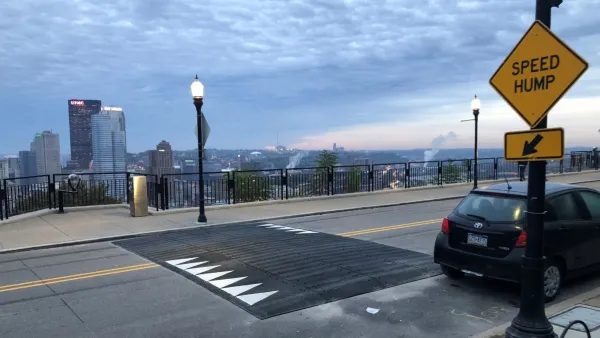
Pittsburgh Excels at Low-Cost, Quick-Build Traffic Calming
The city’s traffic calming initiative has led to a 6 percent average reduction in speeds on corridors with recent interventions.

Pittsburgh Agencies Collaborate on Vision Zero Projects
The city reduced pedestrian deaths to seven in 2023.
Pedestrian Deaths Tick Down — But Rose 58 Percent in the Last Decade
Road fatalities fell by a meager 4 percent in the first half of 2023.

Planetizen Federal Action Tracker
A weekly monitor of how Trump’s orders and actions are impacting planners and planning in America.

The state-sanctioned urbicide of Austin
People don’t kill cities. Freeways do.

US to reduce Colorado River water deliveries to Mexico
A new Colorado Treaty amendment reduces Mexico’s Colorado River water allocation by 250,000 acre feet.

5 New England states march closer to 800 megawatt wind energy project
Securing federal approval for the project may be complicated under the Trump administration, which has historically been hostile towards domestic wind power.

Baltimore to break ground on $50 million Transit Priority Project
The project will bring faster bus trips, safer streets and better bike connections to Baltimore.

Airbnb launches $250 million 'last-dollar financing' housing accelerator, makes first investment in Austin
The company will put $6.4 million towards affordable housing development in Texas’ capital.

FREE Course: Walkable City 1: Why Walkability?
After describing his path towards focusing on walkability as the essence of good planning, Jeff Speck marches through his five principal reasons for making more walkable places.
Reinventing Malls: Planning Alchemy—Turning Gray Fields Into Gold
The course focuses on the opportunities and imperatives that shape reinvention of mall sites.

Eagle County Government
Harvard University Graduate School of Design
Nashville Planning Department
The Architects Foundation
University of Cincinnati Online
The Pocatello Development Authority
The Urban Renewal Agency of the City of Pocatello
Journal of the American Planning Association