Gov. Newsom signed a low that overrides local zoning laws in the state’s biggest counties to allow for larger buildings near rail or rapid bus stations.


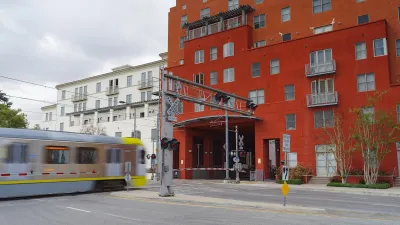
A new law signed by Governor Gavin Newsom last week allows mid- and high-rise housing near major transit stations regardless of local zoning regulations, reports Matthew Hall in the Santa Monica Daily Press.
“Senate Bill 79, authored by state Sen. Scott Wiener, D-San Francisco, permits residential buildings up to nine stories tall next to subway or heavy rail stations in California's eight largest urban counties. The measure allows five- to eight-story buildings near light rail lines and bus rapid transit corridors, upzoning areas within roughly a half-mile of transit hubs.” SB 79 takes effect in July 2026 and includes affordability requirements, labor standards, and exceptions for sensitive areas such as those with high wildfire risk. The law only applies in counties with the largest public transit systems.
Critics say the bill undermines community control, threatens to put strain on local infrastructure without requiring up-front upgrades, and doesn’t do enough to address affordability to prevent displacement. Its proponents argue that new housing near transit will help reduce car dependence and bring down housing costs over time.
FULL STORY: Newsom signs sweeping transit housing bill

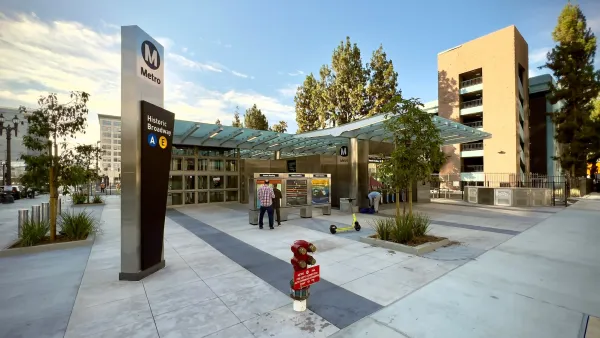
LA Delays State TOD Law to 2030 With its Own, Lower-density Plan
SB 79 allows cities to delay its implementation if they come up with alternate plans to boost density while retaining local control near transit.
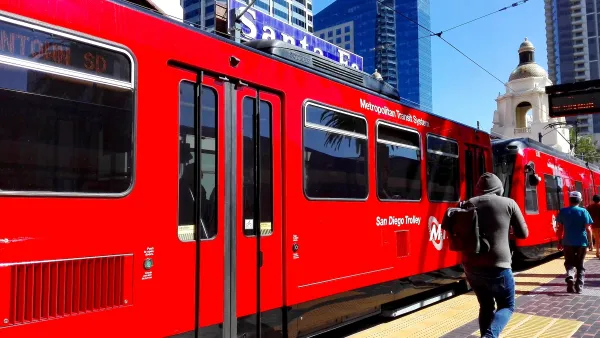
San Diego wants to limit upzoning law to just 16% of transit-adjacent parcels
The city's planning director says some areas are unfit for immediate upzoning due to a lack of resources or hazards such as wildfire risk.
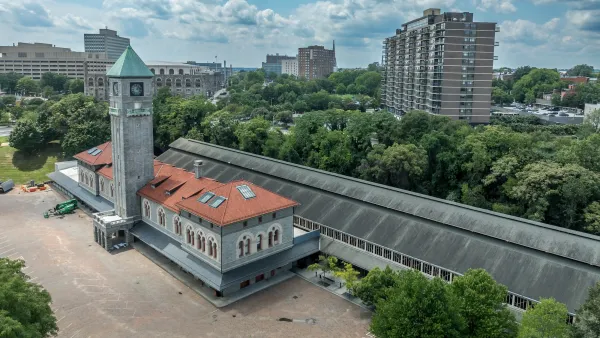
Maryland unveils plan for 5,000 homes near transit
Gov. Moore announced a plan to activate housing construction on 134 acres of state-owned land near transit stations.

Planetizen Federal Action Tracker
A weekly monitor of how Trump’s orders and actions are impacting planners and planning in America.

The state-sanctioned urbicide of Austin
People don’t kill cities. Freeways do.

US to reduce Colorado River water deliveries to Mexico
A new Colorado Treaty amendment reduces Mexico’s Colorado River water allocation by 250,000 acre feet.

5 New England states march closer to 800 megawatt wind energy project
Securing federal approval for the project may be complicated under the Trump administration, which has historically been hostile towards domestic wind power.

Baltimore to break ground on $50 million Transit Priority Project
The project will bring faster bus trips, safer streets and better bike connections to Baltimore.

Airbnb launches $250 million 'last-dollar financing' housing accelerator, makes first investment in Austin
The company will put $6.4 million towards affordable housing development in Texas’ capital.

FREE Course: Walkable City 1: Why Walkability?
After describing his path towards focusing on walkability as the essence of good planning, Jeff Speck marches through his five principal reasons for making more walkable places.
Reinventing Malls: Planning Alchemy—Turning Gray Fields Into Gold
The course focuses on the opportunities and imperatives that shape reinvention of mall sites.

Eagle County Government
Harvard University Graduate School of Design
Nashville Planning Department
The Architects Foundation
University of Cincinnati Online
The Pocatello Development Authority
The Urban Renewal Agency of the City of Pocatello
Journal of the American Planning Association