L.A. County is launching an Urban Natureways initiative that will convert flood channels and utility corridors into interconnected greenways to boost climate resilience, equity, and community vitality.



Los Angeles County is taking a major step toward reimagining its built environment with the proposed Urban Natureways initiative, championed by Supervisor Lindsey P. Horvath. The motion, recently approved by the Board of Supervisors, calls for the creation of a new parkland classification in the County’s General Plan aimed at transforming underused infrastructure—such as flood control channels and utility corridors—into vibrant greenways. These reimagined spaces would serve multiple purposes: improving access to recreation, advancing climate resilience, restoring habitat, and enhancing social equity. Key corridors identified for the first phase include Compton Creek, the Emerald Necklace, the Lower Los Angeles River, and the Pacoima Wash.
The motion directs the Department of Parks and Recreation to lead planning, permitting, and maintenance, in collaboration with local jurisdictions, Metro, and community-based organizations such as ActiveSGV, Pacoima Beautiful, Willowbrook Inclusion Network, Conservation Corps Long Beach, and Nature for All. The motion also calls for creating a Countywide Urban Natureway Marketplace to support small businesses, workforce development, and long-term community stewardship. Together, these actions would help integrate community-driven visions for ecological restoration and connectivity into formal County policy.
Inspired by nationally recognized projects like the Atlanta BeltLine, the Urban Natureways initiative reflects a uniquely Los Angeles County approach to reusing public infrastructure for public benefit. By turning concrete channels into connected corridors of green, the County aims to strengthen neighborhood ties, expand access to nature, and embed biodiversity into the urban landscape.
Read the full story: SUP. HORVATH CHAMPIONS FIRST-OF-ITS-KIND ‘URBAN NATUREWAYS’ PARK DESIGNATION FOR LA COUNTY

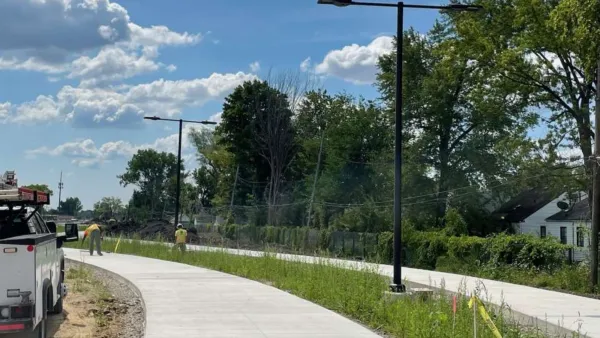
Detroit greenway brings revival — and fears of displacement
The planned Joe Louis Greenway is already bringing change to the neighborhoods near it.
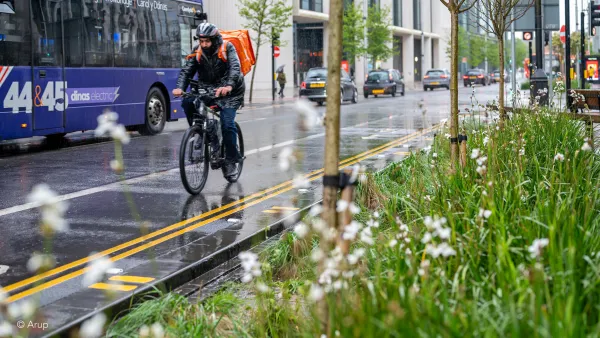
This UK city's bike lanes double as rain gardens and wildlife habitats
Cardiff is combining mobility infrastructure with greening measures to help conserve water, clean the air, and provide shade and greenery.
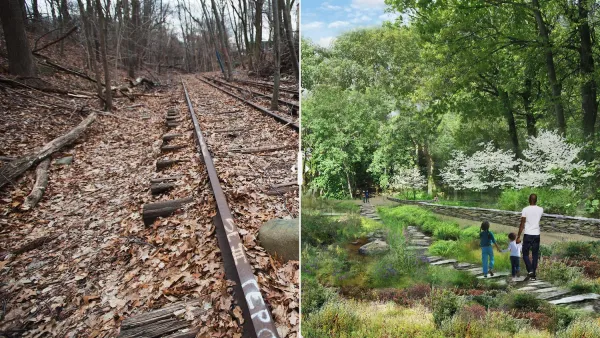
From Queens to Chattanooga, Federal Funding Cuts are Killing Park Projects
Cuts to grants from the Department of Transportation to the EPA are impacting small and large park projects across the country.

Planetizen Federal Action Tracker
A weekly monitor of how Trump’s orders and actions are impacting planners and planning in America.

The state-sanctioned urbicide of Austin
People don’t kill cities. Freeways do.

US to reduce Colorado River water deliveries to Mexico
A new Colorado Treaty amendment reduces Mexico’s Colorado River water allocation by 250,000 acre feet.

Nation's most wind-powered state turns to coal as data centers increase energy demand
For the first time in decades, Iowa has increased its generation of coal power.

NYC cools commuters with city's first rain garden above a bus stop
New York City officials say the plants in the rain garden can absorb 16 gallons of rainwater during heavy storms.

Brightline West’s future may rely on $6 billion federal loan
The company has until Nov. 2 to make a $400 million equity investment into its proposed high-speed rail line.

FREE Course: Walkable City 1: Why Walkability?
After describing his path towards focusing on walkability as the essence of good planning, Jeff Speck marches through his five principal reasons for making more walkable places.
Reinventing Malls: Planning Alchemy—Turning Gray Fields Into Gold
The course focuses on the opportunities and imperatives that shape reinvention of mall sites.

Greater Baltimore Committee
Eagle County Government
Harvard University Graduate School of Design
The Architects Foundation
University of Cincinnati Online
The Pocatello Development Authority
The Urban Renewal Agency of the City of Pocatello
Journal of the American Planning Association