EV drivers can no longer use carpool lanes alone, Bay Area transit is saved — for now — by a $750 million loan, and a Florida commuter rail line loses its state subsidy, jeopardizing its future.



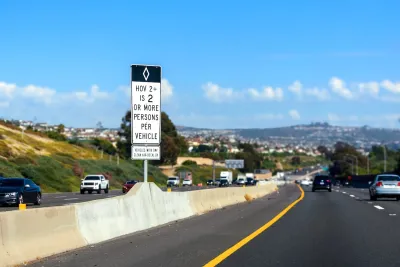
A federal program that let states create programs to incentivize EV use by allowing EV drivers to use carpool lanes alone has lapsed, ending California’s successful carpool lane program. In Washington, D.C., the Trump administration is once again taking aim at public lands, while some Congresspeople are pushing to get rid of the District’s speed cameras and right-on-red ban. California almost rejected the Bay Area’s bid for a $750 million transit loan, but the loan was approved at the last minute. Maryland is taking steps to build housing on state-owned land, while Delaware’s governor is considering state-level zoning reform. And a plan to turn office buildings into vertical farms could put fresh food within reach of more urban dwellers.
The full list of September’s most-read stories:
Congress did not renew a federal program that allowed states to let EV drivers use carpool lanes even when driving alone, dealing a blow to California, where over one million drivers have used the program since it was launched in 1999.
A company specializing in indoor farms wants to expand their operations to unused office buildings and reduce the need to drive produce long distances from rural farms.
The Florida Department of Transportation cut its subsidy to the South Florida Regional Transportation Authority’s (SFRTA) Tri-Rail commuter rail, putting the system, which surpassed pre-pandemic ridership numbers last year, in danger of closing in two years.
The Trump administration is taking steps to reverse a 2024 Public Lands Rule that puts conservation on the same level as other uses of public land such as extraction or recreation.
The parking structure of a Los Angeles mall once featured in Clueless will become 201 luxury housing units while the rest of the property will house a UCLA biomedical research center.
Delaware Governor Matt Meyer cautioned cities that he would consider taking state-level action on zoning reform if local jurisdictions don’t do more to increase their housing supply.
Congressional Republicans are pushing to reverse some Washington, D.C. road safety measures including traffic cameras and a ban on right turns on red.
California Governor Gavin Newsom indicated the state would not sign off on a $750 million loan for Bay Area transit agencies, saying the deal would be finalized next year. However, the state later reversed course, approving the loan.
Maryland Governor Wes Moore’s executive order calls for identifying state-owned properties appropriate for housing development with a focus on transit-adjacent areas.
A traffic engineer argues that the profession, long maligned as too car-oriented, is changing fast.

January Must-Reads: Top 10 Articles From Last Month
How a tidal wave of potential changes at the federal level could throw many programs planners depend on into chaos, a roundup of last year’s zoning stories, and the continuing ripple effects of a landmark Supreme Court case.
How the Trump Presidency Could Impact Urban Planning
An analysis of potential changes in federal housing, transportation, and climate policies.
San Diego wants to limit upzoning law to just 16% of transit-adjacent parcels
The city's planning director says some areas are unfit for immediate upzoning due to a lack of resources or hazards such as wildfire risk.

Planetizen Federal Action Tracker
A weekly monitor of how Trump’s orders and actions are impacting planners and planning in America.

The state-sanctioned urbicide of Austin
People don’t kill cities. Freeways do.

US to reduce Colorado River water deliveries to Mexico
A new Colorado Treaty amendment reduces Mexico’s Colorado River water allocation by 250,000 acre feet.

Mamdani overhauls NYC's Vision Zero plan with 100 new policy goals
The overhaul aims to reduce traffic deaths and make streets safer for pedestrians, cyclists and drivers through lower speed limits, new safety infrastructure and more.

Amtrak not solely to blame for New Jersey commuter rail's unreliability, report finds
A new study from the Garden State Initiative found that NJ Transit’s budget grew 20% across a 4 year period, but reliability declined significantly over the same period.

EPA erases limits on planet-warming pollution from power plants
Under Monday’s plan, power plants would still have some limits on how much mercury, arsenic and other contaminants they can emit.

FREE Course: Walkable City 1: Why Walkability?
After describing his path towards focusing on walkability as the essence of good planning, Jeff Speck marches through his five principal reasons for making more walkable places.
Reinventing Malls: Planning Alchemy—Turning Gray Fields Into Gold
The course focuses on the opportunities and imperatives that shape reinvention of mall sites.

Eagle County Government
Harvard University Graduate School of Design
Nashville Planning Department
The Architects Foundation
University of Cincinnati Online
The Pocatello Development Authority
The Urban Renewal Agency of the City of Pocatello
Journal of the American Planning Association

