Since 2017, the number of cars in the city has stayed roughly the same, even as the population continues to grow.


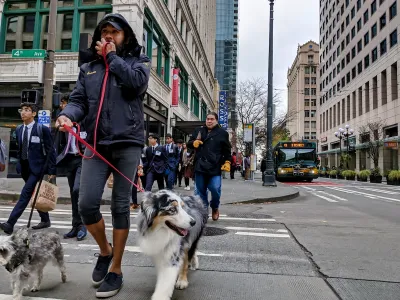
While Seattle’s human population is growing rapidly, the number of cars in the city has stalled.
According to an article by Doug Trumm in The Urbanist, “Between 2017 and 2023, Seattle added 35,000 households, but just 3,300 cars, new Census data has revealed — in news that is music to urbanist ears.” The number of vehicles in the city has stayed relatively unchanged even as the population grew, signaling the city’s success in offering the possibility for residents to go car-free.
“In fact, the rate of car ownership appears to be down about 10% in just six years time, and the share of households that are carless grew 25%, reaching 20% of all Seattle households, according to Census data.” About 90 percent of car-free households were renters.
In 2023, a record 20 percent of Seattle households did not own cars. The city had 127 vehicles for every 100 households. In the 2017 to 2023 time range, the city added about 80,000 residents and only 3,300 cars.
FULL STORY: While Seattle Population Spikes, Car Population Stalls Out

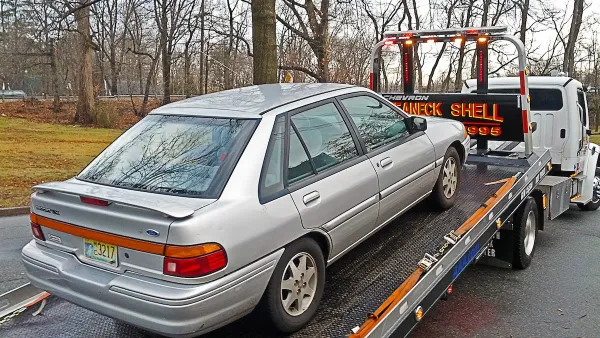
Car Loan Defaults Have Spiked 50%. With Repossession Rates Rising, How Will Americans Get to Work?
In 2024, 1.7 million cars were repossessed in the United States, the highest number since 2009.
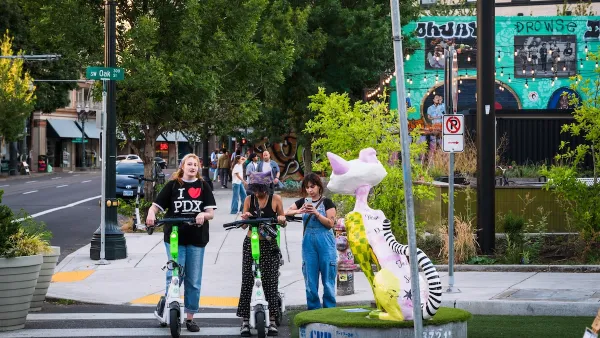
Study: Nearly Half of Portland TOD Residents Commute by Transit
People living in transit-oriented developments are more likely to ditch the car and opt for transit or walking, new research shows.
Study: Automobile Dependency Reduces Life Satisfaction
Automobile dependency has negative implications for wellbeing. This academic study finds that relying on a car for more than 50 percent of out-of-home travel is associated with significant reductions in life satisfaction.

Planetizen Federal Action Tracker
A weekly monitor of how Trump’s orders and actions are impacting planners and planning in America.

The state-sanctioned urbicide of Austin
People don’t kill cities. Freeways do.

US to reduce Colorado River water deliveries to Mexico
A new Colorado Treaty amendment reduces Mexico’s Colorado River water allocation by 250,000 acre feet.

5 New England states march closer to 800 megawatt wind energy project
Securing federal approval for the project may be complicated under the Trump administration, which has historically been hostile towards domestic wind power.

Baltimore to break ground on $50 million Transit Priority Project
The project will bring faster bus trips, safer streets and better bike connections to Baltimore.

Airbnb launches $250 million 'last-dollar financing' housing accelerator, makes first investment in Austin
The company will put $6.4 million towards affordable housing development in Texas’ capital.

FREE Course: Walkable City 1: Why Walkability?
After describing his path towards focusing on walkability as the essence of good planning, Jeff Speck marches through his five principal reasons for making more walkable places.
Reinventing Malls: Planning Alchemy—Turning Gray Fields Into Gold
The course focuses on the opportunities and imperatives that shape reinvention of mall sites.

Eagle County Government
Harvard University Graduate School of Design
Nashville Planning Department
The Architects Foundation
University of Cincinnati Online
The Pocatello Development Authority
The Urban Renewal Agency of the City of Pocatello
Journal of the American Planning Association