In 2024, 1.7 million cars were repossessed in the United States, the highest number since 2009.


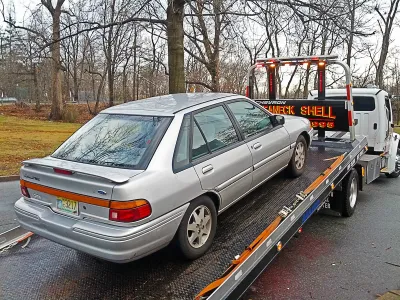
Car loan delinquencies have gone up by 50 percent in the last 15 years, a troubling trend considering that many Americans live in transit-poor places where car ownership is essential. Last year, 1.7 million cars were repossessed, the highest number since 2009.
According to U.S. economics correspondent for The Telegraph Melissa Lawford, interviewed in an article by Sean Saldana in Texas Standard, “what’s particularly worrying is what’s happening in the subprime sector. So that’s people who are on low incomes, maybe have bad credit ratings. Among those borrowers, delinquencies are actually at a record high, which means they’re even worse than they were during the financial crisis, which is quite an astounding statistic.”
Lawford attributes this to the rising cost of cars, higher interest rates, and a general squeeze on lower-income households. “And they’re also there at a point where their situation is only going to get worse. I mean, if they can’t drive to work, maybe they’re going to lose their job. It has this kind of waterfall effect.”
FULL STORY: Warning sign? 1.7 million vehicles were repossessed last year

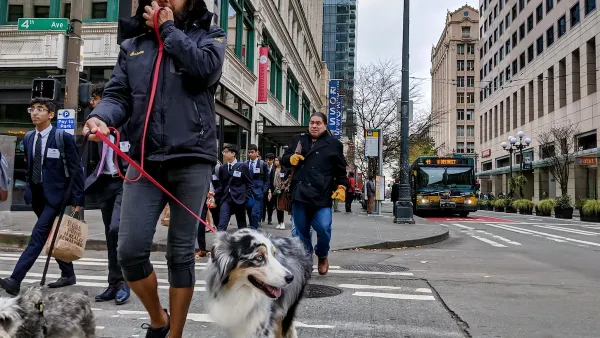
Now 20% Car-Free, Seattle's Population is Growing. Its Traffic is Not.
Since 2017, the number of cars in the city has stayed roughly the same, even as the population continues to grow.

Study: Automobile Dependency Reduces Life Satisfaction
Automobile dependency has negative implications for wellbeing. This academic study finds that relying on a car for more than 50 percent of out-of-home travel is associated with significant reductions in life satisfaction.

When it Comes to Transportation, It’s All About Options
Debunking the notion of the personal automobile as liberator.

The state-sanctioned urbicide of Austin
People don’t kill cities. Freeways do.

US to reduce Colorado River water deliveries to Mexico
A new Colorado Treaty amendment reduces Mexico’s Colorado River water allocation by 250,000 acre feet.

New Jersey’s second-largest city bans standalone data centers
Jersey City will continue to allow co-location facilities, such as those meant for research institutions that store their own data.

Amtrak not solely to blame for New Jersey commuter rail's unreliability, report finds
A new study from the Garden State Initiative found that NJ Transit’s budget grew 20% across a 4 year period, but reliability declined significantly over the same period.

EPA erases limits on planet-warming pollution from power plants
Under Monday’s plan, power plants would still have some limits on how much mercury, arsenic and other contaminants they can emit.

Phoenix announces new on-demand transit service, more frequent RAPID buses
Both new services will launch in October, and are part of Phoenix's Project Effective Access Solutions for Easing Congestion.

FREE Course: Walkable City 1: Why Walkability?
After describing his path towards focusing on walkability as the essence of good planning, Jeff Speck marches through his five principal reasons for making more walkable places.
Reinventing Malls: Planning Alchemy—Turning Gray Fields Into Gold
The course focuses on the opportunities and imperatives that shape reinvention of mall sites.

Eagle County Government
Harvard University Graduate School of Design
Nashville Planning Department
The Architects Foundation
University of Cincinnati Online
The Pocatello Development Authority
The Urban Renewal Agency of the City of Pocatello
Journal of the American Planning Association