The Central Valley town is relaunching its free bus system with an expanded fleet and new cross-town lines.


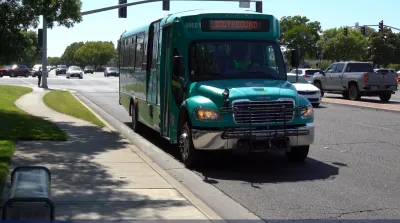
Clovis, California is relaunching its transit system, which is free to ride, with eight bus lines, double the service, and a new on-demand microtransit service, reports Leqi Zhong in The Fresno Bee.
“The fixed-route lines operate from 6 a.m. to 6:45 p.m. Sunday to Friday, with buses running approximately every 30 minutes. The new transit system will extend the hours to 7 p.m. Passengers can expect the waiting time to be under 30 minutes, according to the city.” The free fare is funded via a half-cent sales tax approved by voters in 2020.
“Data from the city’s transit department shows that an average of 15,035 riders used the fix-routes service each month during the 2024-25 fiscal year. Though it represents only a small fraction of Clovis’ total population of 130,000, it has doubled in three years.” The city predicts a 9.5 percent increase in ridership in the first year thanks to the new routes.
A plan to buy additional buses has been postponed due to uncertainty about federal funding from a Federal Transit Administration (FTA) grant.
Read the full story: Clovis is doubling its free public transit service. Here’s what it will cost

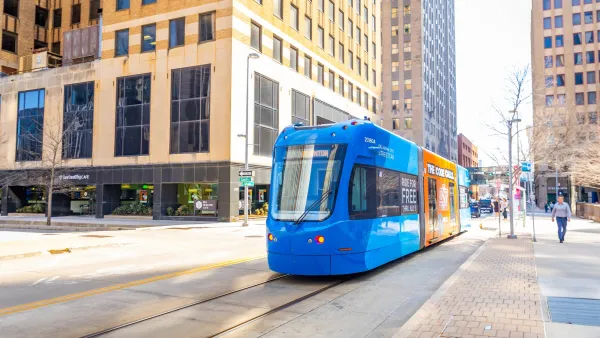
OKC streetcar will stay fare-free after ridership shot up 74%
The downtown streetcar saw a surge in ridership after it eliminated fares in January.
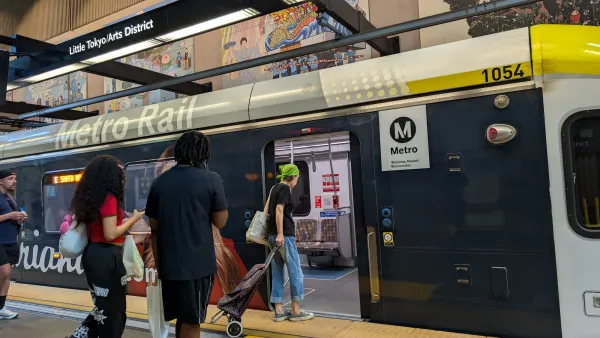
LA mayor wants to make transit fare-free
Los Angeles Mayor Karen Bass says she wants to develop a long-term strategy to make Metro free during her term as chair of the Metro board of directors.
Fisticuffs: The argument FOR fare-free transit
When the barrier to entry drops to zero, magic can happen.

Planetizen Federal Action Tracker
A weekly monitor of how Trump’s orders and actions are impacting planners and planning in America.

Amtrak, CN end decades-long dispute with eight-year agreement
The new operating agreement establishes an updated framework for the companies to work together, including processes to resolve disputes.

Judges permit Denver to divert 77,000 acre feet from the Colorado River for reservoir expansion
Overuse and climate change have caused the Colorado River’s water levels to plummet.

NYC DOT wants faster, more permanent street upgrades
The city is examining ways to build more concrete infrastructure without getting entangled in 'decades-long' projects.

'Something we’ve never seen before:' rising utility rates could strain city finances nationwide
Data centers, climate change and other factors have caused utility rates in the United States to increase by 38% since 2020.

Trump to overrule local leaders, lease millions of acres of America’s Pacific Island territories’ seafloors to mining companies
International law says that the Indigenous people of America’s territories have a right to prior and informed consent regarding projects that impact their countries.

FREE Course: Walkable City 1: Why Walkability?
After describing his path towards focusing on walkability as the essence of good planning, Jeff Speck marches through his five principal reasons for making more walkable places.
Reinventing Malls: Planning Alchemy—Turning Gray Fields Into Gold
The course focuses on the opportunities and imperatives that shape reinvention of mall sites.

Harvard University Graduate School of Design
KFH Group Inc.
Greater Baltimore Committee
The Architects Foundation
University of Cincinnati Online
The Pocatello Development Authority
The Urban Renewal Agency of the City of Pocatello