The ‘85% rule’ guides speed limits based on how fast most drivers travel, sometimes prompting cities to raise speed limits.


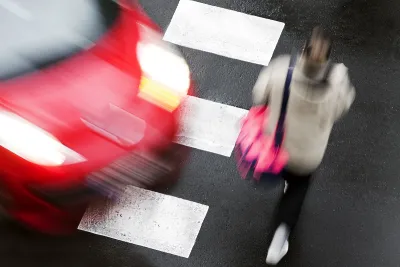
In the United States, the long-held ‘85% rule’ — based in part on traffic studies conducted on rural roads in the 1930s and 40s — established speed limits based on the current speed distribution of free-flowing vehicles on a road.
As a blog post from the Oakland Transportation Management Association explains, the “the 85th percentile speed is the speed at or below which 85% of drivers will operate with open roads and favorable conditions.” Founded on the belief that drivers will drive at the speed, the rule assumes that anything above the 85th percentile would create unsafe conditions.
But as an Associated Press article by Jeff McMurray points out, this creates a feedback loop that can cause officials to raise speed limits when drivers speed. Another approach, dubbed “City Limits,” calls for setting speed limits based on multiple factors that include a street’s level of activity and the likelihood of conflicts.
In its most recent update to the Manual on Uniform Traffic Control Devices (MUTCD), the Federal Highway Administration (FHA) acknowledged that the rule is not technically a rule, and that it has likely held too much weight in transportation planning and that cities should consider safety and pedestrian use as well. Now, more cities, including Madison, Wisconsin and Seattle are lowering speed limits on roads with high pedestrian activity and a high rate of crashes.
Read the full story: States rethink a long-held practice of setting speed limits based on how fast drivers travel

San Antonio could lower speed limit to 25mph
City officials want to lower speed limits and take other steps to reduce speeding and improve traffic safety on neighborhood streets.
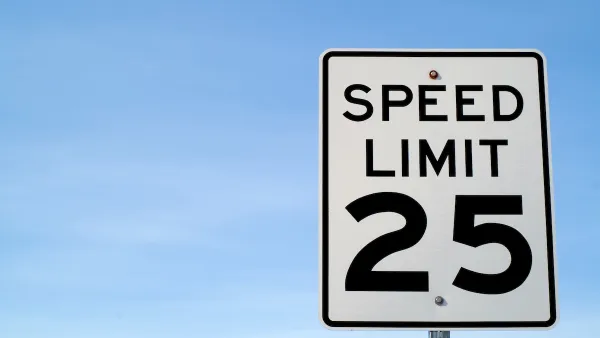
Santa Monica Lowers Speed Limits
Posted speed limits will be reduced by 5 miles per hour on dozens of the city’s streets.

Reducing Driving Speeds Requires More Than Lowering Posted Speed Limits
Without additional changes to roadway design, lower speed limits only slightly reduce driving speeds.

Planetizen Federal Action Tracker
A weekly monitor of how Trump’s orders and actions are impacting planners and planning in America.

California plans to bury El Niño’s downpour
If the state plays its cards right, it may be able to store a billion acre-feet of El Niño’s water in aquifers.

Desperate measures: Advocates weigh draining Lake Powell to fill Colorado River
Draining the reservoir could reduce evaporation losses by a couple hundred thousand acre-feet.

Los Angeles just elected an urban planner as its mayor
Transportation analysts are optimistic that Raman will be more aggressive in addressing transit issues than Bass.

Mamdani’s pied-à-terre tax survives legal challenge
A panel of judges found that the plaintiffs failed to demonstrate injury as a result of New York City's implementation of the tax.

Eastern Nebraska is running out of electricity
Data centers and electrification are straining eastern Nebraska’s grid, throttling economic development.

FREE Course: Walkable City 1: Why Walkability?
After describing his path towards focusing on walkability as the essence of good planning, Jeff Speck marches through his five principal reasons for making more walkable places.
Reinventing Malls: Planning Alchemy—Turning Gray Fields Into Gold
The course focuses on the opportunities and imperatives that shape reinvention of mall sites.

City of Rosemead
Rutgers University, Edward J. Bloustein School of Planning and Public Policy
One Hundred Miles
University of Michigan School for Environment and Sustainability (SEAS)
Hunter College, City University of New York (CUNY)
The Architects Foundation
City of Cambridge
Montrose County
The Pocatello Development Authority