City officials want to lower speed limits and take other steps to reduce speeding and improve traffic safety on neighborhood streets.


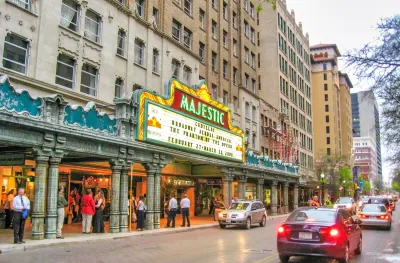
San Antonio officials are exploring lowering speed limits on neighborhood streets from 30 miles per hour to 25 miles per hour as part of their efforts to improve road safety, reports Diego Medel in San Antonio Report.
"Under Texas law, 30 mph is considered a reasonable speed for vehicles on urban residential streets unless otherwise posted. Cities can lower that limit, but only under specific conditions — either through engineering studies or by passing an ordinance that meets state requirements, including signage and annual reporting on enforcement and crashes." Pedestrians struck by cars traveling at 30 mph are roughly 45% likely to die, compared to 5% for people struck at 20 mph.
However, a study by the city showed that drivers are unlikely to slow down when posted speed limits are changed from 30 to 25. "Those findings mirror a similar city effort from 2015, when reduced speed limit signs were installed in nine neighborhoods and data was collected at more than 200 locations. About half of those areas saw slight decreases in speed, while the other half saw slight increases."
In response, San Antonio's Department of Public Works wants to "pursue a broader, multi-pronged strategy that includes engineering changes, enforcement and public outreach and education efforts" in addition to changing speed limits. "Beyond neighborhood streets, council members also pointed to challenges on larger, high-traffic corridors where traditional traffic calming measures like speed humps are not feasible." Public Works officials said these roads require other strategies such as redesigned intersections, narrower roadways, and other infrastructure changes.
FULL STORY: San Antonio considers lowering neighborhood speed limit to 25mph, but it may not be enough


The Weird Way US Cities Set Speed Limits — and Why it’s Changing
The ‘85% rule’ guides speed limits based on how fast most drivers travel, sometimes prompting cities to raise speed limits.

Santa Monica Lowers Speed Limits
Posted speed limits will be reduced by 5 miles per hour on dozens of the city’s streets.

Reducing Driving Speeds Requires More Than Lowering Posted Speed Limits
Without additional changes to roadway design, lower speed limits only slightly reduce driving speeds.

Planetizen Federal Action Tracker
A weekly monitor of how Trump’s orders and actions are impacting planners and planning in America.

The state-sanctioned urbicide of Austin
People don’t kill cities. Freeways do.

US to reduce Colorado River water deliveries to Mexico
A new Colorado Treaty amendment reduces Mexico’s Colorado River water allocation by 250,000 acre feet.

Airbnb launches $250 million 'last-dollar financing' housing accelerator, makes first investment in Austin
The company will put $6.4 million towards affordable housing development in Texas’ capital.

Guerilla urbanists are building DIY bus stop benches in Chicago
A before-and-after of one of the bus stops with a new bench. The new benches are not officially sanctioned or permitted, but the residents who placed them hope they will be the start of a network of DIY benches across the city.

Mamdani overhauls NYC's Vision Zero plan with 100 new policy goals
The overhaul aims to reduce traffic deaths and make streets safer for pedestrians, cyclists and drivers through lower speed limits, new safety infrastructure and more.

FREE Course: Walkable City 1: Why Walkability?
After describing his path towards focusing on walkability as the essence of good planning, Jeff Speck marches through his five principal reasons for making more walkable places.
Reinventing Malls: Planning Alchemy—Turning Gray Fields Into Gold
The course focuses on the opportunities and imperatives that shape reinvention of mall sites.

Eagle County Government
Harvard University Graduate School of Design
Nashville Planning Department
The Architects Foundation
University of Cincinnati Online
The Pocatello Development Authority
The Urban Renewal Agency of the City of Pocatello
Journal of the American Planning Association