‘Range anxiety’ contributes to people’s hesitation about EVs — but hardly anyone need the range they think.


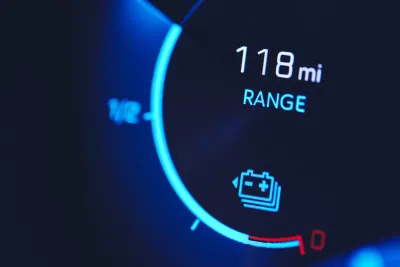
‘Range anxiety’ for EV drivers may not be as big of a concern as most people think, reports Tim Levin in Inside EVs. “Even as consumers demand electric cars that can go 250, 300 or even 400 miles between charging sessions, research shows that they can usually make do with far less. Recurrent, a firm that tracks range and battery health in thousands of EVs, crunched the numbers and learned that electric car drivers only use a small fraction of their batteries each day.”
According to the report, most electric cars with 350-375 mile range average 40.9 miles of driving per day. “Taking the weighted average across all EVs suggests that drivers tend to use 12.6% of their car's rated range daily, Recurrent found.”
As Levin explains, “So the obsession with more and more EV range is less about what people do on a regular basis and more about ‘what if?’ scenarios.” A survey from Recurrent shows that once people buy an EV, just 22.8 percent of owners worry about range. “This suggests the industry's ‘range arms race’ is creating expensive solutions to problems that don't exist, or exist for only a moment before people really experience EV ownership,” says Recurrent.
FULL STORY: https://docs.google.com/spreadsheets/d/1PyMOuZQL_W-6Qx3AsaDf4Lvs97Sq9b-sozRsZKeZ7gs/edit?pli=1&gid=0#gid=0


Swapping your gas car for an EV is greener than keeping it, research shows
An EV repays the 'carbon debt' caused by building it after 4,400 miles.
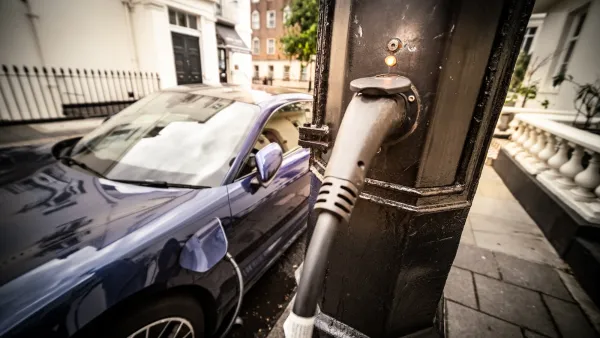
DC light poles will soon charge your electric car
The city awarded three grants to companies that will install more publicly available EV chargers.
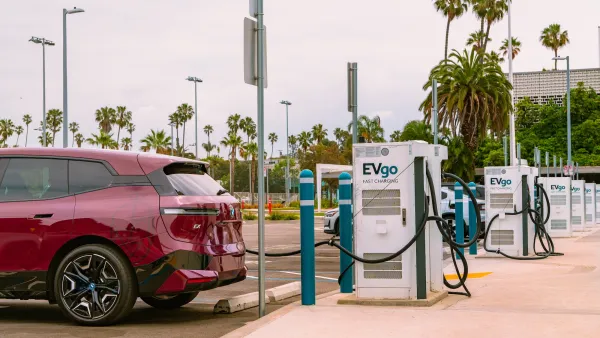
California Beats EV Adoption Goal by Over 1 Million Vehicles
The state pledged to put 1.5 million EVs on its roads by 2025.

Planetizen Federal Action Tracker
A weekly monitor of how Trump’s orders and actions are impacting planners and planning in America.

The state-sanctioned urbicide of Austin
People don’t kill cities. Freeways do.

US to reduce Colorado River water deliveries to Mexico
A new Colorado Treaty amendment reduces Mexico’s Colorado River water allocation by 250,000 acre feet.

5 New England states march closer to 800 megawatt wind energy project
Securing federal approval for the project may be complicated under the Trump administration, which has historically been hostile towards domestic wind power.

Baltimore to break ground on $50 million Transit Priority Project
The project will bring faster bus trips, safer streets and better bike connections to Baltimore.

Airbnb launches $250 million 'last-dollar financing' housing accelerator, makes first investment in Austin
The company will put $6.4 million towards affordable housing development in Texas’ capital.

FREE Course: Walkable City 1: Why Walkability?
After describing his path towards focusing on walkability as the essence of good planning, Jeff Speck marches through his five principal reasons for making more walkable places.
Reinventing Malls: Planning Alchemy—Turning Gray Fields Into Gold
The course focuses on the opportunities and imperatives that shape reinvention of mall sites.

Eagle County Government
Harvard University Graduate School of Design
Nashville Planning Department
The Architects Foundation
University of Cincinnati Online
The Pocatello Development Authority
The Urban Renewal Agency of the City of Pocatello
Journal of the American Planning Association