Metropolitan planning organizations make important transportation planning decisions, but their memberships often don’t reflect their region’s demographics.


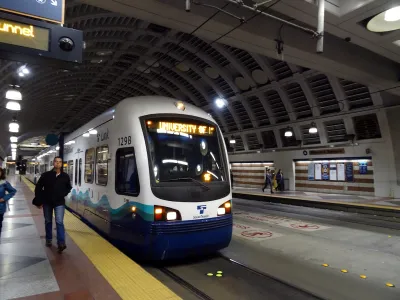
Metropolitan planning organizations (MPOs) play a key role in transportation planning decisions, but few of their boards are representative of the residents they serve, according to research from Yonah Freemark and Lydia Lo of the Urban Institute.
“Under federal law, MPOs are directed to prioritize transportation investments within the metro area, which can include cities, towns, and counties. As such, federal law requires MPO boards to consist of local elected officials, transportation agency officials, state officials, and their appointees,” Freemark and Lo explain.
The researchers analyzed the membership of MPO boards of the largest U.S. metro areas, and found that “though boards prioritize the inclusion of local government representatives, their voting structures often don’t represent local populations proportionally. In some metro areas, some residents’ votes can be worth 10 times as much as other residents’.” Some MPOs, such as Los Angeles, have fairly proportionate representation of the central city, while others, like Philadelphia, do not. Around 13 percent have created weighted voting systems that account for how many people each board member represents.
The researchers conclude that “the current system underrepresents many residents’ perspectives, often to the detriment of effective transportation options.”

Reclaiming Transportation as a Place of Resistance
The systems that move us are not neutral — and we don’t have to pretend like they are.

State DOTs Don’t Resemble Their Constituencies — And That’s a Problem
Streetsblog calls attention to the lack of representation of women, people of color, and other groups in state departments of transportation that are largely dominated by white men.

Book Excerpt: Inclusive Transportation: A Manifesto for Repairing Divided Communities
What is your transportation story?

The state-sanctioned urbicide of Austin
People don’t kill cities. Freeways do.

US to reduce Colorado River water deliveries to Mexico
A new Colorado Treaty amendment reduces Mexico’s Colorado River water allocation by 250,000 acre feet.

New Jersey’s second-largest city bans standalone data centers
Jersey City will continue to allow co-location facilities, such as those meant for research institutions that store their own data.

Amtrak not solely to blame for New Jersey commuter rail's unreliability, report finds
A new study from the Garden State Initiative found that NJ Transit’s budget grew 20% across a 4 year period, but reliability declined significantly over the same period.

EPA erases limits on planet-warming pollution from power plants
Under Monday’s plan, power plants would still have some limits on how much mercury, arsenic and other contaminants they can emit.

Phoenix announces new on-demand transit service, more frequent RAPID buses
Both new services will launch in October, and are part of Phoenix's Project Effective Access Solutions for Easing Congestion.

FREE Course: Walkable City 1: Why Walkability?
After describing his path towards focusing on walkability as the essence of good planning, Jeff Speck marches through his five principal reasons for making more walkable places.
Reinventing Malls: Planning Alchemy—Turning Gray Fields Into Gold
The course focuses on the opportunities and imperatives that shape reinvention of mall sites.

Eagle County Government
Harvard University Graduate School of Design
Nashville Planning Department
The Architects Foundation
University of Cincinnati Online
The Pocatello Development Authority
The Urban Renewal Agency of the City of Pocatello
Journal of the American Planning Association