How did the Finnish capital achieve Vision Zero? It was no accident.



Helsinki, Finland just achieved a full year with zero traffic deaths, reports Mihai Andrei in ZME Science. As Andrei explains, “It’s not accidental progress nor is it an unusual year, it’s the culmination of a decades-long, systematic implementation of a road safety philosophy.”
Helsinki’s Vision Zero approach — which prioritizes safety above all else — employs a broad strategy that includes lower road speeds, automated cameras, and pedestrian-oriented urban design. “The evidence is unequivocal: speed is the single most critical factor in determining the outcome of a crash.” In Helsinki, over half of the city’s streets have a speed limit of 30 kilometers (around 20 miles) per hour.
The city also actively works to reduce car dominance and improve its public transit options. “The goal should be to build a complete network of segregated facilities — such as curb-protected bike lanes and wide, unobstructed sidewalks — that allows a person to travel from any origin to any destination in the city without being forced into mixed traffic.”
FULL STORY: Helsinki went a full year without a traffic death. How did they do it?


Washington Road Safety Bills Fail to Advance
Several bills aimed at reducing traffic deaths fell by the wayside in the state legislature, despite the growing rate of road fatalities.
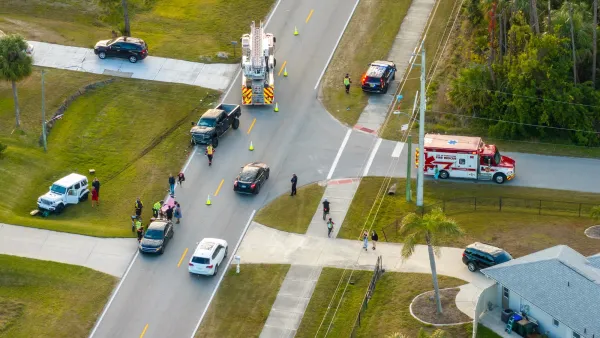
Pedestrian Deaths Fell by Largest Percentage in 15 Years, but Remain Above Pre-Pandemic Levels
After a spike in deaths during the Covid-19 years, road deaths fell to 3,024 in the first half of 2025.

Nevada’s Highway Safety Plan Targets 35% Drop in Traffic Deaths by 2035
The 2026-2030 plan aims to reduce deaths and serious injuries with a long-term goal of eliminating traffic deaths by 2050.

Planetizen Federal Action Tracker
A weekly monitor of how Trump’s orders and actions are impacting planners and planning in America.

The state-sanctioned urbicide of Austin
People don’t kill cities. Freeways do.

US to reduce Colorado River water deliveries to Mexico
A new Colorado Treaty amendment reduces Mexico’s Colorado River water allocation by 250,000 acre feet.

5 New England states march closer to 800 megawatt wind energy project
Securing federal approval for the project may be complicated under the Trump administration, which has historically been hostile towards domestic wind power.

Baltimore to break ground on $50 million Transit Priority Project
The project will bring faster bus trips, safer streets and better bike connections to Baltimore.

Airbnb launches $250 million 'last-dollar financing' housing accelerator, makes first investment in Austin
The company will put $6.4 million towards affordable housing development in Texas’ capital.

FREE Course: Walkable City 1: Why Walkability?
After describing his path towards focusing on walkability as the essence of good planning, Jeff Speck marches through his five principal reasons for making more walkable places.
Reinventing Malls: Planning Alchemy—Turning Gray Fields Into Gold
The course focuses on the opportunities and imperatives that shape reinvention of mall sites.

Eagle County Government
Harvard University Graduate School of Design
Nashville Planning Department
The Architects Foundation
University of Cincinnati Online
The Pocatello Development Authority
The Urban Renewal Agency of the City of Pocatello
Journal of the American Planning Association